
Short answer
A little, but the same rules apply. Menstrual blood carries the shed lining of the uterus along with blood; one proteomics study found hundreds of proteins in it that it didn't find in circulating blood or vaginal fluid. It's still a protein stain, so cool water, gentle blotting and no heat are the starting points. A waterproof protector is the simplest prevention. Severe or biohazard jobs are quoted before we start.
Key terms used on this page
- Protein stain:
- A stain whose main ingredient is protein, such as blood, vomit, feces, mucus or egg. Extension guides treat it with cold water first because heat makes the protein coagulate between the fibers.
- Heat-set stain:
- A stain that has become harder to remove because heat fixed it in place. Kentucky Extension warns never to iron stained fabrics because heat sets stains, and Georgia Extension says stains set by heat will be difficult to remove.
- Hemoglobin oxidation:
- The chemical change that turns a bloodstain from bright red to dark brown as oxygen-carrying hemoglobin converts to methemoglobin and then hemichrome. Bremmer and colleagues found the change is fast at first and slows after a few hours.
- Fibrin clot:
- The mesh of fibrin protein that blood forms as it clots, which stabilizes the platelet plug. In a stain, it is part of what makes dried blood stiffer and harder to lift than fresh blood.
- Spot test:
- Trying a cleaning agent on a hidden area first and checking for color change or damage before treating the stain. Georgia Extension tells readers to always pretest each cleaning agent this way.
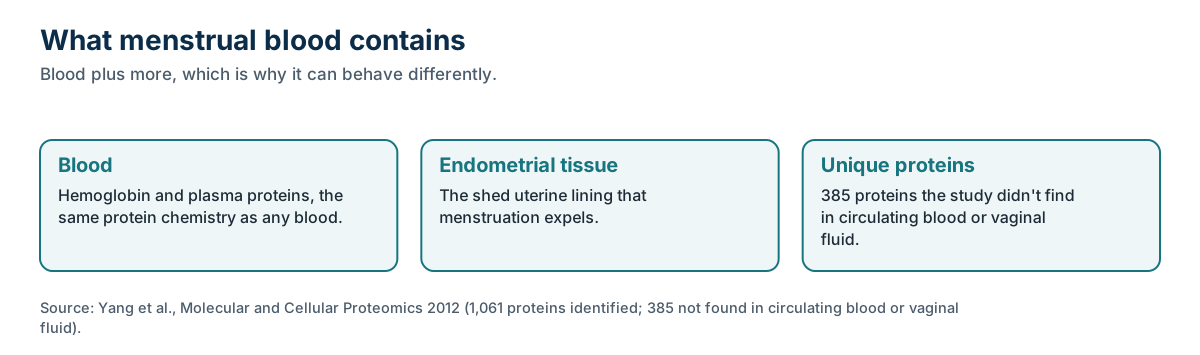
Period blood on a mattress is a little different from other blood stains, but the same rules apply. Menstrual blood carries the shed lining of the uterus along with blood, and one proteomics study found hundreds of proteins in it that it didn't find in circulating blood or vaginal fluid. Chemically, though, it's still a protein stain. Cool water, gentle blotting and no heat are the right starting points, and a waterproof protector is the simplest prevention.
General information about stain chemistry, not medical advice. For questions about your cycle or health, ask a doctor.
What's in menstrual blood?
Yang and colleagues open their proteomics paper with a plain definition: "Menstruation is the expulsion of the endometrial lining of the uterus." Their analysis identified 1,061 proteins in menstrual blood. When they compared it with circulating blood and vaginal fluid, they found 385 proteins unique to menstrual blood, consistent with its role as what the authors call "an easily available noninvasive source of endometrial tissue."
For a stain, the detail that matters is the mix: blood, with its hemoglobin and clotting proteins, plus tissue from the uterine lining. That makes it a protein-rich stain, which puts it in the protein family that University of Kentucky Extension handles with cold water first.
Does it behave differently on fabric?
Somewhat. Because it carries tissue as well as blood, a period stain can look thicker or less even than a drop from a cut; we found no study measuring how that affects removal. Like any blood, it darkens as it dries: Bremmer and colleagues measured bloodstains moving "from bright red to dark brown" as hemoglobin oxidizes, quickly at first and then more slowly. And like any blood, it clots; StatPearls' coagulation chapter describes the fibrin mesh that forms.
None of that changes the basic chemistry. It's why the heat article and the fresh versus dried blood article apply here almost word for word. The difference is mostly practical: a period stain is often found in the morning, after hours of drying, and sometimes after body heat has kept it warm.
| Feature | Menstrual blood | Blood from a cut | Source |
|---|---|---|---|
| Main stain chemistry | Protein | Protein | UKY |
| Other contents | Endometrial tissue, vaginal fluid | Mostly blood alone | Yang 2012 |
| Color change as it dries | Red to brown | Red to brown | Bremmer 2011 |
| First move in the guides | Cool water, no heat | Cool water, no heat | UGA, K-State |
What's a sensible routine if you find a stain?
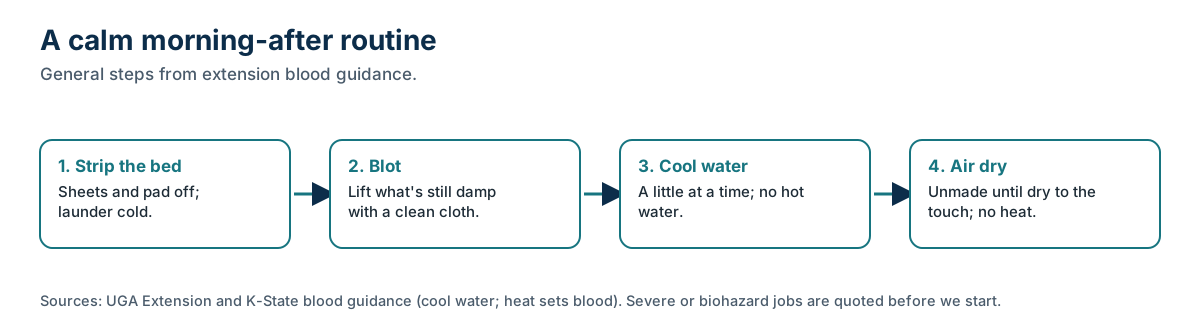
Calm and in order. Strip the bed and wash the sheets and any pad in cold water. Blot the spot on the mattress with a clean, damp cloth to lift what's still soft. Georgia Extension's blood guide says to sponge or blot a wet stain on upholstered furniture with cold water, and its cautions are blunt: "Always use cool water when removing blood stains." K-State adds a warning for fresh blood: "do not use hot water as it will set blood stains."
Use as little water as you can. Every drop that goes into the mattress has to dry back out, and as it dries it carries dissolved stain to the edge of the damp patch; the article on stains that come back explains the rings that leaves. Then leave the bed unmade until the area is dry to the touch, without a hair dryer or heater.
What if the stain has already dried?
Then it's a dried protein stain, and the extension guides change tools rather than direction. Kentucky suggests scraping or brushing off any crust, then a cold soak "using a detergent or an enzyme presoak product." K-State suggests an enzyme product in warm, not hot, water for dried blood. On a mattress, that means a small amount of product applied to the spot, worked in gently, and blotted out. Patience helps more than strength. Repeating a gentle step two or three times, blotting between rounds, is closer to what the guides describe than one hard scrub, and Kentucky warns that excessive rubbing can break fibers, damage the finish or spread the stain. The enzyme article explains why a protease is the right enzyme for blood, and why it's wrong for wool.
For a faint shadow that's left, some people try the 3 percent hydrogen peroxide that Kentucky and K-State mention. It can lighten colored ticking along with the stain, so the peroxide article and a hidden spot test come first.
What about home remedies?
Search for period stains and you'll find salt pastes, baking soda and a long list of kitchen tricks. The extension guides we cite don't recommend salt or baking soda for blood. Their logic is narrower and more useful: Kentucky says to "Always use the least destructive stain removal method first," which means cold water before anything else, then detergent or an enzyme product if water alone doesn't work.
The products that do have support in the guides are enzyme presoaks, which contain a protease that breaks down blood proteins, and, as a last step, 3 percent hydrogen peroxide after a spot test. Two warnings from the guides apply to every remedy. Heat sets blood, and so does alcohol, which Texas A&M AgriLife lists among the things that set blood and vomit. Mixing products adds risk of its own: Kentucky says not to combine enzyme presoaks "with chlorine bleaches." One product at a time, blotted out before the next, is the safer habit.
How do you protect a mattress during a period?
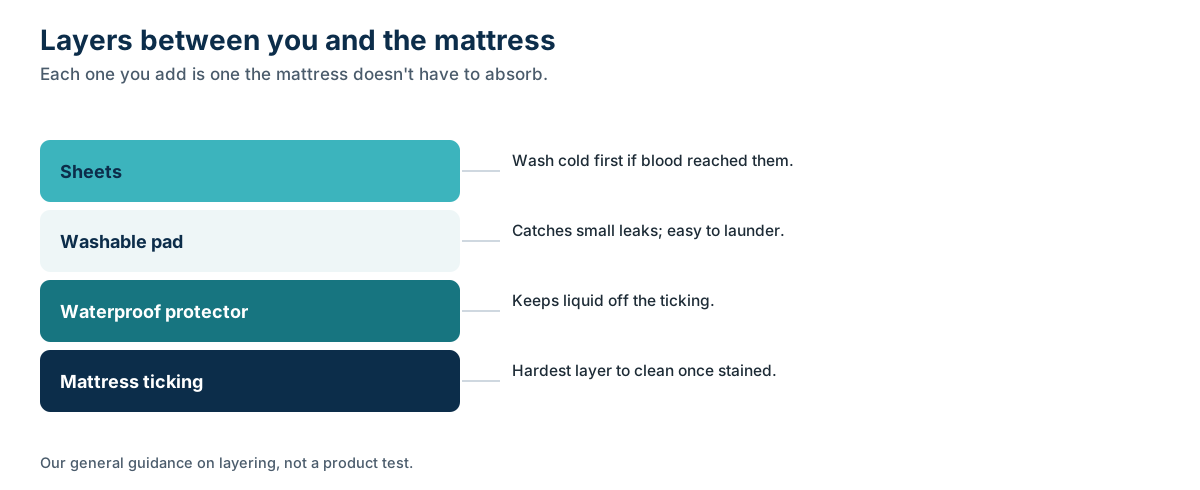
Layers. A waterproof protector under the fitted sheet keeps liquid off the ticking. Some people add a washable pad on top during heavier days. Each layer can go in the wash; the mattress can't. Hub 6 asks whether cleaning is still worth it with a protector, and Hub 3's accidents hub covers protection against urine as well. The cheapest stain to clean is the one that never reaches the mattress.
When is it a job for a professional?
When the stain is large, has soaked deep, or has been set by heat, or when you're unsure what the materials can take. It's a routine stain question, and there's nothing to be embarrassed about. For fabrics that can't be washed, NMSU suggests asking a dry cleaner for help, and Kentucky is frank that some stains are "impossible to remove."
Sleep Sanitation's view
This section is our view. We treat menstrual blood like any blood stain: with discretion, and with general chemistry rather than a published process. Each bed gets assessed, and severe or biohazard jobs are quoted before we start. We can't promise a stain will come out, and we make no disinfection claim; our wording follows the CDC's cleaning and sanitizing terms. That's our own reasoning, not a manufacturer exemption. Your care label and warranty terms govern, so check your warranty terms before you book. You can schedule a visit or see the pricing page. The stain chemistry hub covers related stains.
What we don't know
- Whether the extra proteins in menstrual blood make it measurably harder to lift from fabric. We found no study that tests it.
- How body heat overnight affects a fresh stain before it's found. The guides discuss hot water and dryers, not body warmth.
- How far a typical overnight stain wicks into a quilted mattress top.
Changelog
- 5 October 2026: First published. Sources accessed on this date.
Sources
- Proteomic analysis of menstrual blood (Yang et al., Molecular and Cellular Proteomics, 2012) · PubMed Central
- Remove Stains from Blood (accessed 2026-10-05) · University of Georgia Extension, Textiles
- Stain Removal (accessed 2026-10-05) · K-State Research and Extension, Greenwood County
- Stain Removal for Washable Fabrics (FCS2-840) · University of Kentucky Cooperative Extension
- Biphasic Oxidation of Oxy-Hemoglobin in Bloodstains (Bremmer et al., PLOS One, 2011) · PLOS One
- Physiology, Coagulation Pathways (Chaudhry, Killeen and Babiker, StatPearls) · PubMed / NCBI Bookshelf
- Removing Clothing Stains (Guide C-502) · New Mexico State University Cooperative Extension
- Removing Stains From Washable Fabric (2025) · Texas A&M AgriLife Extension
- Cleaning and disinfecting your school (definitions) · CDC
Last reviewed October 5, 2026. Manufacturer specifications and care instructions change; check the current version for your exact model. This page is general information, not medical advice. How we source and check pages: editorial standards.