
Short answer
Usually because two sleepers leave different amounts of sweat and skin oil in the same spot every night. Sweat rates vary widely between people, and skin oil output depends on hormones and age. Hair and skin products, sleeping warm and more hours in one position add to it. The oils age into a yellow or tan patch, so the darker side reflects years of transfer, not one bad night.
Key terms used on this page
- Sweat gland output:
- How much sweat each active gland produces. A lab study found men sweated more than women at high heat loads during exercise, entirely because of greater output per gland.
- Sebum:
- The oily film made by the skin's sebaceous glands. Picardo and colleagues describe squalene and wax esters as lipids unique to human sebum.
- Lipid autoxidation:
- The slow reaction of unsaturated fats and oils with oxygen in air. On fabric, Chi and Obendorf's review links it to the yellowing of aged oily soils.
- Oil-based stain:
- A stain from fats, oils or waxes, including hand lotion, face cream, hair oil and the greasy rings that body oils leave on collars. It needs detergent or a solvent rather than plain water.
- Mattress protector:
- A removable cover that goes between the mattress and the sheets. Purple says protectors 'go between the mattress and sheets to keep dirt and other stains off your mattress.' Tempur-Pedic recommends its own protector over conventional pads.
- End-to-end rotation:
- Turning a mattress 180 degrees so head and foot swap, spreading wear. Industry care advice suggests periodic rotation unless the care instructions say otherwise.
One side of the mattress turning darker than the other is one of the most common things people notice when they strip the bed. It's usually not a sign that anyone is doing something wrong. Two people can sleep in the same bed, wash the same sheets and still leave very different amounts of sweat and skin oil behind. This short question-and-answer page covers why that happens and what slows it. For the chemistry of why body soil turns yellow, see our sweat stains and yellowing article; we don't repeat it here.
General information about mattress stains and body soil, not medical advice. For questions about sweating or skin, talk with a doctor.
Why does one side turn darker in the first place?
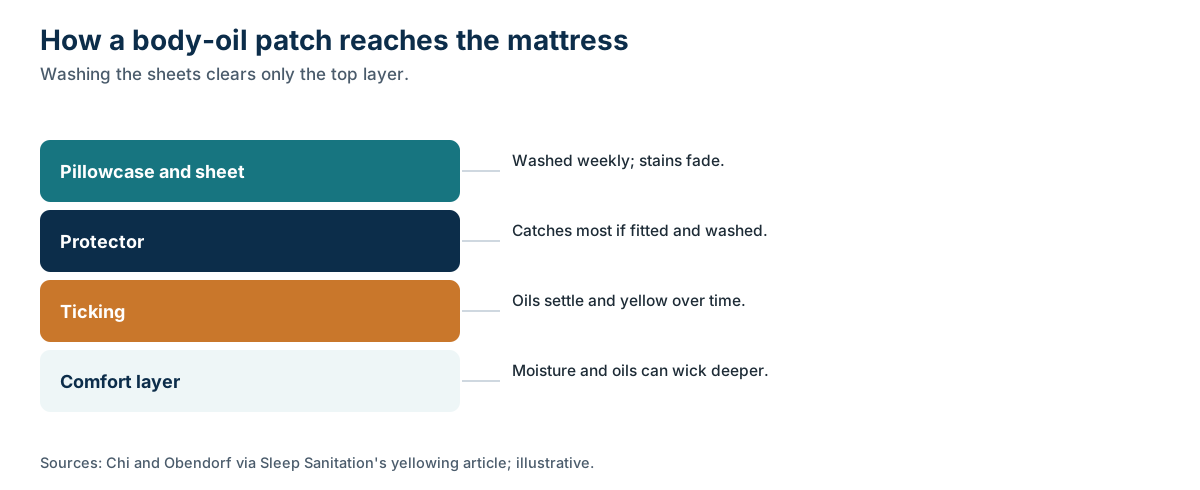
Because the same patch of mattress sits under the same person for thousands of nights. A sleeper's head, neck, shoulders and back rest in roughly the same spot, and each night a little sweat and skin oil passes through the sheet and protector into the cover. On its own, one night leaves almost nothing you can see. Over months and years, the oily part of that soil builds up and slowly changes color. If one sleeper transfers more than the other, their side gets there first.
Is it sweat or skin oil?
Both reach the mattress, but they behave differently. Sweat is mostly water with dissolved salts, and the water evaporates. Skin oil, called sebum, stays in the fabric, and oils change color as they age. That's why the darker area is often tan or yellow and sits where the head and upper body rest, even when the person sweats more in other places. The full explanation of how body oils oxidize in fabric is in sweat stains and yellowing.
Why would two people leave such different amounts?
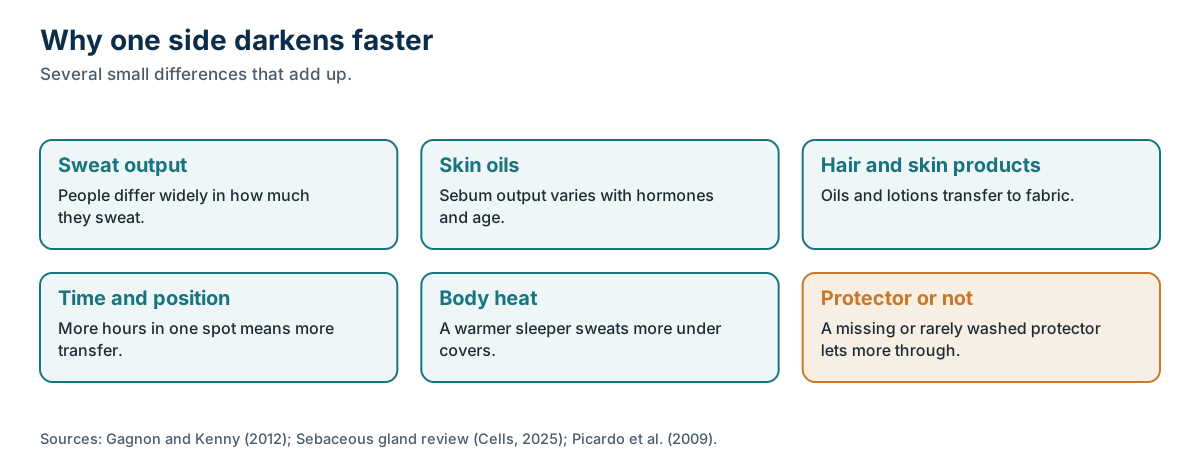
Bodies simply differ, and by a lot. A review of sweat physiology reports whole-body sweating rates ranging from about 0.2 to 3 liters per hour across a wide range of people, activities and conditions, and it stresses the large differences between individuals. Sleep is far at the low end of that range, but the person-to-person spread still applies.
Skin oil varies too. A 2025 review of the sebaceous gland explains that sebum output is mainly regulated by hormones, especially androgens, and that it's low in infancy, rises at puberty and decreases with age. So two adults of different ages or hormonal profiles can produce noticeably different amounts of oil.
It's tempting to assume one kind of sleeper always sweats more. The evidence is more interesting. In a 2012 lab study of men and women cycling at set rates of heat production, differences in sweating appeared only at the highest heat load, and they came from how much each sweat gland produced rather than how many glands were active. At lower loads the groups looked similar. In other words, individual differences matter more than labels, which is why we just call it your partner's side.
Does where and how you sleep matter?
Yes, in a few everyday ways:
- Hours in one position. More time in the same spot means more transfer into the same patch of fabric.
- Sleeping warm. Heavier blankets, a warmer room or a partner who runs hot all raise sweat output under the covers.
- Hair and skin products. Hair oils, conditioners left in, lotions and night creams are oil-based and transfer to pillowcases and sheets, then to the mattress. Our lotion, makeup and hair oil article covers how those stains behave.
- Pillow position. A pillow that ends short of the mattress edge leaves the hair and neck directly over the cover.
None of these are habits to feel bad about. They're just the reasons two halves of one bed can age differently.
Does a darker side mean the mattress is dirtier or unhealthy?
It means more body soil has collected there. It doesn't tell you much about allergens. An allergy practice parameter notes that new mattresses aren't usually contaminated by mites but can become a significant source of mite exposure in as few as 4 months, and that has nothing to do with color. A mattress can look clean and still hold allergen, or look stained and hold little. We found no research linking mattress discoloration itself to health effects. Think of the darker side as a hygiene and appearance signal, not a diagnosis.
Does washing the sheets more often fix it?
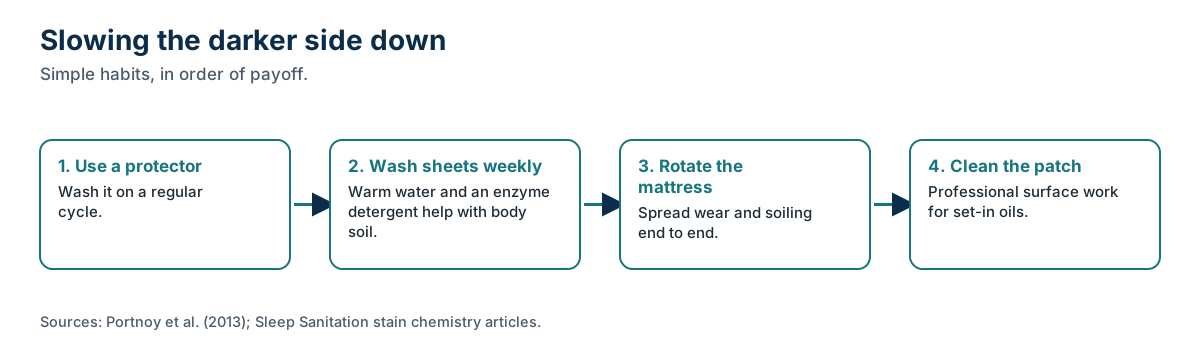
It helps the sheets and slows the mattress, but it can't reach what's already in the cover. Weekly washing of sheets and pillowcases is good general practice and is what allergy guidance recommends. Because body soil passes through the sheet over the course of each night, the mattress below still collects some of it between washes. An enzyme detergent can help with body soil on bedding; see which enzyme for which stain.
Does a protector stop it?
A fitted, washable protector catches much of the sweat and oil before it reaches the cover, which is why mattress industry care guidance recommends one. It needs washing on a regular cycle, because a protector loaded with oils passes more through over time. A protector put on a new mattress is the single most effective step. On a mattress that's already darkened, it slows further change.
Will rotating the mattress even it out?
Not from side to side. Mattress care guidance suggests rotating end to end, and flipping if the mattress is two-sided, unless the maker says otherwise. End-to-end rotation moves the head area to the foot. That spreads wear and puts a fresher area under the shoulders, but each sleeper usually keeps their side. Some couples swap sides for a while; it's a personal choice, not a rule.
Can the darker side be cleaned?
Partly, and sooner is better. Fresh body soil lifts much more readily than oils that have aged in the fabric for years. Old yellowing can resist cleaning and sometimes reappears as the fabric dries, a pattern our article on why stains come back after drying explains. Strong chemistry isn't the answer for a mattress; harsh alkaline or bleaching products can affect fabrics and foams, as pH and mattress materials describes. Professional surface work can often lighten a patch and refresh the cover, but we won't promise a mattress will look new.
Sleep Sanitation's view
This section is our view. A darker side is normal wear from a shared bed, and the fix is mostly habits: a washed protector, weekly sheets and rotating end to end. When the patch bothers you, our visits work on the surface where body soil collects, using dry vapor steam with little water, HEPA vacuuming and UV-C light, with a moisture check after service and the built-in bed mite sensor on our UV-C vacuum. See how to schedule, browse mattress stain chemistry, or call or text (402) 512-5658.
What we don't know
- How much sweat and skin oil a typical sleeper transfers into a mattress each night. We found no study measuring it through sheets and protectors.
- How quickly a protector loses effectiveness as it collects oils between washes.
- Whether swapping sides periodically meaningfully evens out discoloration. We found no study.
Changelog
- 7 October 2026: First published. Sources accessed on this date.
Sources
- Physiological Mechanisms Determining Eccrine Sweat Composition (Baker and Wolfe, 2020) · PubMed Central
- Sex Differences in Thermoeffector Responses During Exercise at Fixed Requirements for Heat Loss (Gagnon and Kenny, 2012) · PubMed
- The Sebaceous Gland: A Key Player in the Balance Between Homeostasis and Inflammatory Skin Diseases (Cells, 2025) · PubMed Central
- Sebaceous Gland Lipids (Picardo et al., 2009) · PubMed Central
- Environmental Assessment and Exposure Control of Dust Mites: A Practice Parameter (Portnoy et al., 2013) · PubMed Central
- Caring for a Mattress · Better Sleep Council (mattress industry consumer site)
Last reviewed October 7, 2026. Manufacturer specifications and care instructions change; check the current version for your exact model. This page is general information, not medical advice. How we source and check pages: editorial standards.