
Short answer
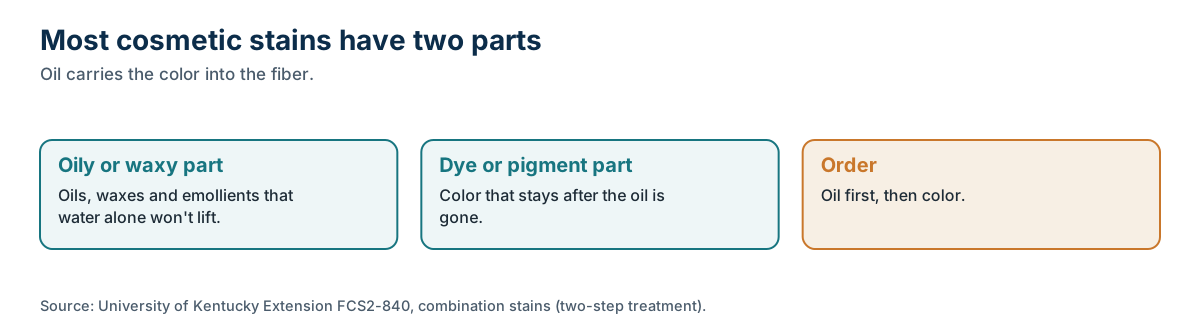
Because oils don't mix with water, and many cosmetics carry color as well. Extension guides class hand lotion, face cream and hair oil as oil-based stains, and lipstick and eye makeup as combination stains with an oily or waxy part and a dye part. Over time, oils wick into yarn and oxidize, which turns them yellow and harder to lift. The order that matters: deal with the oil first, then the color.
Key terms used on this page
- Oil-based stain:
- A stain from fats, oils or waxes, including hand lotion, face cream, hair oil and the greasy rings that body oils leave on collars. It needs detergent or a solvent rather than plain water.
- Combination stain:
- A stain with an oily or waxy part and a dye or pigment part, such as lipstick or eye makeup. The usual approach is two steps: the oily part first, then the color.
- Lipid autoxidation:
- The slow reaction of unsaturated fats and oils with oxygen in air. On fabric, Chi and Obendorf's review links it to the yellowing of aged oily soils.
- Lipase:
- An enzyme that cuts the ester bonds in fats and oils. In cleaners it targets body oils, lotions and greasy food soil.
- Spot test:
- Trying a cleaning agent on a hidden area first and checking for color change or damage before treating the stain. Georgia Extension tells readers to always pretest each cleaning agent this way.
Lotion, makeup and hair oil stain a mattress because oils don't mix with water, and many cosmetics carry color as well. Extension guides class hand lotion, face cream and hair oil as oil-based stains, and lipstick and eye makeup as combination stains with both an oily or waxy part and a dye part. Over time, oils wick deeper into yarn and oxidize, which turns them yellow and makes them harder to lift. So the oil comes first, and the color second.
General information about stain chemistry, not medical advice.
Which products are oil stains?
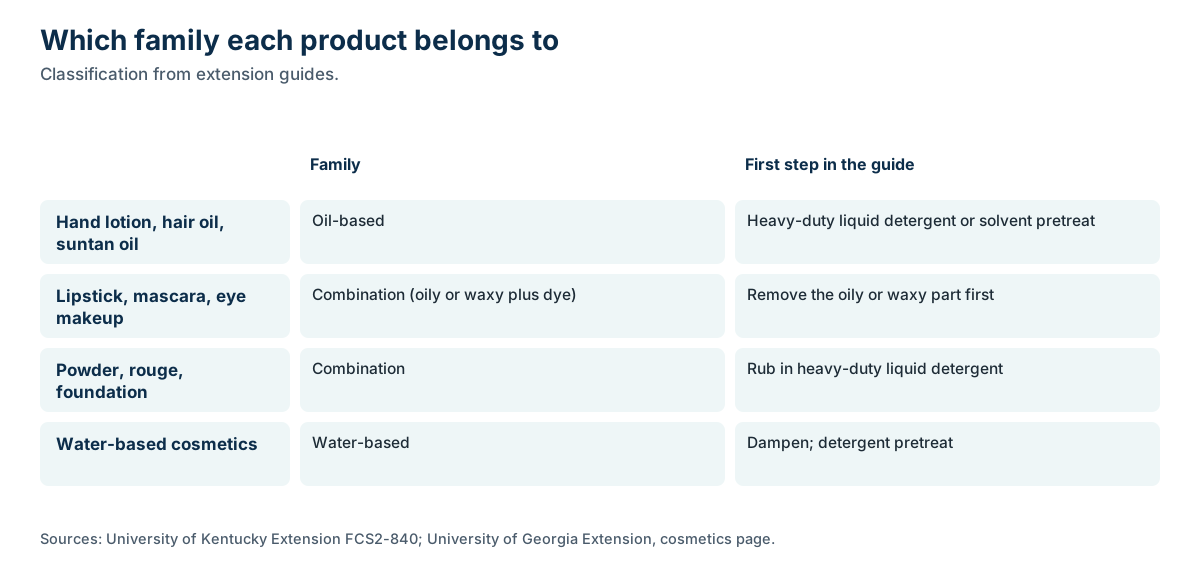
University of Kentucky Extension puts a list of everyday products in its oil-based family: face creams, hair oil, hand lotion, and suntan oil or lotion, alongside cooking fats and automotive oil. It also lists "Collar/cuff greasy rings," which is the same body-oil chemistry a pillow edge picks up. Kentucky's general approach for washable fabric is that "Oil stains can be removed by pretreatment with a heavy-duty liquid detergent, an aerosol petroleum-based solvent pretreatment spray, or a pump-type detergent-based pretreatment spray."
Iowa State's AnswerLine describes the same split: remove "the oily/waxy portion first by treating with a dry cleaning solvent or stain stick," then rub in liquid laundry detergent. Both guides were written for laundry, but the chemistry carries over to a mattress cover.
Hair oil and leave-in products tend to land where the head rests, which on a mattress means the top edge and the area under the pillow. That's also where skin oil collects, so by the time anyone notices a hair-oil mark, it's usually mixed with body oil, and the sweat and yellowing article applies as much as this one.
Why is makeup different?
Makeup usually brings color along with the oil. Kentucky's combination stain section explains that these stains "usually have an oily/waxy component and a dye or pigment component," and it prescribes a "Two-step treatment: Remove oily/waxy portion; then remove dye portion using bleach (as safe for fabric)." Eye makeup and lipstick fall in its first group, and face powder, rouge and foundation in its second.
Georgia Extension splits cosmetics another way, by base. For a water-based cosmetic it suggests dampening the stain and pretreating with detergent; for an oil-based cosmetic it starts with a commercial cleaner or waterless hand cleaner. Its lipstick steps are long and repetitive, ending with "Repeat if necessary," which says something about how stubborn pigment can be.
| Product | Family | First step in the guide | Source |
|---|---|---|---|
| Hand lotion, face cream | Oil-based | Detergent or solvent pretreatment | UKY |
| Hair oil | Oil-based | Detergent or solvent pretreatment | UKY |
| Lipstick, eye makeup | Combination | Oily or waxy part first, then dye | UKY |
| Foundation, powder, rouge | Combination | Rub in heavy-duty liquid detergent | UKY |
| Water-based cosmetics | Water-based | Dampen, then detergent | UGA |
Why does soap set some makeup stains?
K-State's red lipstick advice is blunt: "Never use soap based products as they set the stain." Its steps for washable fabric are to sponge with denatured alcohol, rub with liquid laundry detergent, and let the item air dry before washing. The guide doesn't explain the chemistry behind the soap warning, so we won't invent one. The practical point is that the obvious first move, a bar of soap, is the one this guide rules out for lipstick.
Alcohol has its own catch. Kentucky notes that "Alcohol fades some dyes so check for colorfastness," so a fix for the lipstick can become a pale spot on a printed ticking.
How does an oil stain age?
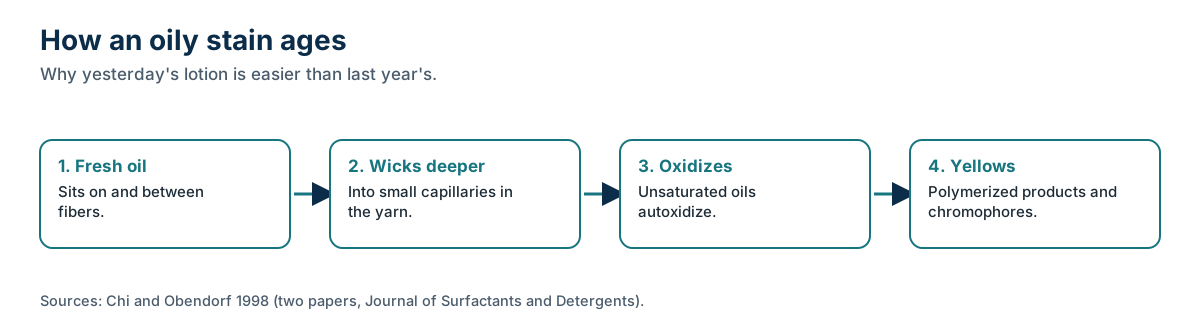
This is where time matters. Chi and Obendorf's literature review on oily soil found that "Difficulty of soil removal and discoloration of oily soiled fabrics were the main problems of aged oily soil." They attribute the aging effects to three things: "oxidation of unsaturated oils, wicking of oils into small capillaries within the yarn structure, and possible chemical linkages of aged oils with fibers."
A follow-up study by the same authors traced the color to oxidation products that absorb light, and found that a reducing bleach only hid the yellow for a while. The sweat and yellowing article walks through that study and what it means for body oil on a mattress.
Skin adds its own oils to every product. Picardo and colleagues describe sebum lipids that include squalene and wax esters, and Chi and Obendorf used squalene as their model oily soil. The sweat article covers body-oil yellowing in more detail.
Why do the guides split combination stains into two groups?
Because the oily part differs. Kentucky's guide puts waxy, solvent-soluble stains in Group A, which it handles first with dry-cleaning solvent and then heavy-duty liquid detergent: ball-point ink, candle wax, crayon, eye makeup (mascara, pencil, liner, shadow), lipstick, shoe polish and tar. Group B gets heavy-duty liquid detergent rubbed in without a solvent step: barbecue sauce, calamine lotion, cocoa, face makeup (powder, rouge, foundation), gravy and hair spray.
The second step is the same for both groups, and it's about color. Kentucky advises starting the dye step "with an all-fabric bleach because it is less damaging to colors and fabrics," moving to chlorine bleach only for tough dye stains on fabrics that are colorfast to it. On a mattress, chlorine is ruled out on wool and polyurethane foam, so the gentler step is usually the last one available. Georgia's suntan lotion steps show the same pattern: a detergent and vinegar soak, then an oxygen bleach soak. A mattress can't be soaked, which is one reason cosmetic stains on a bed often fade rather than vanish.
Where do enzymes fit?
Lipase is the enzyme aimed at fats. Niyonzima and Moree's review of detergent enzymes sums it up: "proteases acted as protein stain removals, amylases remove starch-based food stains whereas lipases remove fatty stains." Many laundry products combine all three. The enzyme article explains how each one works and why wool is the exception.
What about solvents on a mattress?
Here the guides stop short. The solvent advice in Georgia, Kentucky and Iowa State was written for clothing and upholstery fabric, not for foam layers below a ticking. Georgia's caution applies everywhere: "Always pretest each cleaning agent on an inconspicuous area first to determine colorfastness." Kentucky adds that solvents should be allowed to evaporate before anything else happens. We found no extension guidance on solvents and mattress foam, so we treat that as unknown and keep solvent use small and surface-level, if at all.
Sleep Sanitation's view
This section is our view. Oily and cosmetic stains tend to collect at the head of the bed, and older yellowing may not reverse at all; we don't promise removal. Organic methods are our default, and our Italian-made Vapor Clean machines let us control heat and moisture for each fabric. We make no disinfection claim; for what that word means, see the CDC's cleaning and sanitizing terms. This is our own reasoning, not a manufacturer exemption. Your care label and warranty terms govern, so check your warranty terms before you book. Our process page explains a visit, and the stain chemistry hub covers the other families.
What we don't know
- How common mattress-cover fabrics respond to the solvents named in laundry guides. We found no study.
- How quickly oils from lotions and hair products oxidize on a mattress compared with the fabrics in laboratory studies.
- Whether antioxidant finishes, which Chi and Obendorf tested on cotton, appear on any mattress ticking.
Changelog
- 5 October 2026: First published. Sources accessed on this date.
Sources
- Stain Removal for Washable Fabrics (FCS2-840) · University of Kentucky Cooperative Extension
- Stain Removal (accessed 2026-10-05) · K-State Research and Extension, Greenwood County
- Remove Stains From Cosmetics/Makeup/Sunscreen (accessed 2026-10-05) · University of Georgia Cooperative Extension, Textiles
- Remove Stains From Oil (accessed 2026-10-05) · University of Georgia Cooperative Extension, Textiles
- Holiday Stains (AnswerLine, 13 Dec 2022) · Iowa State University Extension and Outreach
- Aging of oily soils on textile materials: a literature review (Chi and Obendorf, J Surfactants Deterg, 1998) · Journal of Surfactants and Detergents (DOI)
- Preventing discoloration of squalene-soiled cotton fabrics with antioxidants (Chi and Obendorf, J Surfactants Deterg, 1998) · Journal of Surfactants and Detergents (DOI)
- Sebaceous gland lipids (Picardo et al., Dermato-Endocrinology, 2009) · PubMed Central
- Concomitant production of detergent compatible enzymes by Bacillus flexus XJU-1 (Niyonzima and More, Braz J Microbiol, 2014) · PubMed Central
- Cleaning and disinfecting your school (definitions) · CDC
Last reviewed October 5, 2026. Manufacturer specifications and care instructions change; check the current version for your exact model. This page is general information, not medical advice. How we source and check pages: editorial standards.