
Short answer
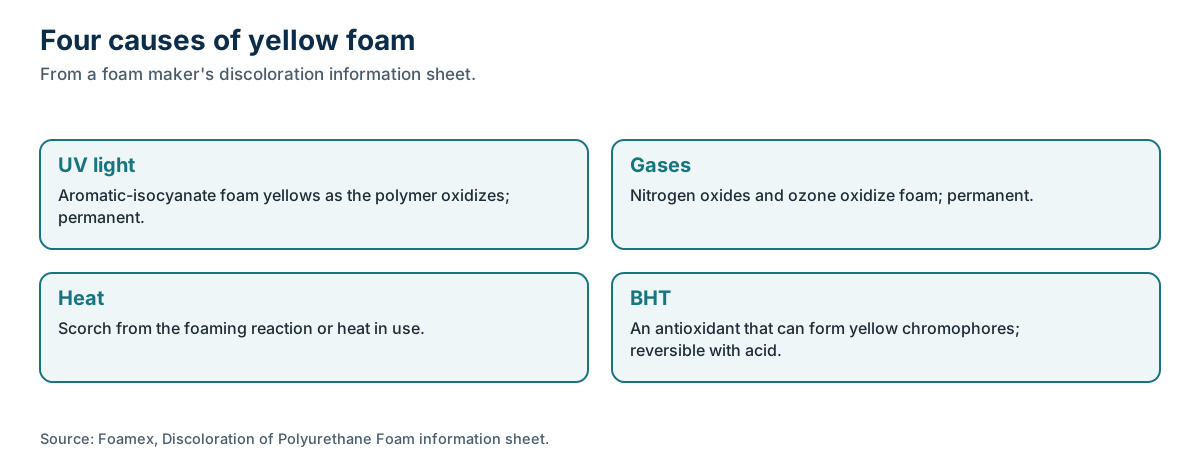
Mattress foam turns yellow mainly because the polymer itself oxidizes. A foam maker's information sheet explains that foam made with an aromatic isocyanate forms yellow quinones under UV light, and that nitrogen oxides, ozone and heat can also yellow it. Because the color is part of the polymer, it can't be extracted, and it appears before the foam loses strength.
Key terms used on this page
- Aromatic isocyanate:
- An isocyanate such as TDI or MDI. A foam maker's information sheet says foam made with an aromatic isocyanate yellows under UV light, and that quinones form only from aromatic isocyanates.
- Foam yellowing:
- Discoloration of polyurethane foam from UV light, nitrogen oxides, ozone or heat. The Foamex sheet says UV and gas yellowing is permanent and that foams discolor before they lose physical properties.
- BHT yellowing:
- Yellowing caused by the antioxidant butylated hydroxytoluene reacting with nitrogen oxides. The Foamex sheet says it is promoted by alkaline conditions and can be reversed with a dilute acid.
- Isocyanate:
- The second main ingredient of polyurethane, carrying reactive NCO groups that link with a polyol. Gama and colleagues' review names MDI and TDI as the most commonly used isocyanates.
- Polyfoam (polyurethane foam):
- Conventional polyurethane foam, used for comfort, transition and base layers. Like memory foam it has cells that liquid can enter; Casper warns that 'the foam in the mattress core will soak up water and detergent.'
Mattress foam turns yellow mostly because the foam's own polymer oxidizes over time. A foam manufacturer's information sheet explains that polyurethane foam made with an aromatic isocyanate forms yellow quinones when exposed to UV light. Nitrogen oxides, ozone and heat can yellow it too. Because the color sits in the polymer backbone, it can't be washed out, and it shows up before the foam loses strength.
General information about mattress materials, not medical advice.
Why does foam chemistry matter for color?
Because the color comes from the foam, not from something on it. The Foamex information sheet on foam discoloration opens with the basic rule: "The color stability of polyurethane foams is affected by UV light, oxidation and temperature." It then sets out several separate ways foam turns yellow, each with a different cause and a different outcome.
Most of them trace back to the isocyanate. Gama and colleagues' review says "The most commonly used isocyanates are methylene diphenyl diisocyanate (MDI) and toluene diisocyanate (TDI)." Both are aromatic isocyanates. A 2024 polyurethane study by Li and colleagues says "Common aromatic diisocyanates include TDI and MDI, which tend to yield quinoid structures upon UV exposure and thus cause yellowing." The how foam is made article explains where the isocyanate fits in the recipe.
How does UV light yellow foam?
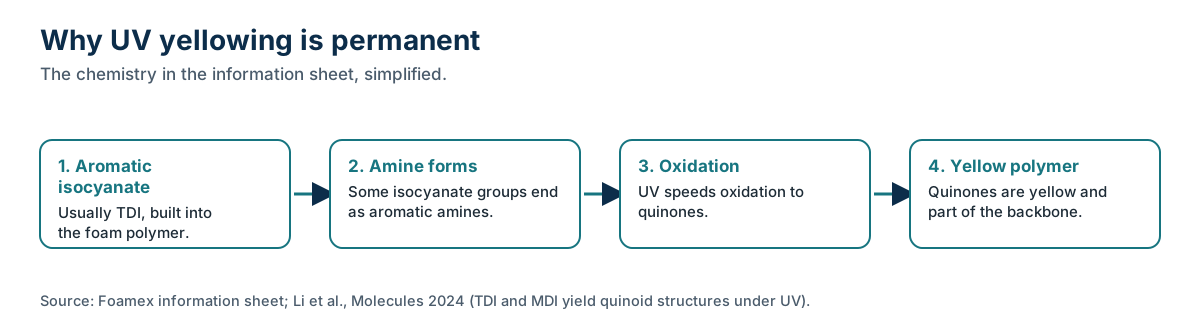
Through a short chain of reactions. The Foamex sheet explains that the isocyanate, "typically toluene diisocyanate, reacts with the polyol to form the urethane polymer." Sometimes an amine forms instead of a urethane link, and "this resulting aromatic amine is capable of being oxidized to a quinone. Quinones are yellow and their formation will make the foam appear more and more yellow as the oxidation proceeds over time."
UV light speeds that process up, per the sheet. A 2023 laboratory study by Liszkowska and colleagues, using rigid polyurethane foams rather than mattress foam, aged samples in a chamber with heat, humidity and UV radiation and found that "The content of yellow color (b) of degraded foams... significantly increases" compared with fresh samples. We note the difference in foam type, but the direction matches the foam maker's account.
Can gases in the air yellow foam?
Yes, according to the Foamex sheet. "Oxides of nitrogen from tow motor emissions, gas fired furnaces or pollution can cause a foam to oxidize and become yellow." It adds that this "may be more observable in the winter when warehouses are closed up and gas furnaces are in operation," and that "Ozone exposure can also oxidize foam and cause discoloration."
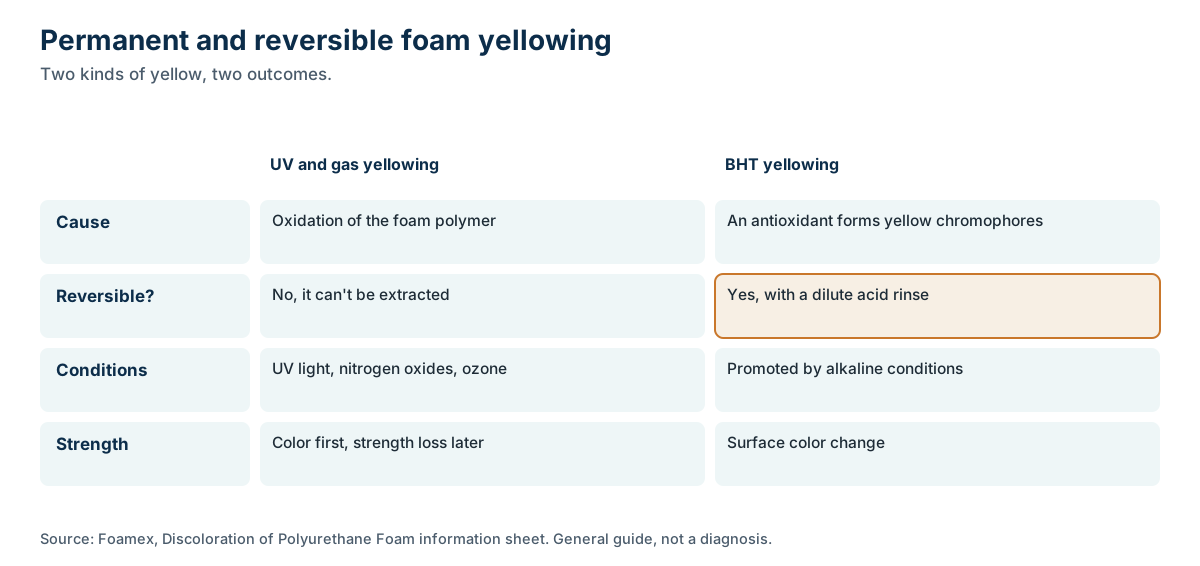
So foam can yellow in storage, in a warehouse or inside a mattress, without light reaching it. The sheet lists gas fading as a separate category from UV yellowing, though both are oxidation and both are permanent.
What about heat?
Heat can yellow foam in two places, the sheet says: "during the foaming process or if the foam is exposed to heat in end use." The factory case comes from the reaction itself. "The foam making process is exothermic, that is, the reaction produces heat. If an elevated temperature is reached and sustained, the foam can scorch in the center." As the block cools, it "draws oxygen rich air inside and the foam oxidizes." The sheet notes scorch is more common in summer. Additives play a role too: "Fire retardants can increase the risk of discoloration."
On the end-use side, Hub 5's article on what temperature mattress foam can tolerate covers the published evidence on heat and foam aging.
What is BHT yellowing, and why is it different?
It's the one kind that can go away. BHT, butylated hydroxytoluene, is an antioxidant, and the Foamex sheet says "BHT is volatile. It can deposit on the materials, whether or not direct contact exists." Nitrogen oxides from pollution or furnaces "will convert BHT to the colored form," and the reaction "is promoted by alkaline conditions and retarded by acidic environments."
The sheet says this form "is reversible" and that BHT "can revert to a colorless form if treated with an acidic rinse such as dilute acetic or citric acid." It also says BHT's use in making polyols "is being phased out." We mention the acid detail for understanding only. Mattress foam sits inside a cover, and we don't advise opening one or wetting foam to test it.
Does yellow foam mean the foam is failing?
Not at first. The Foamex sheet is clear that "Foams discolor before they exhibit physical property loss." Since the quinone is part of the polymer backbone, "the foam will appear discolored before there is any degradation of the foam. Once the oxidation starts breaking chemical bonds, the foam will lose strength." It also says "Continued exposure to UV & certain gases will ultimately degrade the foam."
Some foams yellow faster than others, according to the sheet: "Ethers discolor faster than esters," and "The higher the density, the faster the UV discoloration occurs." That second point surprises people who equate density with quality. The density and firmness article explains what density does measure.
Is there foam that won't yellow this way?
In principle. "Quinones are only formed from aromatic isocyanates," the Foamex sheet says. "If an aliphatic isocyanate is used, quinones can not form and the foam will not discolor." The catch, per the same sheet: "Aliphatic isocyanates are difficult to process and expensive. They are rarely used to make flexible polyurethane foam." Gama's review similarly notes aliphatic isocyanates are mainly used in other applications, such as coatings.
Makers can also slow yellowing. The sheet says color stability "can be improved by using pigments or dyes to mask any discoloration or by using UV absorbers or antioxidants to retard discoloration." Li's 2024 study tested a UV absorber in a waterborne polyurethane for the same purpose.
Why you shouldn't unzip a cover to look
Seeing foam is usually a sign something's open that shouldn't be. CertiPUR-US's FAQ says a mattress zipper "is usually there for easy assembly at the factory and not for the customer to use," and advises never removing the cover "unless the mattress cover is specifically intended to be removed for laundering." The fire barrier article explains one reason why.
Sleep Sanitation's view
This section is our view. Yellowed foam is a change in the material itself, and no cleaning reverses it. What a visit can address is soil and odor at the surface. Our approach to that is our own reasoning and not a manufacturer exemption, which is why your care label and warranty terms govern and why you should check your warranty terms before you book. We mean "sanitize" in the CDC's sense and make no disinfection claim. Weighing a visit for an older bed with discolored foam? Hub 6 lists problems professional cleaning can't fix, and how we're different sets out what a cleaning does and doesn't change. The mattress materials hub covers the other layers.
What we don't know
- Which isocyanate a given mattress foam was made with. Makers rarely say, and the cause of yellowing can't be read by eye.
- How fast foam inside an intact cover yellows in a typical bedroom. The Foamex sheet describes causes, not rates.
- Whether yellowing in mattress foam tracks with comfort changes before the strength loss the sheet describes.
Changelog
- 5 October 2026: First published. Sources accessed on this date.
Sources
- Discoloration of Polyurethane Foam (information sheet) · Foamex (foam manufacturer)
- Preparation of Yellowing-Resistant Waterborne Polyurethane Modified with Disulfide Bonds (Li et al., Molecules, 2024) · PubMed Central
- Polyurethane Foams: Past, Present, and Future (Gama, Ferreira and Barros-Timmons, Materials, 2018) · PubMed Central
- Methods to Increase or Decrease Resistance to Photodegradation and Biodegradation of Polyurethane (Liszkowska et al., Materials, 2023) · PubMed Central
- Frequently Asked Questions (accessed 2026-10-05) · CertiPUR-US
- Cleaning and disinfecting your school (definitions) · CDC
Last reviewed October 5, 2026. Manufacturer specifications and care instructions change; check the current version for your exact model. This page is general information, not medical advice. How we source and check pages: editorial standards.