
Short answer
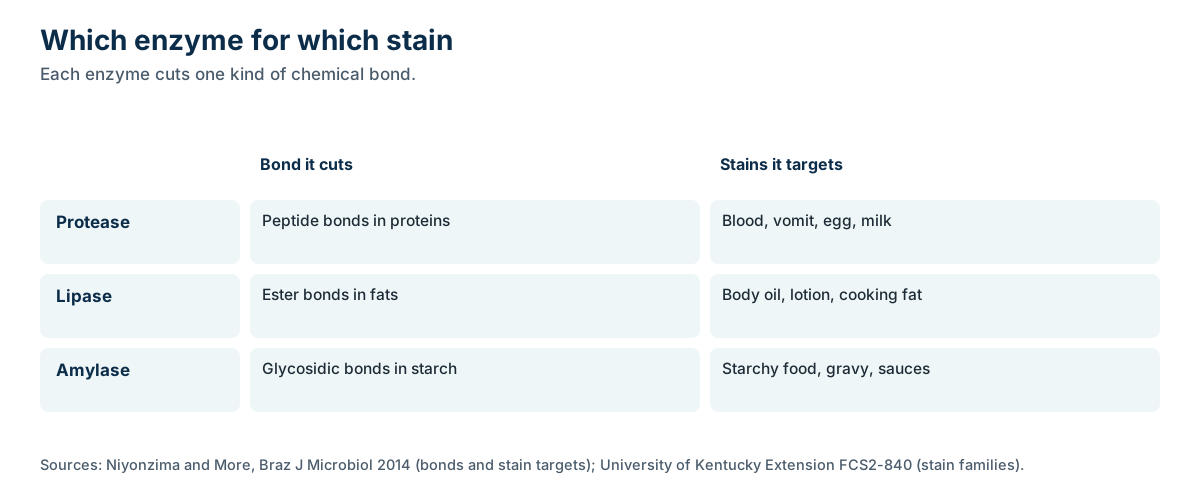
Each enzyme matches one stain family. Protease breaks down protein stains such as blood, vomit and mucus. Lipase targets fats and body oils, and amylase targets starch from food. Each one cuts a specific chemical bond using water. They need contact time and the right temperature and pH, and because proteases digest protein, Kentucky Extension warns against enzyme presoaks on wool and silk.
Key terms used on this page
- Detergent enzymes:
- Enzymes added to cleaners to break specific bonds in soil: proteases for protein, lipases for fats and oils, amylases for starch. Each targets its own kind of soil.
- Protease:
- An enzyme that cuts proteins at their peptide bonds. In cleaners it targets blood, vomit and other protein soil, and because wool is protein, Kentucky Extension warns against enzyme presoaks on wool and silk.
- Lipase:
- An enzyme that cuts the ester bonds in fats and oils. In cleaners it targets body oils, lotions and greasy food soil.
- Amylase:
- An enzyme that breaks down starch. In cleaners it targets starchy food soil; it does little for blood or body oil on its own.
- Enzyme cleaner:
- A cleaning product that uses enzymes to break down organic soils such as urine, sweat, vomit or blood. Several mattress makers mention them for urine stains, including Purple and Avocado. They are liquids, so how much is applied matters as much as what is applied. Sleep Sanitation uses enzyme treatment on urine and organic odor, sparingly.
Each enzyme matches one stain family. Protease breaks down protein stains such as blood, vomit and mucus. Lipase targets fats and body oils, and amylase targets starch from food. Each one cuts a specific kind of chemical bond, using water to do it. Enzymes need contact time and suitable temperature and pH, and because proteases digest protein, Kentucky Extension warns against enzyme presoaks on wool and silk.
General information about stain chemistry, not medical advice.
What do enzymes actually do to a stain?
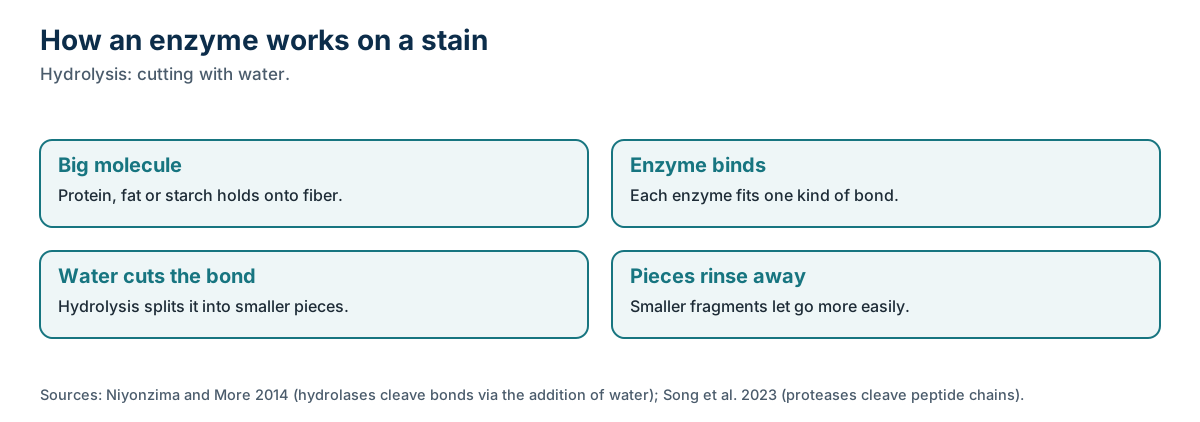
They cut big molecules into smaller ones. Niyonzima and More explain that amylase, lipase and protease "are hydrolase enzymes that cleave the glycosidic, ester, and peptide bonds, respectively via the addition of water." Hydrolysis means splitting a bond with water. A large protein or fat molecule clings to fiber; smaller fragments let go and rinse away more easily.
Their review sums up the division of labor: "the proteases acted as protein stain removals, amylases remove starch-based food stains whereas lipases remove fatty stains." Inan Bektas and colleagues add cellulase to the list, noting that "Cellulases, lipases, proteases, and amylases are among the enzymes frequently used in detergents."
Which enzyme goes with which stain?
Start with the stain family from the hub's table, then match the enzyme.
| Stain | Family | Enzyme that targets it | Source |
|---|---|---|---|
| Blood, vomit, mucus | Protein | Protease | UKY; Niyonzima 2014 |
| Body oil, lotion, hair oil | Oil-based | Lipase | Niyonzima 2014 |
| Gravy, sauces, starchy food | Starch, often combination | Amylase | Niyonzima 2014 |
| Coffee, tea, wine | Tannin | None directly; detergent and, if safe, an oxidizer | UKY |
| Lipstick, makeup | Combination | Oil first; then dye | UKY |
That fourth row matters. Enzymes don't target plant pigments, so an enzyme cleaner alone isn't the tool for a wine stain; the coffee, wine and tea article explains why. Most real stains are mixed, which is why many detergents combine enzymes. Kentucky's guide lists enzyme presoak products as containing "amylase, protease, lipase." Food spills show why: Kentucky lists gravy among its combination stains and baby food, cheese sauce and pudding among its protein stains, so a single dinner spill can call for more than one enzyme.
What does a protease need to work?
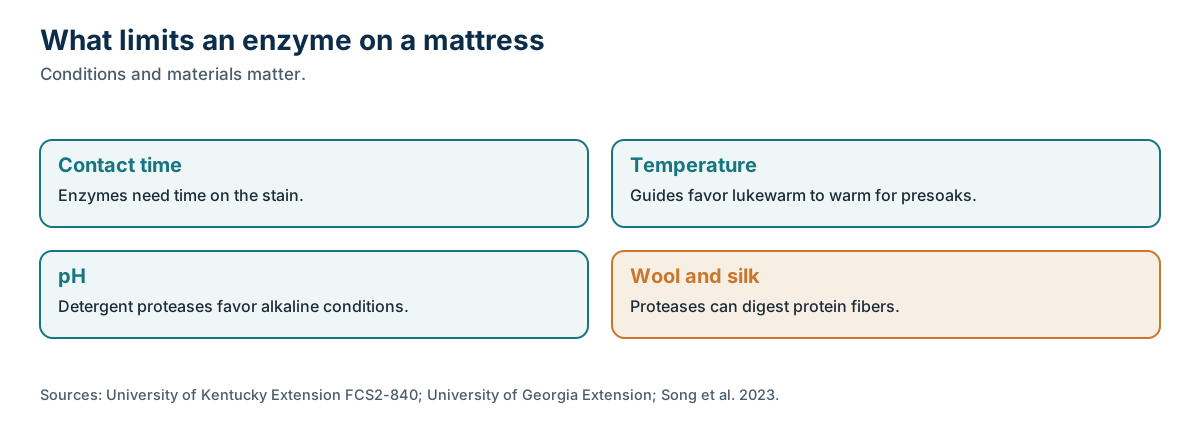
Time, temperature and pH. Song and colleagues describe alkaline proteases as the workhorses of the detergent industry and note that "alkaline proteases exhibit the highest activity in the pH range of 8 to 13." They also note that with proteases, "shorter periods of agitation and lower wash temperatures can be used." That's laundry, where fabric sits in solution. On a mattress, contact time is the hard part, because you can't soak a mattress the way you can soak a shirt.
Temperature cuts both ways with blood and body fluids. Kentucky says enzyme presoaks "are most effective in warm to hot water," but the protein rule says cool water first, because heat can set the stain before the enzyme gets to it. Georgia Extension's blood advice splits the difference: soak in cool water first, then use "lukewarm water with enzyme pre-soak." The heat and blood article explains the order.
How should an enzyme product be handled?
Kentucky's notes on enzyme presoaks read like a short user manual. Soak time matters: "Clothes should be allowed to soak 15 to 30 minutes." Storage matters: "To preserve the strength of the presoaks, do not mix them with water until you are ready to use, and do not combine them with chlorine bleaches." The same guide notes that some pretreatment products also contain "enzymes that break down protein stains, such as blood."
Detergent makers face the same constraints at a larger scale. Inan Bektas and colleagues describe "detergent-compatible enzymes" as "the new trend followed by most in the detergent industry," because an enzyme is only useful if it survives the other ingredients in the bottle. Niyonzima and More cite work in which a mixture of lipase and protease "was also able to remove the blood and grease stains when added to the detergent," which is the point of combining them: real stains are mixed.
On a mattress, those notes translate into three habits. Mix or open the product only when you're ready to use it. Give it contact time on the spot instead of scrubbing. And never pair it with chlorine bleach, which Kentucky rules out on wool and polyurethane foam anyway.
Why is wool the exception?
Because wool is made of protein. Kentucky's note on enzyme presoaks is direct: "Do not use on silk or wool since enzymes digest protein." A protease can't tell a blood protein from a wool fiber, so on a wool-topped mattress, an enzyme product meant for protein stains is a risk to the fiber itself. Alkaline conditions add a second risk, because the Woolwise scouring notes warn that "too much alkali can damage wool," and detergent proteases favor alkaline conditions. The pH article covers that in detail, and the compatibility guide has the per-material answer for wool.
What can't an enzyme do?
An enzyme doesn't bleach color. After a protease removes the protein from a blood stain, any color left from oxidized hemoglobin may need a different approach, and any pigment from a drink or cosmetic isn't touched at all. It also doesn't stop a stain from wicking back up, which the article on stains that come back explains.
An enzyme also isn't a disinfectant. It breaks down organic material; it makes no claim about germs. The difference between cleaning, sanitizing and disinfecting has its own rules, covered in the CDC's cleaning and sanitizing terms. And Texas A&M AgriLife reminds that some common products set stains rather than lift them: alcohol sets blood and vomit, and alkalies such as ammonia set coffee and tea.
An enzyme also can't reach what it can't touch. It works where the solution meets the stain, so residue that has wicked into foam below the ticking is out of reach of a surface application. And it can't undo every kind of damage. If heat has already set a protein stain, Kentucky's general warning still applies: "Some stains are difficult to remove, and some are impossible to remove. Be prepared to accept some failures."
What about urine and memory foam?
Urine has its own chemistry and its own enzyme questions. Hub 3 covers whether enzyme cleaners are safe on memory foam and the accidents hub explains urine in full, so this article doesn't repeat it. For blood specifically, K-State suggests cold water for fresh stains and, for dried ones, a product containing enzymes, the same protein logic in a different source.
Sleep Sanitation's view
This section is our view. Enzyme treatment for urine and organic odor is part of our default approach, alongside organic methods and our Italian-made Vapor Clean machines. We choose products by material, which means extra caution on wool. We can't promise any stain will lift, we make no disinfection claim, and severe or biohazard jobs are quoted before we start. That's our own reasoning, not a manufacturer exemption. Your care label and warranty terms govern, so check your warranty terms before you book. See our process page or schedule a visit.
What we don't know
- How much contact time an enzyme product needs on a mattress, where it can't soak the way laundry does. We found no study on mattresses.
- How mild an enzyme product has to be before it's safe on wool. Kentucky's warning is general, and product labels vary.
- Whether residual enzyme left in a mattress affects later cleaning. We found no data.
Changelog
- 5 October 2026: First published. Sources accessed on this date.
Sources
- Concomitant production of detergent compatible enzymes by Bacillus flexus XJU-1 (Niyonzima and More, Braz J Microbiol, 2014) · PubMed Central
- Microbial proteases and their applications (Song et al., Frontiers in Microbiology, 2023) · PubMed Central
- Isolation and characterization of detergent-compatible amylase-, protease-, lipase-, and cellulase-producing bacteria (Inan Bektas et al., Braz J Microbiol, 2023) · PubMed Central
- Stain Removal for Washable Fabrics (FCS2-840) · University of Kentucky Cooperative Extension
- Remove Stains from Blood (accessed 2026-10-05) · University of Georgia Extension, Textiles
- Stain Removal (accessed 2026-10-05) · K-State Research and Extension, Greenwood County
- Removing Stains From Washable Fabric (2025) · Texas A&M AgriLife Extension
- Aqueous Scouring and Detergents (Wool 482/582 lecture notes) · Australian Wool Education Trust / University of New England (Woolwise)
- Cleaning and disinfecting your school (definitions) · CDC
Last reviewed October 5, 2026. Manufacturer specifications and care instructions change; check the current version for your exact model. This page is general information, not medical advice. How we source and check pages: editorial standards.