
Short answer
It's a rule of thumb, not a measured lifespan. A mattress-industry consumer council says a seven-year-old set has reached the end of the line, while also telling people to listen to their bodies. A 2022 recycling study found discarded mattresses and foundations averaged 13.9 years, though it says that isn't a measure of durability. Support, damage and comfort decide replacement better than age.
Key terms used on this page
- Replacement rule of thumb:
- A round number for when to replace a mattress, such as seven years. The best-known version comes from mattress-industry consumer education, not from wear testing.
- Discard age:
- How old a mattress is when it's thrown out. A 2022 California study found a mean of 13.9 years and cautioned that it doesn't represent durability or useful life.
- Mattress age guideline:
- A publisher's rule of thumb for when to think about replacing a bed. The Better Sleep Council, sponsored by the mattress industry's trade association, says about seven years; Sleep Foundation says 6 to 8 years; Saatva's blog says over 10. None is an expiry date.
- Body impression:
- A shallow, lasting dip where someone sleeps. It's a change in shape, not in soil, so a cleaning visit doesn't remove it. Whether an impression counts as a defect is set by each maker's own warranty terms.
- Sagging:
- A mattress surface that has dipped and no longer springs back. Sleep Foundation lists a bed that is noticeably saggy or damaged in certain areas as a reason to replace it. Cleaning removes soil; it can't restore support.
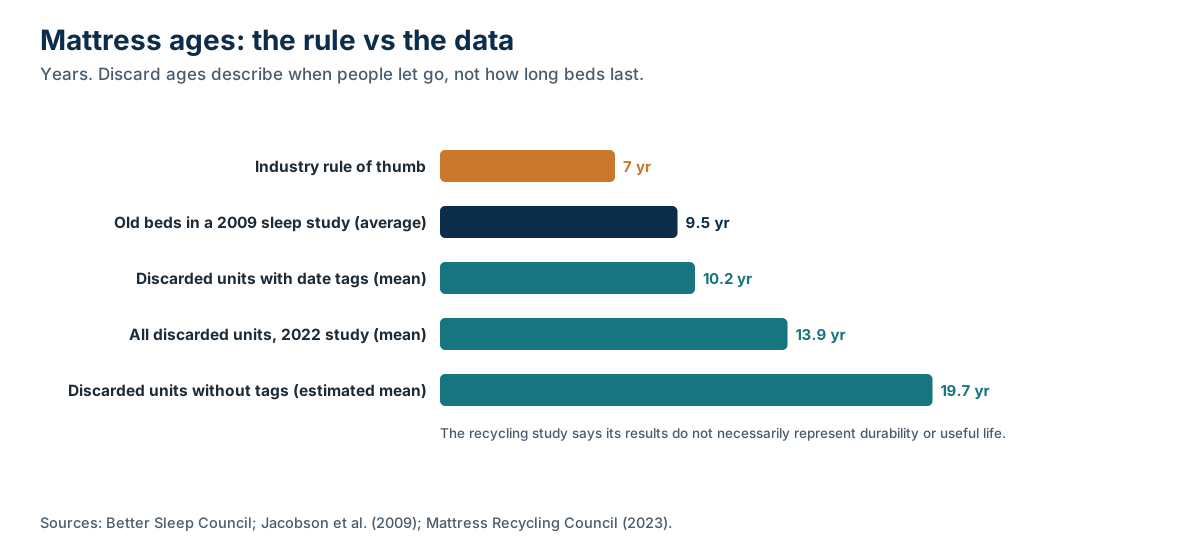
The 7-year rule is a rule of thumb from mattress-industry consumer education, not a lifespan measured by testing or sleep research. The same source that gives it also tells you to listen to your body and check your bed twice a year. The best real-world data we found, a 2022 study of discarded mattresses, put the average age at disposal at 13.9 years, with the authors warning that this isn't a measure of durability either. Neither number tells you when your mattress is done. Condition does.
General information about mattress care, not medical advice.
Where the number comes from
The clearest statement of the rule is on a mattress-industry consumer council's replacement page, under the heading "The seven-year itch." It says how long a mattress lasts depends on how often it's used and its quality, "but in general a mattress set that is seven years old has reached the end of the line and needs to be replaced." It then softens that straight away: "While this is a good rule of thumb, everyone's body changes over time," and your body "may be ready for a new mattress before the seven-year mark."
That's an honest framing, as far as it goes. It calls the number a rule of thumb, not a finding, and pairs it with self-checks. But the number on its own is what spread. When people repeat the seven-year figure on its own, they've usually dropped the caveats.
We looked for the research behind seven. We didn't find a wear test, durability standard or sleep study that produced it. That doesn't make it wrong for every bed. It means the number is a judgment, and it comes from an industry that sells mattresses. We'd treat it as a reminder to check, not a deadline.
What discard data show
A recycling program's 2023 age study gives the most concrete numbers we found. Researchers examined 1,793 discarded mattresses and foundations at California recycling facilities in 2022, using the date on the law tag where there was one and estimating age where it was missing.
- All units combined: mean age 13.9 years.
- Units with a date tag: 10.2 years.
- Units without a date tag: 19.7 years (estimated).
- Mattresses alone: 13.2 years. Foundations: 15.1 years.
An earlier 2019 study by the same program, using tagged units only, found 11.2 years. Older, untagged units pull the average up.
The authors are careful about what this means. Their results "do not necessarily represent the durability or useful life of mattresses and foundations," because many things besides wear influence when someone throws a mattress out: moving, a new partner, a change in taste, a bed moved to a guest room before disposal. Discard age tells you when people let go, not when beds stop working.
What one sleep study found
A 2009 study in the Journal of Chiropractic Medicine is often cited in replacement discussions. Researchers recruited 59 healthy adults with minor sleep-related pain and compromised sleep whose own beds averaged 9.5 years old. Participants recorded sleep quality and back discomfort for 28 days on their own beds, then for 28 days on new, medium-firm beds. Sleep quality and back discomfort improved significantly on the new beds.
It's a real result, but a limited one. There was no control group, the participants knew they were on new beds, and novelty itself can change how people rate sleep. It shows that people with older beds and some discomfort felt better on new ones. It doesn't establish an age at which a mattress should go.
What the rule is, and isn't
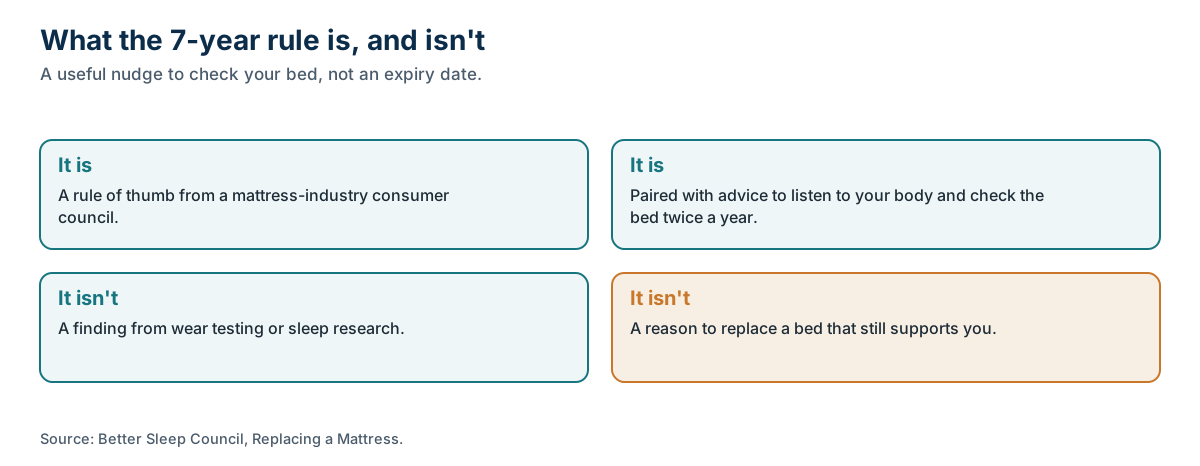
The 7-year rule is a useful nudge if you've had the same bed since before your children were born and never thought about it. It's a poor reason to throw out a bed that still supports you, and it can make people keep a failed bed because it's only five years old.
What actually decides when to replace
Wear in a mattress is mostly about support. In foam, firmness and height fall as the material is flexed night after night; the Polyurethane Foam Association describes flex fatigue tests that measure "the percentage of IFD loss," a standard firmness measure, after thousands of compressions. Denser foams generally hold up better. In innersprings, coils can fatigue, break or rust. You feel those changes as dips, lumps and soreness long before you see them.
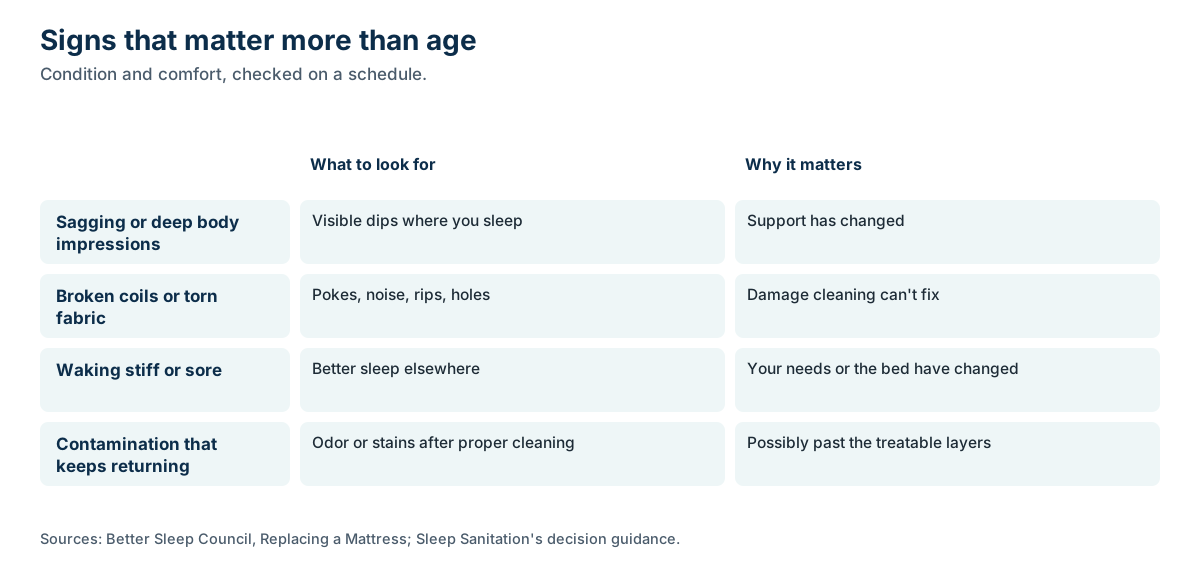
The same consumer council's list of reasons to replace is more useful than its number: waking stiff or sore, sleeping better somewhere else, and visible signs of overuse such as sagging, tearing, ripping, holes, staining or damage. Its own tip is to evaluate your mattress for comfort and support twice a year when the clocks change. That's a schedule we can support, because it's about checking, not discarding.
Where cleaning fits
Cleaning doesn't restore support, and we won't pretend otherwise. If the bed sags or has broken coils, replace it. But many older mattresses are replaced for reasons that are really about the surface: a yellowed patch, an odor in the cover, a stain from an accident years ago, or a worry about what's accumulated. Those are often fixable. Our decision guide and is a 10-year-old mattress worth cleaning? walk through that choice, and problems cleaning can't fix is honest about the limits.
Other replacement numbers you'll see
You'll also see two-year, eight-year and seven-to-ten-year rules, plus fixed schedules for pillows. We checked those in mattress and pillow replacement myths. And if you're deciding on a cleaning rhythm instead, see how often to clean a mattress or browse the hub.
Sleep Sanitation's view
This section is our view. We'd rather you replace a mattress because it stopped supporting you than because it hit a birthday. If it still supports you and the problem is surface soiling or odor in the cover, a cleaning may be the better spend; if it doesn't, we'll tell you so. Our visits use dry vapor steam with little water, HEPA vacuuming and UV-C light, with a moisture check after service and the built-in bed mite sensor on our UV-C vacuum. See our process or call or text (402) 512-5658.
What we don't know
- What, if any, evidence the original 7-year figure was based on. The consumer page doesn't cite a source.
- How long mattresses of different constructions keep their support in real homes. Industry durability tests are lab compressions, not years of nightly use.
- How the California discard data compare with Nebraska. We found no regional study.
Changelog
- 7 October 2026: First published. Sources accessed on this date.
Sources
- Replacing a Mattress · Better Sleep Council (mattress industry consumer site)
- Caring for a Mattress · Better Sleep Council (mattress industry consumer site)
- Mattress and Foundation Age Analysis (July 2023) · Mattress Recycling Council
- Changes in Back Pain, Sleep Quality, and Perceived Stress After Introduction of New Bedding Systems (Jacobson et al., 2009) · PubMed Central
- Foam Performance · Polyurethane Foam Association
- IN-TOUCH Vol. 1 No. 2: Foam density · Polyurethane Foam Association
- Environmental Assessment and Exposure Control of Dust Mites: A Practice Parameter (Portnoy et al., 2013) · PubMed Central
Last reviewed October 7, 2026. Manufacturer specifications and care instructions change; check the current version for your exact model. This page is general information, not medical advice. How we source and check pages: editorial standards.