
Short answer
Most fixed replacement rules don't hold up. We found no source for replacing a mattress every two years, and the better-known 7-year figure is itself an industry rule of thumb. Pillow schedules mostly come from brand surveys. A new mattress can pick up mites within months, so age isn't a proxy for cleanliness. Replace on condition: support, damage, comfort and contamination you can't clean.
Key terms used on this page
- Replacement rule of thumb:
- A round number for when to replace a mattress, such as seven years. The best-known version comes from mattress-industry consumer education, not from wear testing.
- Pillow condition check:
- Judging a pillow by lumps, loss of spring and odor rather than age. One study of pillows used 1.5 to more than 20 years found 4 to 16 fungal species per pillow.
- Flex fatigue:
- Loss of firmness and height in foam after repeated compression. Foam industry tests compress samples thousands of times and measure the percentage of firmness lost.
- Discard age:
- How old a mattress is when it's thrown out. A 2022 California study found a mean of 13.9 years and cautioned that it doesn't represent durability or useful life.
- Clean-or-replace decision:
- Our four-test framework for a problem mattress: whether the bed is structurally sound, how deep the problem goes, what the care label and warranty allow, and whether the cause is really a pest or health issue. It's our decision guidance, not a published standard.
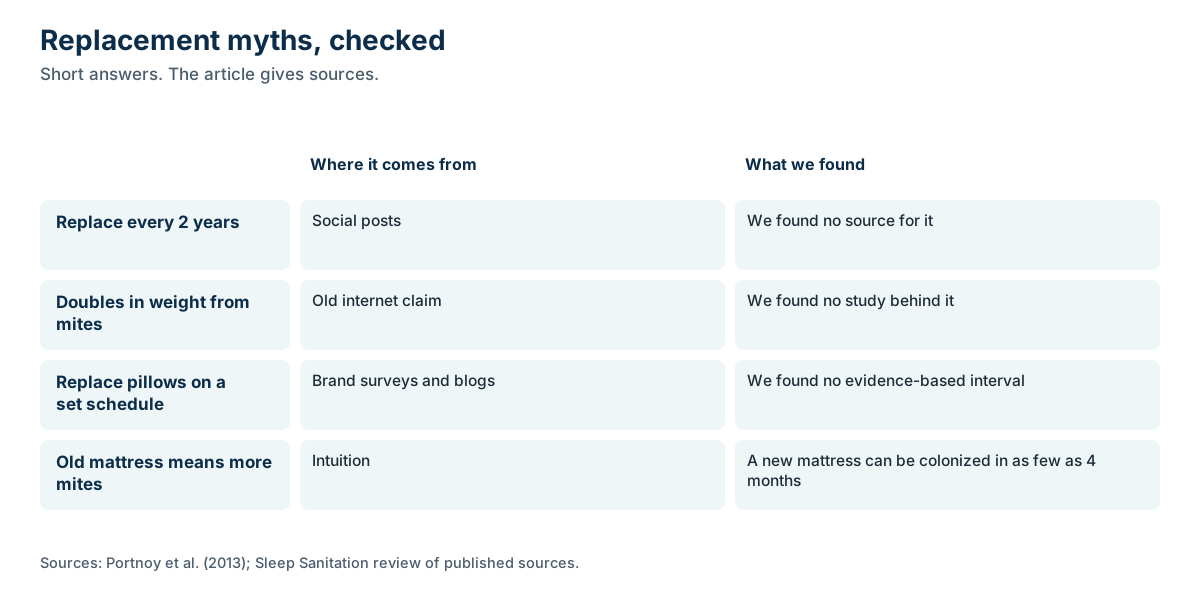
Most fixed replacement rules you see online fall apart when you look for their source. We found nothing behind the advice to replace a mattress every two years. The 7-year figure is itself an industry rule of thumb, covered in is the 7-year rule real?. Pillow schedules mostly come from bedding brands. And the idea that an old mattress is a dirty one, and a new one is clean, ignores how fast a bed picks up mites. Condition is what matters: support, damage, comfort and contamination that cleaning can't reach.
General information about mattress and pillow care, not medical advice.
Myth: replace your mattress every two years
This one circulates in short social posts, usually alongside a startling statistic and no citation. We couldn't find any study, standard or even manufacturer guidance that recommends replacing a mattress every two years. It's far shorter than the industry's own seven-year rule of thumb and a fraction of what people actually do: a recycling program's study of 1,793 discarded units found they averaged 13.9 years old at disposal.
A two-year cycle would be hard to justify on wear. Foam and springs lose support gradually; the Polyurethane Foam Association describes durability tests in which foam is "compressed a few thousand times, or many thousands of times" to measure firmness loss. A decent mattress doesn't fall off a cliff after 730 nights. If yours does, that's a quality problem worth raising with the maker, not a schedule.
Myth: an old mattress is full of mites, a new one is clean
Age and cleanliness aren't the same thing. An allergy practice parameter notes that "when new, mattresses generally are not contaminated by mites, although they can become contaminated and a significant source of mite exposure in as few as 4 months." In other words, a new bed starts collecting skin flakes, and the mites that eat them, almost at once.
That cuts both ways. Buying a new mattress isn't a fix for mite allergy on its own, because the new one will be colonized too unless it's encased and the room's humidity is managed. And an older mattress isn't necessarily worse than a two-year-old one; humidity, protector use and bedding habits matter more than age. Our article on protectors vs encasings covers what actually keeps a new mattress cleaner.
Myth: a mattress doubles in weight from mites
You'll still see claims that a mattress doubles in weight over ten years, or gains several pounds a year, because of mites and skin. We've already looked into this one and found no study behind it. Mattress dust is real and does contain skin flakes, mites and their droppings, but there's no measurement showing it adds that kind of weight. What actually lives in mattress dust goes through what studies have measured, so we won't repeat it here.
Myth: pillows must be replaced on a fixed schedule
Pillow schedules are everywhere: every six months, every year, every two years. Many trace back to bedding-brand surveys and marketing, which tend to report that most people keep pillows far longer than the brand recommends. We found no evidence-based interval for replacing a pillow.
What we did find is a reason not to keep pillows forever. A 2006 study in the journal Allergy cultured 10 pillows that had been in use from 1.5 to more than 20 years. The number of fungal species isolated per pillow "varied from 4 to 16, with a higher number from synthetic pillows," and the most common species was Aspergillus fumigatus. The study was small and didn't link pillow age to a threshold, so it doesn't give you a date. It does make a 15-year-old pillow hard to defend.
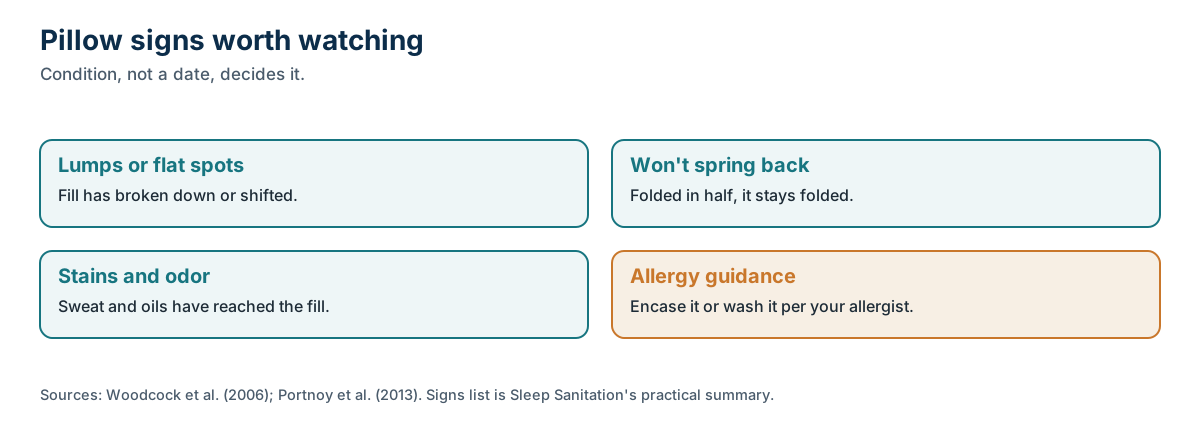
Pillow fill choice is murkier than marketing suggests. Studies comparing feather and synthetic pillows for mite allergen have not all pointed the same way, so we don't recommend one fill over another for allergy. If allergy is the concern, allergy guidance leans on encasings and washing rather than fill type.
Myth: a long warranty means a long life
A warranty describes what the maker will repair or replace for defects, usually with conditions on body impressions, stains and care. It's a commercial promise, not a forecast of comfort. Plenty of beds outlast their warranties, and some stop feeling supportive well before theirs ends. If you're keeping a bed for its warranty, read the care terms; many require a protector and a clean, unstained mattress for a claim.
Myth: flipping doubles a mattress's life
Rotating end to end, and flipping a mattress that is built to be flipped, spreads wear so body impressions form more slowly. That's sensible care, and mattress-industry guidance recommends periodic rotation unless the care instructions say otherwise. But there's no data showing it doubles a lifespan, and many modern mattresses are one-sided, with comfort layers only on top. Flipping those puts you on the support core. Rotating, flipping and care labels covers what to do with yours.
How foam actually wears
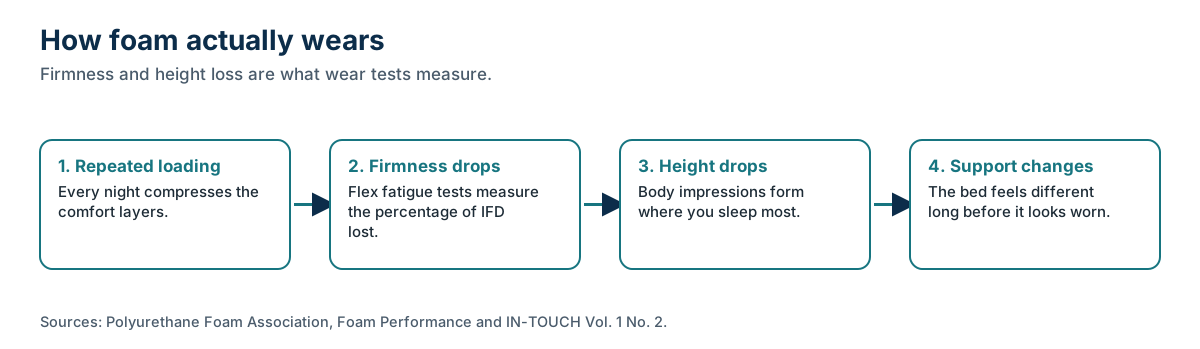
Foam wear is about support. Each night compresses the comfort layers, and over time they lose some firmness and height. Foam makers measure this as IFD loss, a standard firmness test, after repeated flexing, and the foam association notes that higher-density foams generally hold their properties longer. That's why a dip forms where you sleep and why a bed can feel worn while looking fine. It's also why no single number of years fits every mattress.
What to use instead of a schedule
- Support: dips, lumps, sagging, or a partner rolling toward the middle.
- Damage: broken or poking coils, torn fabric, split foam.
- Comfort: waking stiff or sore, sleeping better elsewhere.
- Contamination: odor or staining that returns after proper cleaning, or soiling that has reached the core.
If the problem is the surface, cleaning may solve it; see problems cleaning can't fix for where that stops. If it's support or damage, replace it. More schedule questions are in the hub.
Sleep Sanitation's view
This section is our view. Fixed replacement intervals mostly serve the people selling replacements. We'd rather you check support, damage and comfort twice a year and decide from that. When the issue is surface soiling, odor in the cover or allergen-carrying dust on a bed that still supports you, our cleaning may be the better spend, and when it isn't, we'll say so. See how we're different, or call or text (402) 512-5658.
What we don't know
- Whether pillow age reliably predicts fungal or mite load. The pillow study was too small to say.
- How much regular rotation extends support in real homes. We found no field study.
- Where the two-year mattress claim started. We found no original source.
Changelog
- 7 October 2026: First published. Sources accessed on this date.
Sources
- Replacing a Mattress · Better Sleep Council (mattress industry consumer site)
- Mattress and Foundation Age Analysis (July 2023) · Mattress Recycling Council
- Environmental Assessment and Exposure Control of Dust Mites: A Practice Parameter (Portnoy et al., 2013) · PubMed Central
- Fungal Contamination of Bedding (Woodcock et al., Allergy, 2006) · PubMed
- Foam Performance · Polyurethane Foam Association
- IN-TOUCH Vol. 1 No. 2: Foam density · Polyurethane Foam Association
- Feather Bedding and Childhood Asthma Associated With House Dust Mite Sensitisation: A Randomised Controlled Trial (2011) · PubMed Central
- Endotoxin and House Dust Mite Allergen Levels on Synthetic and Buckwheat Pillows (Nam et al., 2004) · PubMed Central
Last reviewed October 7, 2026. Manufacturer specifications and care instructions change; check the current version for your exact model. This page is general information, not medical advice. How we source and check pages: editorial standards.