
Short answer
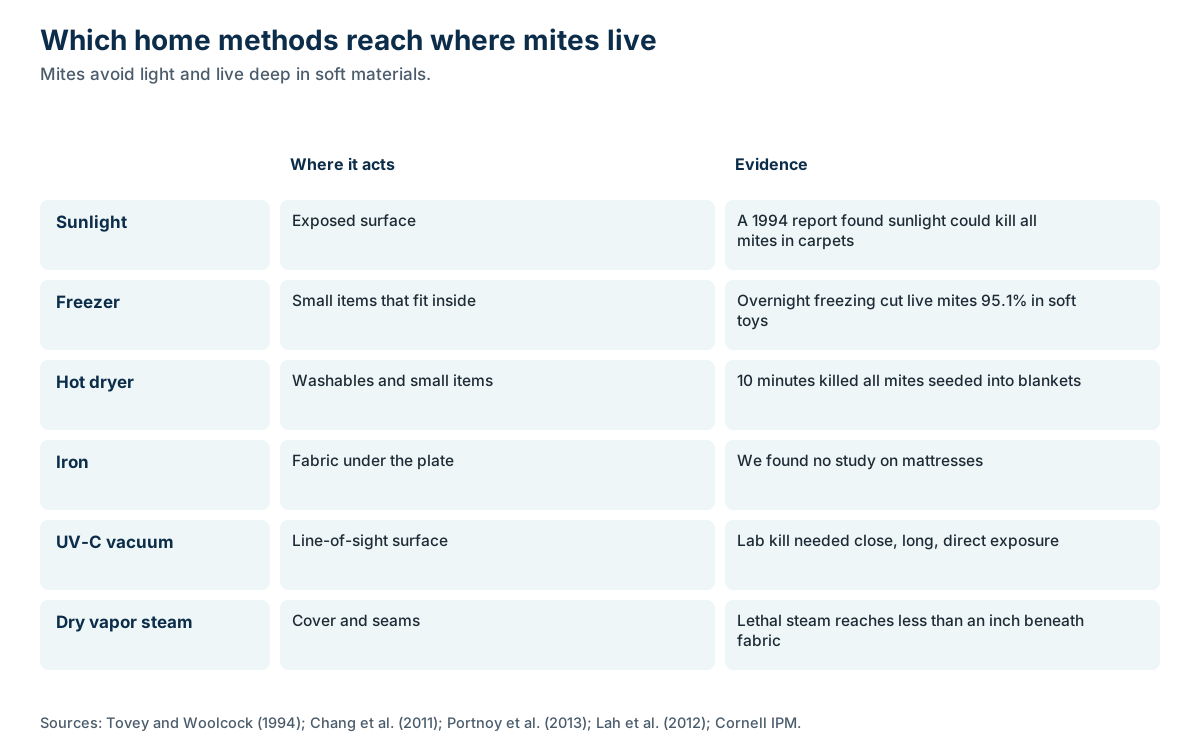
None of them reach deep inside a mattress. Mites avoid light and live in the deeper layers of soft furnishings. Freezing and dryer heat work well on items that fit in the appliance. Sunlight, ironing and UV-C act on the exposed surface; UV-C killed mites in a lab only with close, long, direct exposure. Steam heat also stays near the surface. Each helps at the top; none reaches the core.
Key terms used on this page
- Photophobic:
- Avoiding light. The practice parameter describes mites as light sensitive and photophobic, living deep in pillows, mattresses and carpets.
- Line-of-sight exposure:
- Treatment that only acts on what it can directly reach, like light. In a lab study, UV-C killed all exposed mites only at close range for an hour, with less effect when shielded.
- Freeze treatment:
- Putting small items in a freezer to kill mites. Overnight freezing cut live mites by 95.1% in soft toys; mite eggs resisted all but a minus 70°C freezer in another study.
- Dryer heat treatment:
- Using a clothes dryer's heat to kill mites in bedding. The practice parameter cites 10 minutes killing all mites seeded into blankets and an hour killing 99% in used duvets.
- UV-C radiation:
- Short-wavelength ultraviolet light. The FDA describes it as a known disinfectant for air, water and nonporous surfaces, and warns that some consumer UV wands give off unsafe levels.
None of these methods reach deep inside a mattress. Mites avoid light and live in the deeper, more stable layers of soft furnishings, while sunlight, an iron and UV-C act on the exposed surface. Freezing and a hot dryer work well, but only on items that fit in the appliance. Steam heat also stays close to the top. That doesn't make these methods useless. It means each one helps where it reaches, and it's worth knowing where that is before you drag a mattress into the yard.
General information about bed mites and home care, not medical advice.
Why depth matters
An allergy practice parameter describes mites as "light sensitive and photophobic, and thus live deep within soft substrates, such as pillows, mattresses, and carpets, where moisture is retained and humidity fluctuations are minimized." It notes some move up to carpet surfaces in the dark of night, then retreat.
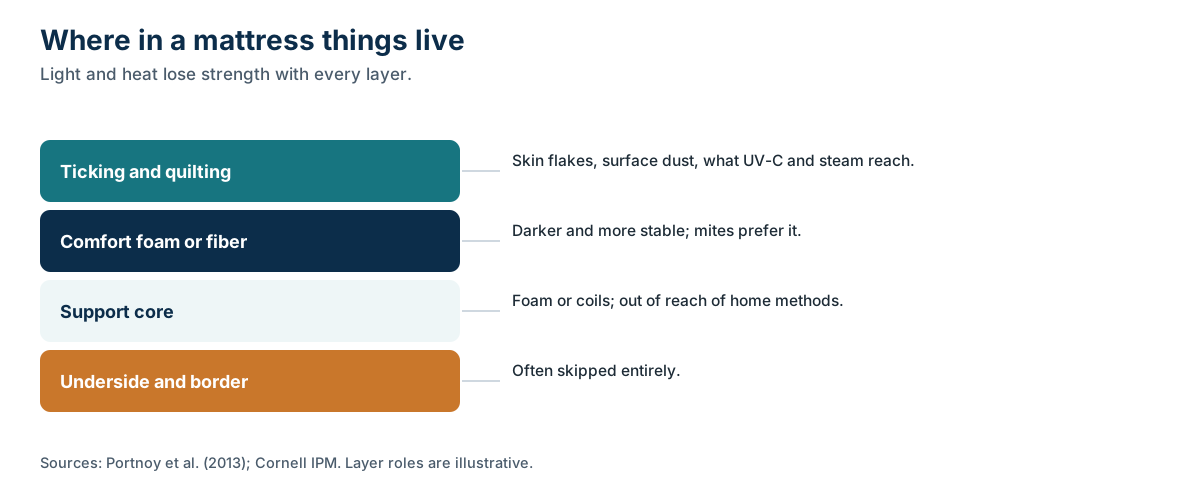
So any method that works by light, or by heat applied from outside, has to get past the cover and into the layers below. Mattresses are built to be thick and insulating, which is the opposite of what you want for that job. The same parameter says physical measures such as heating, freezing and desiccation "theoretically should be effective," while noting that controlled trials of them are lacking.
Sunlight
A short 1994 report by Tovey and Woolcock was titled "Direct exposure of carpets to sunlight can kill all mites." Sun heats and dries what it hits, and mites are sensitive to both. That's a real effect at the surface.
A mattress is a harder case. Mites will move away from light and heat into the layers beneath, and a thick mattress lying in the sun heats mostly from the top. The practice parameter also reports that mite eggs exposed to direct sunlight and dry heat at 50°C died only after between 3 and 5 hours. We found no study of sunning whole mattresses. Airing a bed in dry sun is harmless if you can do it without soaking the mattress in dew or grass moisture, but think of it as a surface and drying step.
Freezer
Freezing works well on what fits. A 2011 study of soft toys found overnight freezing reduced live mites by 95.1%, and NIEHS suggests that non-washable bedding "can be frozen overnight." For pillows, stuffed animals and small cushions, it's a practical option.
Eggs are tougher. The practice parameter cites a study in which "only the deep freezer at −70°C was effective in preventing hatching," much colder than a home freezer. And a mattress won't fit a freezer, so this method stops at small items.
Hot dryer
This is one of the better-studied home methods. The practice parameter reports that all mites seeded into blankets died after 10 minutes in a clothes dryer, and that an hour killed 99% of mites naturally present in used duvets. The 2011 soft-toy study found an hour of hot tumble drying cut live mites by 89.1%. For sheets, pillowcases, washable pillows and blankets, a hot dryer cycle is an easy win. Check labels: waterproof protectors and some fabrics need lower heat.
Iron
Ironing pillowcases or sheets puts brief, intense heat into fabric under the plate. On laundry you've already dried hot, it adds little. We found no study of ironing as a mite measure for bedding or mattresses.
On a mattress, we'd skip it. An iron heats only the cover directly beneath it, for seconds, and the heat has to stop before it scorches the ticking or softens the foam below; the Polyurethane Foam Association describes memory foam as performing best between 55°F and 85°F and softening with heat. Many fabric care labels say "Do not iron" for good reason. Our recipes article covers the viral detergent-and-iron method in more detail.
UV-C vacuums
We use a UV-C vacuum ourselves, so we want to be fair and accurate here. UV-C light can kill mites. In a 2012 laboratory study using a germicidal 254 nm lamp, direct exposure at 10 cm for 60 minutes killed 100% of adult mites immediately. Effects fell with distance and shielding: at 55 cm for an hour, mortality 24 hours later was 58.4% for one species and 27.7% for the other, and when mites were in their culture material, kill at 10 cm for 60 minutes dropped to about 74% and 70%. Egg hatching fell by more than half.
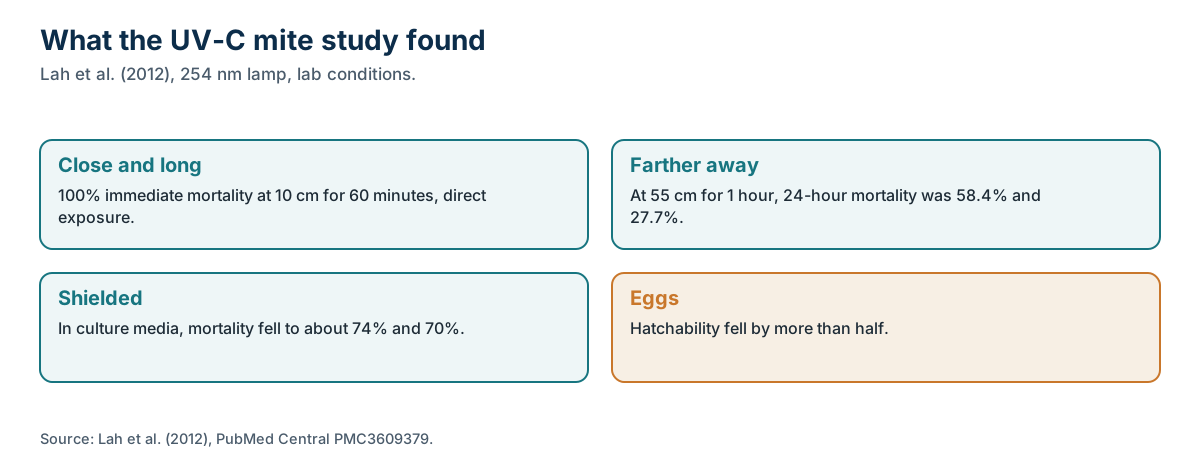
Two things follow. UV-C works on what it can see, for as long as it sees it, so it's a surface exposure. And the FDA describes UV-C as "a known disinfectant for air, water, and nonporous surfaces," which a fabric mattress cover isn't. A vacuum head passes in seconds, not an hour. So we don't claim UV-C reaches inside a mattress, and we make no disinfection claim for it. What a UV-C vacuum does well is combine suction, which removes surface dust and skin flakes, with light exposure on the surface it's passing over. Ours also has a built-in bed mite sensor, which is one of the two checks included in every visit.
Steam
Steam heat goes a little deeper than light but not far. Cornell's draft bed bug guidance says lethal steam penetrates "less than one inch beneath fabric surface." In a 2004 Ohio State study, a hard-surface steam cleaner at 96°C killed all the mites in the carpet and mattress samples tested and cut allergen. That's encouraging for the surface, and it's where dry vapor steam does its work: the cover, quilting and seams. Our article on whether steam penetrates a mattress and does dry vapor steam kill bed mites? go into the evidence.
Putting it together
- Small washables: hot dryer cycle. Small non-washables: freezer overnight.
- Sheets and pillowcases: weekly wash; ironing optional, not needed.
- Mattress surface: vacuum regularly; sun or UV-C exposure helps at the top only.
- Room: humidity control, the measure with the strongest home evidence. See is autumn mite season?.
Killing mites and removing their allergen are different jobs; killing vs removing allergen explains why both matter. More myth checks are in the hub.
If bites rather than allergies are the worry, none of these methods is the right first step. Do bed mites bite? explains what usually causes bites in bed and why identification comes first.
Sleep Sanitation's view
This section is our view. Every method on this page, including the UV-C and dry vapor steam we use, works at or near the surface. That's not a weakness to hide; it's where skin flakes, dust and spills collect. We just won't tell you any of it reaches the core. Our visits combine dry vapor steam with little water, HEPA vacuuming and UV-C light, plus a moisture check after service and the built-in bed mite sensor on our UV-C vacuum. See our process or call or text (402) 512-5658.
What we don't know
- How far sunlight warms the inside of a mattress, and for how long. We found no study of sunning whole mattresses.
- How much a few seconds of UV-C exposure from a moving vacuum affects mites on a real mattress cover. The lab study used minutes to an hour.
- Whether household freezers reliably stop mite eggs from hatching. The study cited found only a minus 70°C freezer did.
Changelog
- 7 October 2026: First published. Sources accessed on this date.
Sources
- Environmental Assessment and Exposure Control of Dust Mites: A Practice Parameter (Portnoy et al., 2013) · PubMed Central
- Direct Exposure of Carpets to Sunlight Can Kill All Mites (Tovey and Woolcock, 1994) · PubMed
- Effect of Freezing, Hot Tumble Drying and Washing With Eucalyptus Oil on House Dust Mites in Soft Toys (Chang et al., 2011) · PubMed
- Effect of Germicidal UV-C Light (254 nm) on Eggs and Adults of House Dust Mites (Lah et al., 2012) · PubMed Central
- Beware of Ultraviolet Wands That Give Off Unsafe Levels of UV Radiation · US Food and Drug Administration
- Using Steam to Eliminate Bed Bugs (draft guidance) · Cornell University IPM Help Center
- Eliminating Dermatophagoides farinae and Their Allergens Through High Temperature Treatment of Textiles (Glass and Needham, 2004) · PubMed
- Dust Mites and Cockroaches · National Institute of Environmental Health Sciences (NIH)
- IN-TOUCH Vol. 11 No. 1: Viscoelastic (memory) foam (revised 2016) · Polyurethane Foam Association
- 16 CFR Part 423: Care Labeling of Textile Wearing Apparel and Certain Piece Goods · Electronic Code of Federal Regulations (eCFR)
Last reviewed October 7, 2026. Manufacturer specifications and care instructions change; check the current version for your exact model. This page is general information, not medical advice. How we source and check pages: editorial standards.