
Short answer
It depends on the fill and the label. Fiberfill and some down toppers can often be machine washed and must dry completely. Foam and latex toppers usually can't go in a washer; they're spot cleaned or cleaned at the surface with little moisture. Wool can felt. If urine, sweat or mold has soaked deep into foam, replacing the topper is often more sensible than trying to rescue it.
Key terms used on this page
- Mattress topper:
- A separate padded layer laid on top of a mattress, often memory foam, latex or fiber. Toppers carry their own care labels; Tempur-Pedic says 'Do NOT wash or Dry Clean the TEMPUR-Topper Supreme.'
- Mattress protector:
- A removable cover that goes between the mattress and the sheets. Purple says protectors 'go between the mattress and sheets to keep dirt and other stains off your mattress.' Tempur-Pedic recommends its own protector over conventional pads.
- Surface moisture:
- Water held in the cover fabric and the top of the comfort layer, close enough to the air to evaporate quickly. It is the moisture a low-moisture method aims to leave, as opposed to water that has travelled down into the core.
- Care label:
- The care instructions sewn into a mattress, topper or cover. Tempur UK notes that 'A label stitched inside the cover will give you specific care instructions for the item you have purchased.' A care label outranks general web guidance.
- Clean-or-replace decision:
- Our four-test framework for a problem mattress: whether the bed is structurally sound, how deep the problem goes, what the care label and warranty allow, and whether the cause is really a pest or health issue. It's our decision guidance, not a published standard.
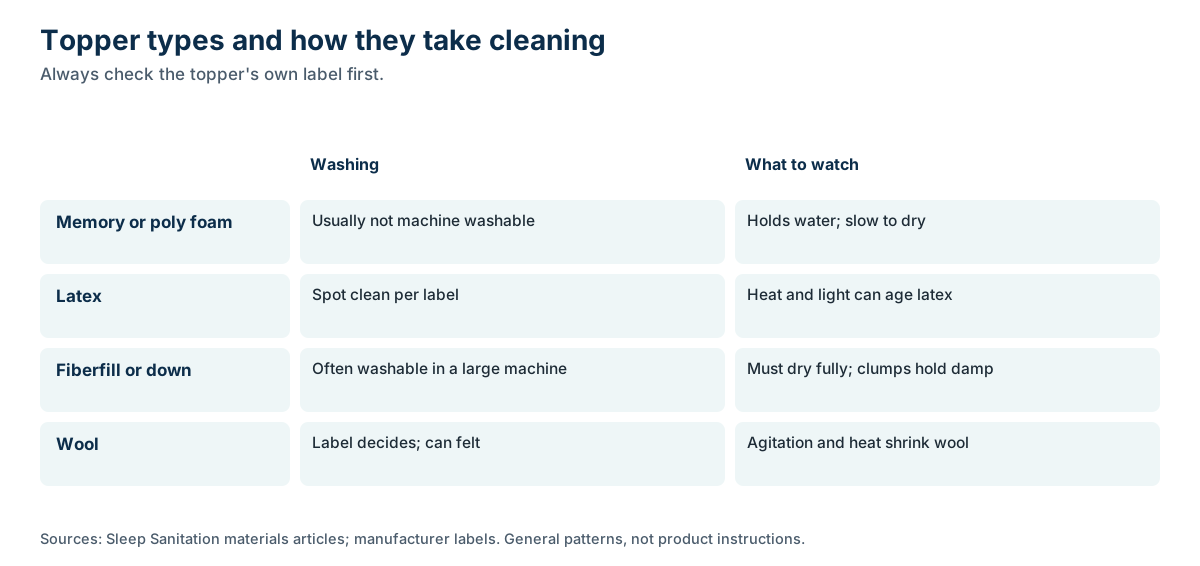
Whether a topper can be washed depends on two things: what it's made of and what its label says. Fiberfill and some down toppers are often machine washable, provided they dry all the way through. Foam and latex usually aren't; they're spot cleaned, or cleaned at the surface with little moisture. Wool can felt and shrink. And when urine, sweat or mold has soaked deep into foam, replacing the topper is often the sensible choice. Here's how each type takes cleaning, and how to decide.
General information about mattress topper care, not medical advice.
Start with the label
A topper's care label outranks any general advice, including ours. The words on it carry defined meanings: under the FTC's care labeling rule for apparel, Do not iron means an item is not to be smoothed with an iron, No steam means steam in any form shouldn't be used, and water temperatures such as hot, warm and cold have set ranges. That rule covers clothing and certain fabric goods rather than bedding, but bedding makers use the same vocabulary. If your topper says spot clean only, it means it.
If there's no label, find the maker's care page or treat the topper by its most delicate component.
Foam toppers
Memory foam and polyfoam toppers are open-cell materials that soak up water readily and give it back slowly. A washer's agitation can tear foam, and a waterlogged topper is heavy and slow to dry, which is how mildew gets started. Most foam topper labels say spot clean only or ask you to wash a removable cover instead. Our moisture hub explains what happens when memory foam gets wet and why foam is slow to dry.
Heat is the other caution. The Polyurethane Foam Association describes memory foam as performing best in a range of about 55°F to 85°F and softening with heat. A dryer cycle isn't something foam makers describe, and we wouldn't try it.
For a foam topper, cleaning means: vacuum the surface, blot spills promptly with a little mild detergent and water, and let it dry fully with air on both sides.
Latex toppers
Latex is also usually spot clean only. Like foam, it holds water in its structure, and labels typically warn against machine washing and direct heat. Treat it the way you'd treat foam: surface cleaning, minimal moisture, full drying. Our latex compatibility article and the comparison of which materials are most moisture-sensitive cover how latex compares.
Fiberfill and down toppers
These are the toppers most often machine washable, typically in a large-capacity machine. The risk is drying. A thick fiber or down topper can feel dry on the outside while the inside is still damp, and damp clumps can smell and grow mildew. Tumble dry per the label until it's dry all the way through, breaking up clumps as you go. A hot dryer cycle, if the label allows it, also kills mites; an allergy practice parameter cites dryer studies in which blankets and duvets lost most or all of their mites.
Wool toppers
Wool fibers felt and shrink with heat, moisture and agitation. That's why many wool toppers are spot clean or dry clean only, though some are treated to be washable. Follow the label exactly, and if it says not to wash, don't. Our wool compatibility article explains why wool behaves this way.
What soaks through
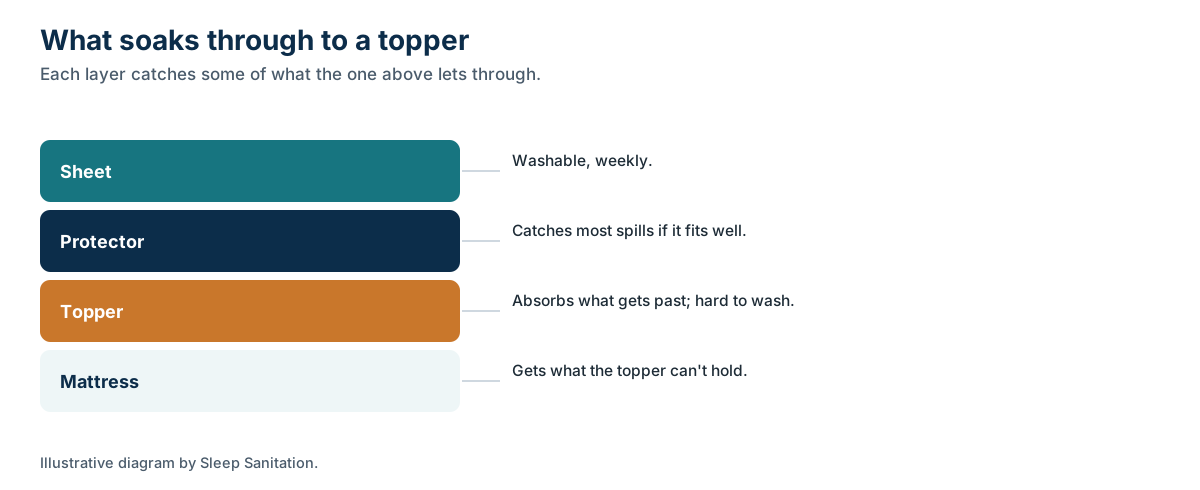
A topper sits between the protector and the mattress, which is exactly where a lot of soak-through ends up. Sweat, a child's accident or a pet's can pass a thin protector and settle into the topper, and from there into the mattress. People often discover this only when stripping the bed.
The simplest fix is placement: put the protector over the topper, not under it. That way the washable layer takes the daily contact and the topper stays clean longer. If you also want the mattress protected, a second protector underneath does that.
Pads versus toppers
A mattress pad is usually thin and quilted, designed to be laundered like bedding. A topper is thicker and there to change comfort. Federal rules include mattress pads under the mattress flammability standard, 16 CFR Part 1632, and pads that contain a chemical fire retardant must still pass the test "after they have been washed and dried 10 times." That's a reason to follow a pad's laundering instructions rather than adding products to the wash.
Wash, sanitize or replace?
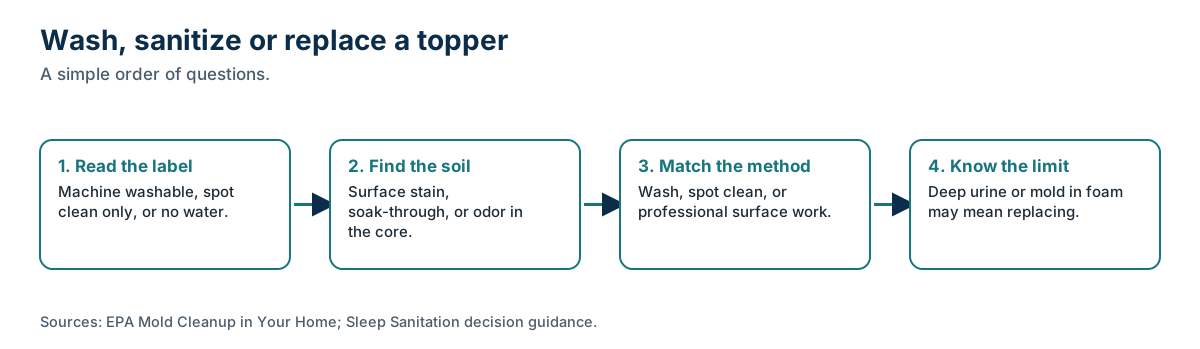
- Washable fiber, surface soil: wash per the label and dry completely.
- Foam or latex, surface stain: spot clean with minimal moisture; professional surface cleaning can help with set-in soil.
- Odor or staining that returns: the soil has probably reached the core. With foam, that's hard to fix without soaking it.
- Mold: EPA's mold cleanup guidance says absorbent or porous materials "may have to be thrown away if they become moldy," because mold fills the spaces in them. For a foam topper, that usually means replacing it.
- Lost support or loft: replace. Cleaning doesn't restore foam or fiber that has broken down.
Toppers cost far less than mattresses, so the bar for replacement is lower. Spend cleaning effort on the mattress beneath. How often to clean a mattress covers that side, and the hub links the other care questions.
A protector over the topper is the cheapest way to extend its life, since it catches sweat and spills before they reach the fill. Protectors vs encasings explains the difference between spill protection and an allergen barrier, and how often to wash sheets and protectors covers wash rhythms for both. If the topper itself can't be washed, a protector you can wash does most of the work for it.
Sleep Sanitation's view
This section is our view. We'll clean the surface of a foam or latex topper alongside the mattress when its label allows steam, and we'll tell you if we think it's past saving. We won't soak a topper, and we'd rather you replace a moldy one than pay us to try. Our visits use dry vapor steam with little water, HEPA vacuuming and UV-C light, with a moisture check after service and the built-in bed mite sensor on our UV-C vacuum. See our process or call or text (402) 512-5658.
What we don't know
- How well common topper materials tolerate repeated home washing over years. We found no independent testing.
- How much a protector over a topper reduces soak-through into the mattress in real use.
- Whether any home method reliably removes deep urine odor from foam toppers without soaking them.
Changelog
- 7 October 2026: First published. Sources accessed on this date.
Sources
- 16 CFR Part 1632: Standard for the Flammability of Mattresses and Mattress Pads (FF 4-72) · Electronic Code of Federal Regulations (eCFR)
- 16 CFR Part 423: Care Labeling of Textile Wearing Apparel and Certain Piece Goods · Electronic Code of Federal Regulations (eCFR)
- Mold Cleanup in Your Home · US EPA
- IN-TOUCH Vol. 11 No. 1: Viscoelastic (memory) foam (revised 2016) · Polyurethane Foam Association
- Foam Performance · Polyurethane Foam Association
- Caring for a Mattress · Better Sleep Council (mattress industry consumer site)
- Environmental Assessment and Exposure Control of Dust Mites: A Practice Parameter (Portnoy et al., 2013) · PubMed Central
Last reviewed October 7, 2026. Manufacturer specifications and care instructions change; check the current version for your exact model. This page is general information, not medical advice. How we source and check pages: editorial standards.