
Short answer
Weekly: wash sheets and pillowcases. Every few weeks: wash the protector and vacuum the mattress surface. Twice a year, at the clock changes: rotate the mattress and check it for sagging and damage. Through summer: keep indoor humidity below about 50%. After any accident: clean promptly. Add a deeper cleaning once or twice a year if your household is busy. The checklist below sets it out season by season.
Key terms used on this page
- Care interval:
- How often a care step is repeated, such as weekly bedding washes. For mattresses, we found no study that sets a cleaning interval; the weekly bedding interval comes from graded allergy guidance.
- Event-based cleaning:
- Cleaning a mattress because something happened to it, such as an accident, heavy sweating or a move, rather than because a date arrived. A mattress-industry care page advises blotting any damp spot promptly and never soaking the mattress.
- Heating season:
- The months a home's heating runs, when indoor air is drier. A 1982 Ohio study found mite numbers lowest in the dry, late heating season.
- End-to-end rotation:
- Turning a mattress 180 degrees so head and foot swap, spreading wear. Industry care advice suggests periodic rotation unless the care instructions say otherwise.
- Allergen seasonality:
- The yearly rise and fall of mite allergen indoors. The practice parameter describes levels rising in humid summer, staying elevated through winter and falling in late winter and spring.
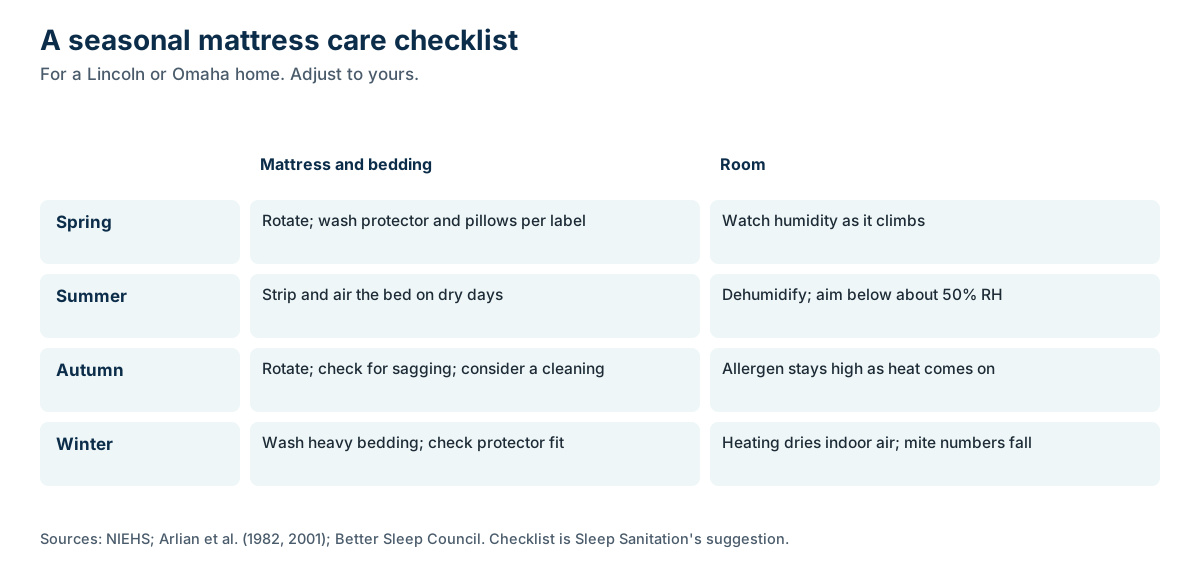
Mattress care doesn't need a big annual project. It works better as a few small habits on different rhythms: weekly bedding, a protector and surface vacuum every few weeks, a rotation and check at the twice-yearly clock changes, humidity control through summer, and prompt attention when something spills. Here's a season-by-season version for a Lincoln or Omaha home, with the reason behind each step and the source it rests on.
General information about mattress care, humidity and allergens, not medical advice.
The rhythm underneath the seasons
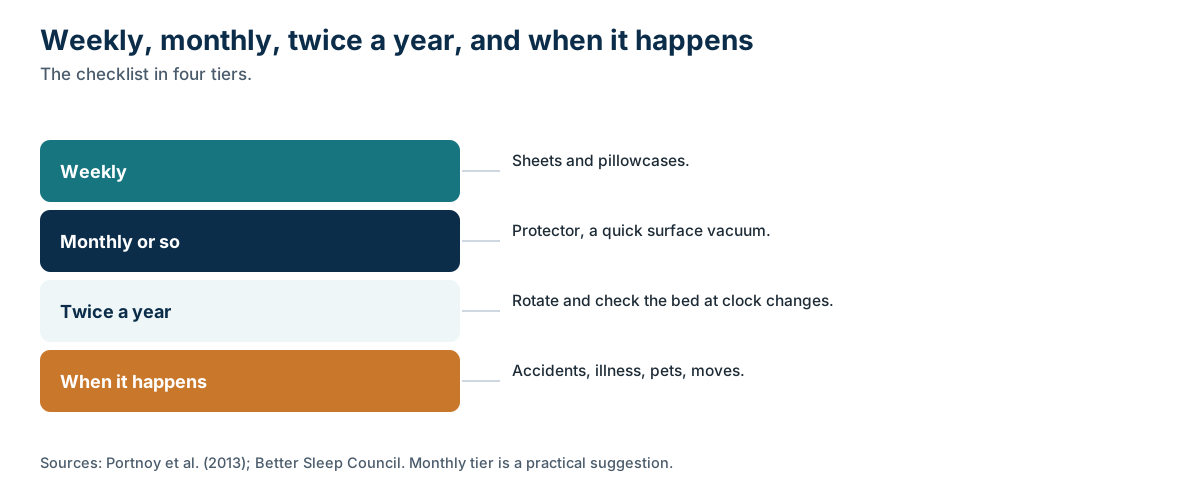
- Weekly: wash sheets and pillowcases. This is the one interval with graded allergy guidance behind it; how often to wash sheets and protectors explains temperatures and dryers.
- Every few weeks: wash the mattress protector, and vacuum the mattress surface slowly while it's off.
- Twice a year: rotate the mattress end to end and check it for sagging, stains and damage. A mattress-industry consumer council suggests the clock changes as a reminder.
- When it happens: accidents, illness, a new pet, a move. These matter more than any date, as how often to clean a mattress explains.
What to look for at each clock change
The twice-yearly check is quick. A mattress-industry consumer council lists signs worth noticing: waking with stiffness, numbness or aches; sleeping better somewhere other than your own bed; a mattress that sags or shows tears, holes, stains or other damage; and feeling tired despite a full night's sleep. None of these alone means replacement, but two or three together are worth taking seriously. While the bed is stripped, look at the frame as well. The same council's care page says a queen or king frame should have strong center support so the mattress doesn't bow, and it warns against putting a board between mattress and foundation as a fix for sagging. If the check raises the bigger question, is the 7-year rule real? and our decision center help with it.
Spring: after a closed-up winter
Spring is when windows open again and humidity starts to climb. It's a natural reset.
- Rotate the mattress at the March clock change and check it for comfort and support.
- Wash the protector and pillows per their labels. If pillows are lumpy, stay folded or smell after washing, replace them; replacement myths explains why we don't use a fixed schedule.
- Start watching humidity. A cheap hygrometer in the bedroom tells you where you stand before summer arrives.
- Wash heavy winter bedding before storing it, and dry it fully.
Summer: the humid season
In published Ohio data, mite numbers peaked in the humid summer months. This is the season where effort pays off most.
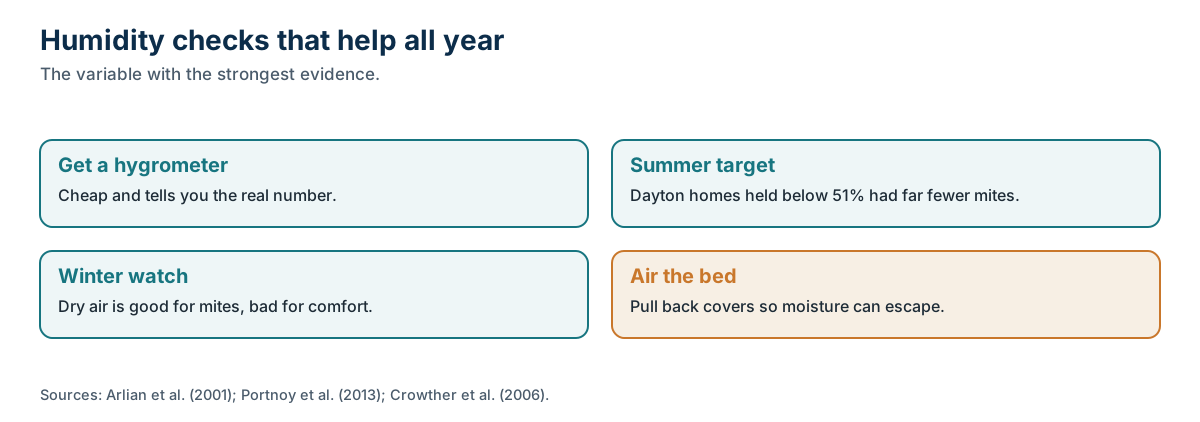
- Keep indoor relative humidity below about 50%. NIEHS suggests a dehumidifier or air conditioner to maintain humidity "at, or below, 50 percent." In a Dayton study, homes that stayed below 51% through two humid summers ended up with allergen levels "more than 10 times lower" than humid homes.
- Close windows on humid days if you're running air conditioning. Window-cooled homes were among the humid group in the Dayton study.
- Air the bed. Pull the covers back for a while in the morning. It lets the night's moisture escape, though on its own it isn't mite control; see the unmade bed claim.
- Sun bedding if you like, on a dry day. A 1994 report found direct sunlight could kill mites in carpets; it acts on the exposed surface.
Autumn: allergen stays high as heat comes on
An allergy practice parameter describes mite allergen staying elevated after the summer peak and through winter. Autumn is a good time to deal with the summer's buildup.
- Rotate and check at the November clock change.
- Consider a deeper cleaning if your household is busy, has pets or includes a mite-allergic sleeper. It follows the humid peak; is autumn mite season? explains the timing honestly.
- Check the protector's fit and look for tears in any encasings.
- Change the furnace filter before heating starts, a routine step that's easy to forget in the switch from cooling.
Winter: dry air and heavy bedding
Heated winter air is drier. In the 1982 Ohio study, mite numbers were lowest in the dry, late heating season.
- Keep weekly sheet washes going, even when the bed feels clean.
- Give heavy blankets and duvets a hot dryer cycle if they're hard to wash often. The practice parameter cites a study in which an hour in a dryer killed 99% of mites in used duvets.
- Don't overdo humidifiers in the bedroom. Some moisture helps comfort, but pushing humidity back up undoes winter's natural advantage against mites. Aim for comfortable, not damp.
- Wash and dry thoroughly. Bedding put back damp in a cold room dries slowly.
Any time: when something happens
Accidents don't wait for the seasons. Urine, vomit, blood or a big spill that reaches the mattress is worth dealing with promptly, because liquids spread and set the longer they sit. Blot, don't soak, and follow our urine and accidents guide for what to do next. A move, a used mattress or a new pet are also reasons to clean outside the usual rhythm. Illness in the house is another: after a fever or a stomach bug, wash all the bedding and the protector, then let the bare mattress air for a while before remaking the bed.
Keeping it realistic
You don't need to do every item. Weekly sheets, a protector you actually wash, summer humidity under control and prompt attention to accidents cover most of the value. Rotation and checks add a little more. If someone in the house has mite allergy, follow their allergist's plan, which may add encasings; protectors vs encasings explains the evidence. The rest of the care questions are in the hub.
Sleep Sanitation's view
This section is our view. Most of this list costs nothing and needs no one's help, including ours. Where a deeper cleaning fits, we usually suggest late summer or early autumn, or right after an accident, and we're happy to tell you when a bed doesn't need one yet. Our visits use dry vapor steam with little water, HEPA vacuuming and UV-C light, with a moisture check after service and the built-in bed mite sensor on our UV-C vacuum. We serve Lincoln, Omaha and surrounding towns; book on our schedule page or call or text (402) 512-5658.
What we don't know
- How much each seasonal step changes mite or allergen levels on its own. Studies test humidity and bedding washes, not checklists.
- Typical bedroom humidity in Lincoln and Omaha homes through the year. We found no local survey.
- The ideal time of year for a deeper mattress cleaning. We found no study comparing seasons.
Changelog
- 7 October 2026: First published. Sources accessed on this date.
Sources
- Dust Mites and Cockroaches · National Institute of Environmental Health Sciences (NIH)
- Environmental Assessment and Exposure Control of Dust Mites: A Practice Parameter (Portnoy et al., 2013) · PubMed Central
- The Prevalence of House Dust Mites and Associated Environmental Conditions in Homes in Ohio (Arlian et al., 1982) · PubMed
- Reducing Relative Humidity Is a Practical Way to Control Dust Mites and Their Allergens in Homes in Temperate Climates (Arlian et al., 2001) · PubMed
- Replacing a Mattress · Better Sleep Council (mattress industry consumer site)
- Caring for a Mattress · Better Sleep Council (mattress industry consumer site)
- Direct Exposure of Carpets to Sunlight Can Kill All Mites (Tovey and Woolcock, 1994) · PubMed
Last reviewed October 7, 2026. Manufacturer specifications and care instructions change; check the current version for your exact model. This page is general information, not medical advice. How we source and check pages: editorial standards.