
Short answer
Wash sheets and pillowcases weekly. That is the one bedding interval with graded allergy guidance behind it. Sources disagree on temperature: NIEHS says 130 to 140°F, while an allergy practice parameter says high heat isn't needed and home water should stay below 120°F. A hot dryer cycle kills mites. Protectors and pillows have no studied interval, so follow labels and condition.
Key terms used on this page
- Bedding wash cycle:
- The routine of laundering sheets and pillowcases. An allergy practice parameter recommends weekly washing and says high water temperature isn't needed to cut allergen.
- Dryer heat treatment:
- Using a clothes dryer's heat to kill mites in bedding. The practice parameter cites 10 minutes killing all mites seeded into blankets and an hour killing 99% in used duvets.
- Pillow condition check:
- Judging a pillow by lumps, loss of spring and odor rather than age. One study of pillows used 1.5 to more than 20 years found 4 to 16 fungal species per pillow.
- Care Labeling Rule:
- The FTC rule, 16 CFR Part 423, that defines care terms such as hot water and No steam. It covers apparel and certain piece goods, not mattresses.
- Live-mite kill:
- A study outcome that counts whether mites are alive after a treatment. It is different from allergen removal: dead mites and their droppings can stay in the fabric, still carrying allergen, until something removes them.
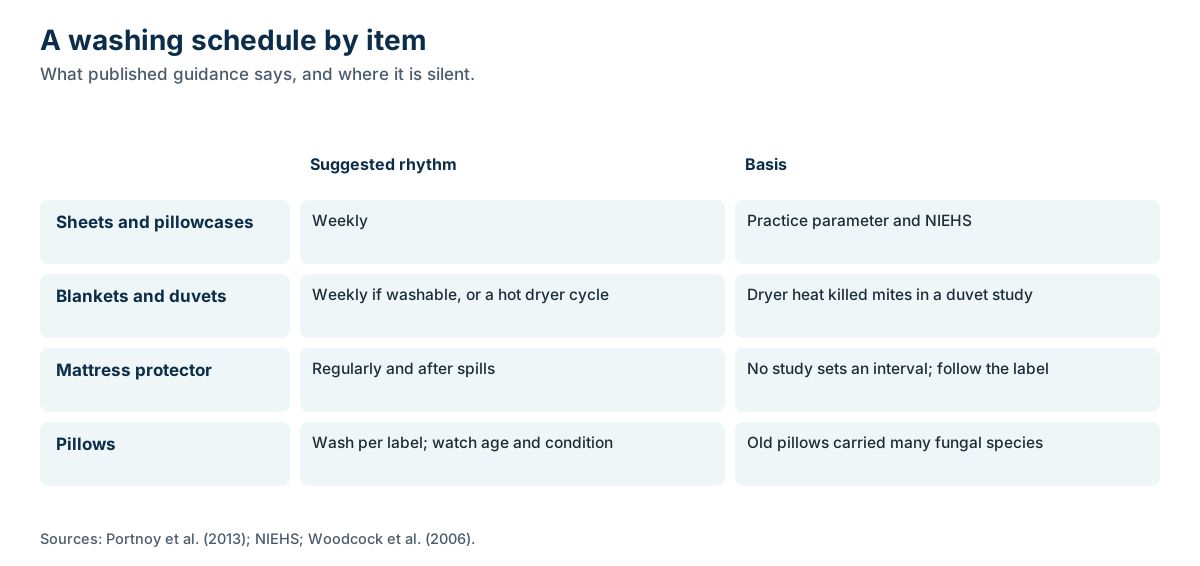
Wash sheets and pillowcases once a week. That is the one bedding interval with graded allergy guidance behind it, and it's sensible for any household. The sources split on how hot the water needs to be, and they're largely silent on protectors and pillows, so those come down to labels and condition. Here's what each source actually says, item by item, and where you have room to choose.
General information about bedding care and allergens, not medical advice.
Sheets and pillowcases: weekly
The clearest guidance comes from a 2013 practice parameter written by American allergy societies. It tells clinicians to advise patients that bedding "should be washed weekly" to lower mite numbers and allergen, and rates that as a strong recommendation on B-level evidence. The NIEHS consumer page gives the same interval: wash all bedding and blankets "once a week."
Weekly also makes sense without allergies. Every night a sleeper sheds skin flakes and leaves sweat and skin oils in the fabric, and pillowcases collect hair products and face creams. Washing once a week keeps that from building up and transferring further down to the protector and mattress.
How hot does the water need to be?
Here the sources disagree, and it's worth seeing why.
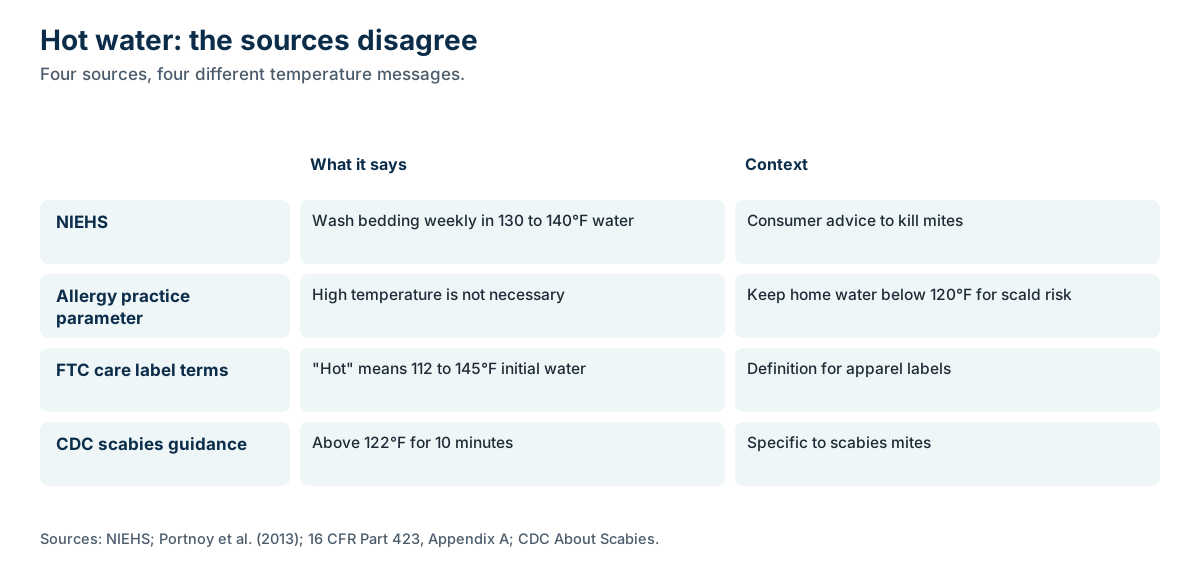
- NIEHS advises washing bedding "in hot water, 130 to 140 degrees Fahrenheit" to kill mites.
- The practice parameter says weekly washing reduces mites and allergen "and that high temperature is not necessary." It adds that home hot water should be kept below the temperature, 120°F, "that causes a scalding risk to occupants."
- The FTC's care labeling rule defines hot on apparel labels as initial water from 112 to 145°F, warm as 87 to 111°F and cold as up to 86°F. Your sheets' label uses those words.
- CDC scabies guidance is a special case: items should be washed in water above 122°F for 10 minutes, or dried on the hot cycle. That's for scabies, a human itch mite, not the mites in bedding.
The disagreement makes sense once you separate two goals. Removing allergen doesn't need high heat; the practice parameter cites a study in which warm, 99°F washing removed a mean of 84% of allergen from laundry items. Killing live mites does need heat, and a dryer delivers it more safely than scalding water.
The dryer does the killing
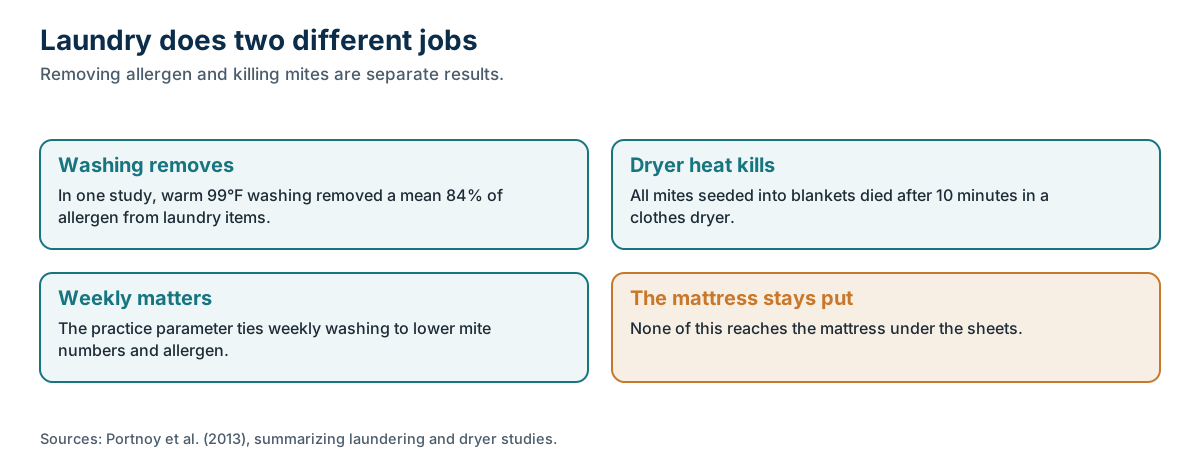
The practice parameter notes that "the dry heat of a clothes dryer also can be used to kill" mites. In one study all mites seeded into blankets died after 10 minutes in a dryer; in another, 99% of mites naturally present in used duvets died after an hour. So if your water heater is set for safety, a hot dryer cycle on sheets that tolerate it gets the mite-killing job done. Check the care label first: some fabrics and most waterproof protectors want lower heat.
Mattress protectors: regularly, and after spills
We found no study that sets an interval for washing a mattress protector. Allergy guidance is about encasings, which are different, and covered in protectors vs encasings. For an ordinary fitted protector, a practical rhythm is every few weeks, more often with pets, children, night sweats or allergies, and right away after any spill. A mattress-industry consumer council calls a washable cover a must to keep the bed "fresh and free from stains."
Two cautions. First, waterproof protectors usually have a polyurethane or similar membrane, and some labels limit water temperature, dryer heat or bleach; follow yours, because a cracked membrane stops being waterproof. Second, a protector only works if it's on: take it off, wash it and put it back the same day rather than leaving the mattress bare for a week.
Blankets, duvets and comforters
Weekly washing applies to "all bedding and blankets" in the NIEHS advice, but big items are a nuisance to wash that often. Two practical alternatives: keep a duvet cover on and wash the cover weekly, and give the duvet itself a periodic dryer cycle. The 99% figure above came from used duvets after an hour of dryer heat. NIEHS also suggests that non-washable bedding "can be frozen overnight," though most duvets won't fit a home freezer.
Pillows: wash per label, replace on condition
Pillows are where the advice gets thin. Most synthetic pillows can be machine washed; many feather and foam pillows can't, so the label decides. Allergy guidance often suggests pillow encasings for mite-allergic sleepers.
For replacement, we found no evidence-based interval. A small 2006 study in the journal Allergy cultured 10 pillows that had been in use from 1.5 to more than 20 years and found between 4 and 16 fungal species per pillow, with more species in synthetic pillows. That doesn't set a schedule, but it is a reasonable argument for retiring very old pillows. Research on feather versus synthetic pillows and mite allergen has gone both ways, so we don't push one fill over another. Signs a pillow is done: it's lumpy, stays folded when you fold it in half, or smells even after washing. Replacement myths covers pillow schedules you may see online.
A simple weekly routine
- Strip the bed, pull back the covers and let the mattress air for a while if you have time. Moisture from the night can escape.
- Wash sheets and pillowcases. Use the warmest water the label allows that you're comfortable with, then a hot dryer cycle if the fabric tolerates it.
- Every few weeks, add the protector. Vacuum the mattress surface slowly while it's off.
- Put the protector back on before the sheets.
Washing doesn't reach the mattress
Clean sheets don't mean a clean mattress. Laundry removes what's in the fabric you take off the bed; the mattress keeps whatever already got through. Our article on whether washing sheets cleans the mattress goes into why, and how often to clean the mattress itself covers that side. The hub links the rest of the schedule questions.
Sleep Sanitation's view
This section is our view. Weekly sheets and a regularly washed protector are the best value in mattress care, and we'd tell you that even though it means you'll need us less. When the mattress itself needs attention, our visits use dry vapor steam with little water, HEPA vacuuming and UV-C light, and every visit includes a moisture check after service and the built-in bed mite sensor on our UV-C vacuum. See our process or call or text (402) 512-5658.
What we don't know
- How often a fitted mattress protector needs washing to keep the mattress clean. We found no study.
- Whether there's a pillow age after which fungal or mite load reliably jumps. The pillow study was small and not designed to answer that.
- How much the temperature difference between NIEHS's advice and the practice parameter matters in real homes with modern detergents.
Changelog
- 7 October 2026: First published. Sources accessed on this date.
Sources
- Environmental Assessment and Exposure Control of Dust Mites: A Practice Parameter (Portnoy et al., 2013) · PubMed Central
- Dust Mites and Cockroaches · National Institute of Environmental Health Sciences (NIH)
- 16 CFR Part 423: Care Labeling of Textile Wearing Apparel and Certain Piece Goods · Electronic Code of Federal Regulations (eCFR)
- About Scabies · US Centers for Disease Control and Prevention
- Fungal Contamination of Bedding (Woodcock et al., Allergy, 2006) · PubMed
- Endotoxin and House Dust Mite Allergen Levels on Synthetic and Buckwheat Pillows (Nam et al., 2004) · PubMed Central
- Feather Bedding and Childhood Asthma Associated With House Dust Mite Sensitisation: A Randomised Controlled Trial (2011) · PubMed Central
- Caring for a Mattress · Better Sleep Council (mattress industry consumer site)
Last reviewed October 7, 2026. Manufacturer specifications and care instructions change; check the current version for your exact model. This page is general information, not medical advice. How we source and check pages: editorial standards.