
Short answer
A fitted protector is for spills, sweat and stains. An encasing zips around the whole mattress as an allergen barrier. Encasings reliably cut mite allergen in mattress dust, but trial results on symptoms are mixed: two large adult trials found no benefit as a single measure, while a trial in children with asthma found fewer hospital visits. Allergy guidance recommends encasings as one part of a wider plan.
Key terms used on this page
- Encasing pore size:
- The average gap between fibers in an encasing fabric. The practice parameter says under 10 microns blocks the main mite allergen and under 6 microns blocks cat allergen.
- Woven microfiber encasing:
- A breathable zippered cover made of tightly woven ultrathin filaments that filter allergen. The practice parameter prefers it over nonwoven covers, which can't be washed.
- Partial bedroom control:
- Using only encasings and hot-washing bedding against mites. A 2024 meta-analysis found it didn't help on its own and did not recommend it as a stand-alone strategy.
- Mattress protector:
- A removable cover that goes between the mattress and the sheets. Purple says protectors 'go between the mattress and sheets to keep dirt and other stains off your mattress.' Tempur-Pedic recommends its own protector over conventional pads.
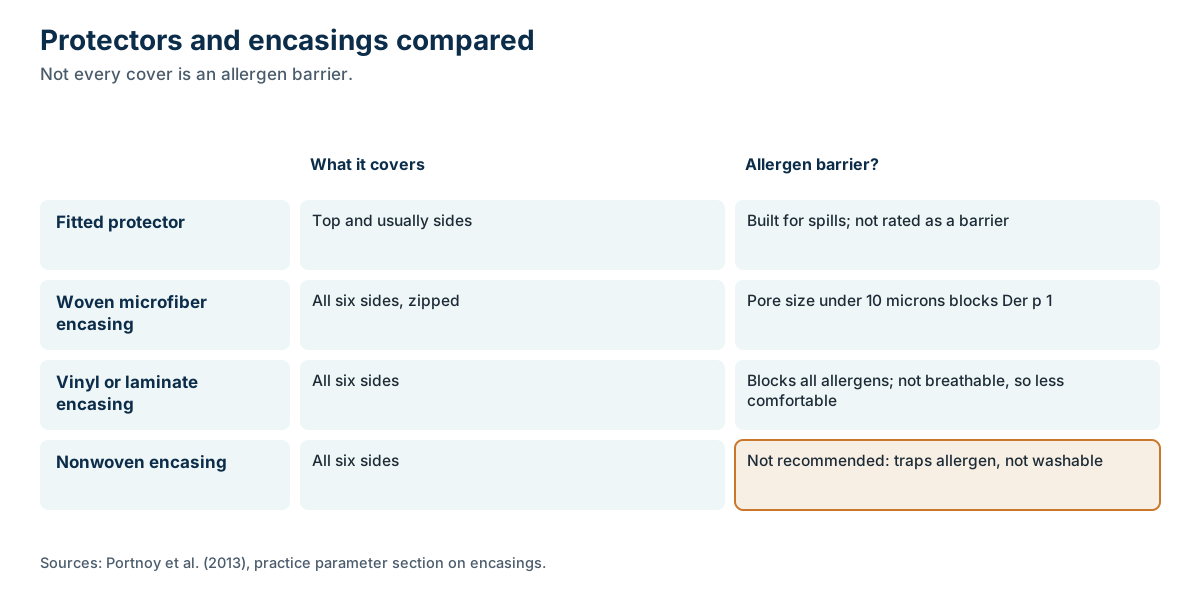
A fitted mattress protector and a zippered encasing do different jobs. The protector catches spills, sweat and stains. The encasing wraps all six sides in fabric tight enough to block allergen. Encasings reliably cut mite allergen in mattress dust; what they do for symptoms is genuinely mixed. Two large adult trials found no benefit when encasings were the only measure, while a trial in children with asthma found fewer hospital visits. Allergy guidance recommends them as one part of a wider plan. Here's the honest picture, and how to choose.
General information about mattress covers and allergens, not medical advice. If you have allergies or asthma, follow your clinician's plan.
Two products with one name problem
Shops use "protector," "cover" and "encasement" loosely. The practical distinction is coverage and fabric.
A protector is usually fitted like a deep sheet, with a waterproof membrane or absorbent layer on top. It covers the sleeping surface and often the sides, leaving the underside open. It's built to keep liquids and soil off the mattress. It isn't usually rated as an allergen barrier.
An encasing zips around the whole mattress, box spring or pillow. An allergy practice parameter describes four types: vinyl, laminates, woven microfiber and nonwoven microfiber. Vinyl and laminates block all allergens but don't let air or water vapor through, so they're uncomfortable and now rarely used. Woven microfiber is the common choice: tightly woven ultrathin filaments act as a filter while staying breathable. The parameter advises against nonwoven covers because they can't be washed and accumulate allergen. Our encasement article covers the fabric types in more depth.
Why pore size matters
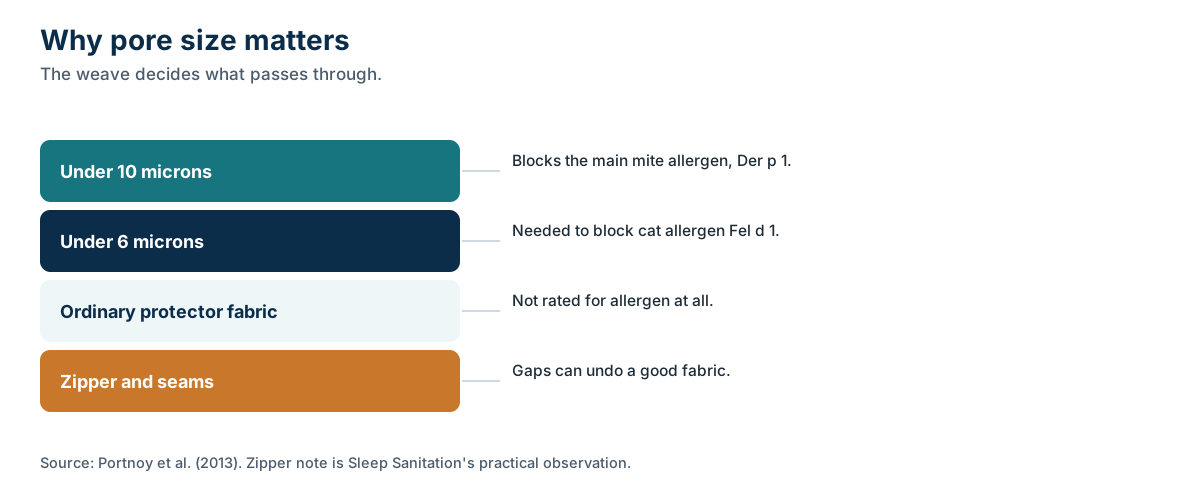
According to the practice parameter, woven fabrics with a mean pore size smaller than 10 microns block the main mite allergen, Der p 1, while blocking cat allergen needs pores smaller than 6 microns. If you're buying an encasing for allergy, look for a stated pore size and a washable woven fabric. A fitted protector won't have either, because that's not its job.
The zipper and seams count too. A barrier fabric with a gap at the zipper end leaks at the gap. Encasings with a flap or zipper cover, sized to fit snugly, close that route.
What the trials found
The trials are worth reading carefully, because they're often summarized as either a clear success or a clear failure. Both are oversimplified.
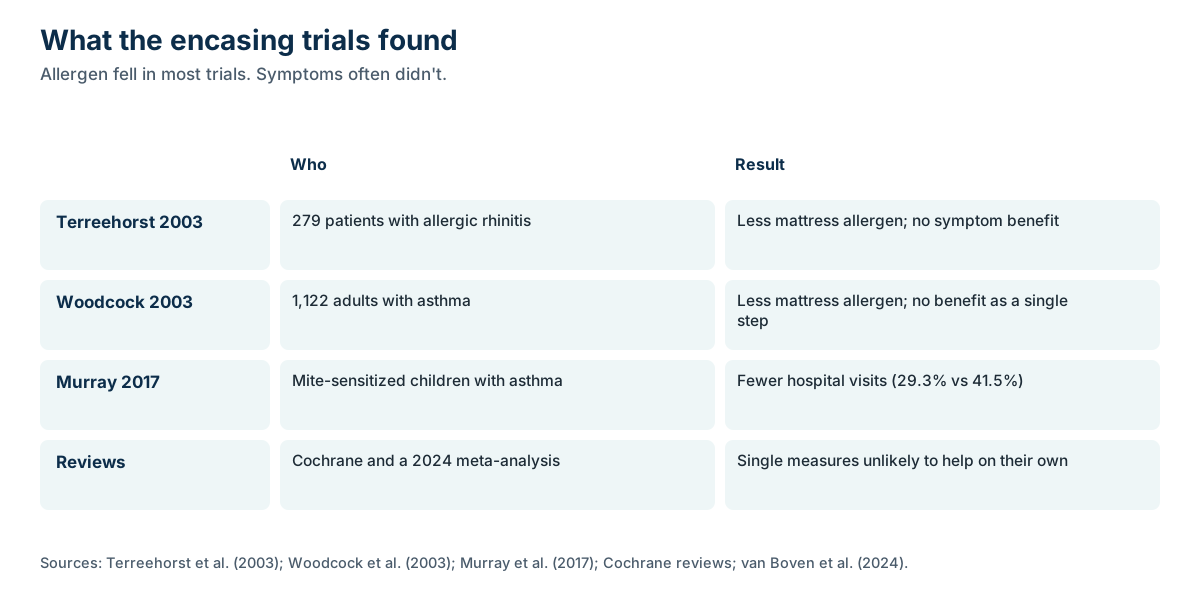
Allergic rhinitis, 2003. Terreehorst and colleagues gave 279 patients with mite-sensitive allergic rhinitis either impermeable or ordinary covers for mattress, pillow and duvet for a year. Mite allergen in the mattresses fell significantly in the impermeable group, but there was no significant effect on symptoms. The authors concluded that "this single avoidance measure did not lead to a significant improvement" in rhinitis symptoms.
Asthma in adults, 2003. Woodcock and colleagues ran a double-blind trial of allergen-impermeable bed covers in 1,122 adults with asthma. Mattress allergen fell in the active group, but lung function and the ability to reduce inhaled steroids didn't differ. Encasings as a single measure didn't help these adults.
Asthma in children, 2017. Murray and colleagues randomized 284 mite-sensitized children aged 3 to 17, all recruited after an emergency hospital visit for asthma, to real or placebo encasings for a year. Fewer children in the encasing group attended hospital with an exacerbation: 29.3% versus 41.5%. In adjusted analysis the risk was 45% lower. The annual rate of such visits was lower too but not statistically significant, and there was no difference in courses of oral steroids.
Reviews. A Cochrane review of rhinitis trials found that only two encasing studies were of good quality and the rest "small and of poor quality." A 2024 meta-analysis grouped encasings with hot-washing bedding as "partial bedroom control" and concluded that "partial bedroom control is not recommended" as a strategy on its own, while combined bedroom measures showed more promise.
What the guidance says
The 2013 practice parameter recommends encasings, but with a clear caveat: encasings "effectively contain mite allergens," yet covers alone are unlikely to bring a benefit unless used as part of a broader avoidance plan. That's consistent with the trials: the allergen drops, and the effect on symptoms depends on who you are and what else you do.
One transparency note the parameter itself makes: one workgroup member owned a company that sells a product discussed in it, so the encasing section was rewritten by other members without his participation. We mention it because the document does.
Choosing and using them
- For spills, sweat and stains: a washable fitted protector. Wash it regularly, more often with pets, children or night sweats.
- For mite allergy: a woven encasing with a stated pore size, on the mattress, box spring and pillows, as part of the plan your allergist suggests.
- For both: encasing first, protector over it. The protector takes the daily mess; the encasing stays on as the barrier.
- Fit: snug, with the zipper fully closed and covered. Check for tears every time you change the bed.
Washing schedules for each are in how often to wash sheets and protectors.
A protector or encasing also keeps a topper cleaner if it goes over the top layer; toppers covers which fills can go in a washer and which can't.
What neither one does
A protector or encasing keeps new soil and allergen from moving between you and the mattress. Neither removes what was already in the mattress before it went on, and protectors don't cover everything. If the bed was uncovered for years, had an accident get through, or smells, cleaning still has a job; is cleaning worth it with a protector? works through that. More care questions are in the hub.
Sleep Sanitation's view
This section is our view. We recommend a washable protector on every bed, and a woven encasing where someone is mite-allergic and their allergist agrees. We don't sell either, and we don't think a cleaning replaces them. When a protected or encased mattress needs attention, our visits use dry vapor steam with little water, HEPA vacuuming and UV-C light, and include a moisture check after service and the built-in bed mite sensor on our UV-C vacuum. See how we're different or call or text (402) 512-5658.
What we don't know
- Why encasings helped children with severe asthma in one trial but not adults in others. Age, severity and exposure levels all differed.
- How much an ordinary fitted protector reduces mite allergen exposure. Trials tested barrier encasings, not spill protectors.
- How well encasings hold their barrier after years of washing and use in real homes.
Changelog
- 7 October 2026: First published. Sources accessed on this date.
Sources
- Environmental Assessment and Exposure Control of Dust Mites: A Practice Parameter (Portnoy et al., 2013) · PubMed Central
- Evaluation of Impermeable Covers for Bedding in Patients With Allergic Rhinitis (Terreehorst et al., NEJM, 2003) · PubMed
- Control of Exposure to Mite Allergen and Allergen-Impermeable Bed Covers for Adults With Asthma (Woodcock et al., NEJM, 2003) · PubMed
- Preventing Severe Asthma Exacerbations in Children: A Randomized Trial of Mite-Impermeable Bedcovers (Murray et al., 2017) · PubMed
- House Dust Mite Avoidance Measures for Perennial Allergic Rhinitis (Cochrane Review) · PubMed Central
- House Dust Mite Control Measures for Asthma (Cochrane Review) · PubMed Central
- House Dust Mite Allergen Avoidance Strategies for the Treatment of Allergic Asthma: A Hypothesis-Generating Meta-Analysis (van Boven et al., 2024) · PubMed Central
- Update on House Dust Mite Allergen Avoidance Measures for Asthma (Zuiani and Custovic, 2020) · PubMed Central
Last reviewed October 7, 2026. Manufacturer specifications and care instructions change; check the current version for your exact model. This page is general information, not medical advice. How we source and check pages: editorial standards.