
Short answer
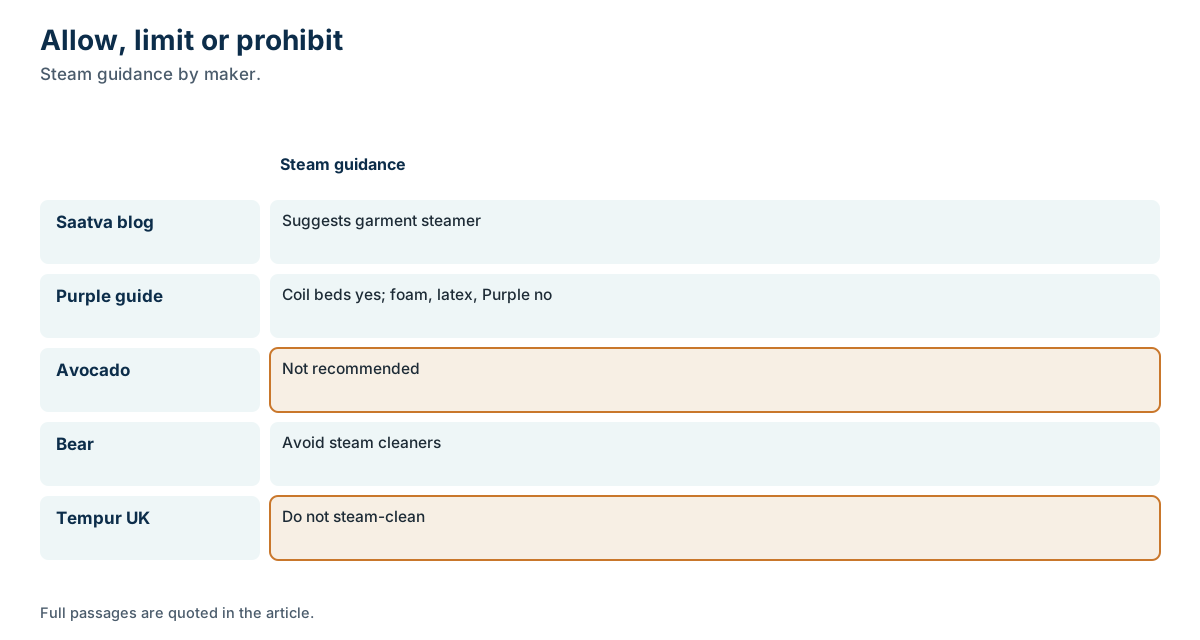
Each maker writes care rules for its own beds. Saatva's blog suggests a garment steamer; Purple allows steam on innerspring and hybrid beds but not memory foam, latex or its own beds; Tempur, Avocado and Bear say no. Stated reasons: moisture for foam, heat for latex. None mentions dry vapor by name, and we don't read that as permission.
Key terms used on this page
- Viscoelastic foam:
- The foam sold as memory foam. The Polyurethane Foam Association describes it as a type of open cell, flexible polyurethane foam with slow recovery after compression, and says its firmness, support and recovery rate are affected by temperature and humidity.
- Mattress saturation:
- Water filling the open cells of a foam or fiber layer below the cover, rather than sitting at the surface. Casper's care page warns that the foam in the mattress core will soak up water and detergent; saturation is that outcome.
- Heat softening:
- The temporary softening of viscoelastic foam as it warms. The PFA says heat, even body heat, can soften viscoelastic materials and, in extreme situations, affect the foam's ability to provide support. It gives an optimum range for memory action of 55°F to 85°F.
- Foam lamination:
- Bonding foam layers to each other or to fiber and fabric to build a mattress. Adhesive data sheets from Jowat, ADiNO, Worthen and 3M each describe bonding foam, which tells us mattresses are glued in different ways with different chemistries.
- Surface moisture:
- Water held in the cover fabric and the top of the comfort layer, close enough to the air to evaporate quickly. It is the moisture a low-moisture method aims to leave, as opposed to water that has travelled down into the core.
Read a few mattress makers' care pages and you'll find them disagreeing about steam. One suggests it. Another allows it for some constructions. Several say not to use it. That isn't confusion. Each maker is writing for its own materials, its own warranty and its own view of what owners will do with a steamer. This article quotes each passage in full, sets out the reasons they give, and explains how we handle the disagreement.
This article is general information about cleaning and materials, not medical, legal or engineering advice. For warranty questions, ask your mattress maker.
The passages, in full
These are the makers' words, each written for its own products.
Saatva (blog): "Bonus tip: If you have a garment steam cleaner, go over your mattress with that before vacuuming to kill and loosen even more dust mites." It's a tip in a blog post rather than a care rule, and it names a garment steamer, not a commercial unit.
Purple (cleaning guide): "After vacuuming, you can steam clean your innerspring or hybrid mattress, but you should not steam clean a memory foam, latex, or adjustable mattress since the heat and water could damage its materials. Note that you should not steam clean a Purple mattress. If you have any doubts, refer to the manufacturer’s care instructions and your warranty."
Avocado (cleaning guide): "Allow any residual dampness to air-dry completely. You can place the mattress outside, since the natural latex is fully covered and not exposed to direct sunlight. However, a cool blow dryer will also work. Steam cleaners are not recommended because their excessive heat can over-bake the organic latex."
Bear (help page), in its list of things to avoid: "Using steam cleaners, as excess moisture may damage foam materials."
Tempur UK (care page): "There is a high risk that soaking with water or other cleaning fluids will cause irreversible damage, destroying the benefits of comfort and support which the TEMPUR ® Material provides. It will also invalidate your guarantee. Do not steam-clean or dry-clean the TEMPUR ® Material."
Tempur-Pedic US (product care): "Never wash the TEMPUR® material. TEMPUR® material should never become wet."
The reasons they give
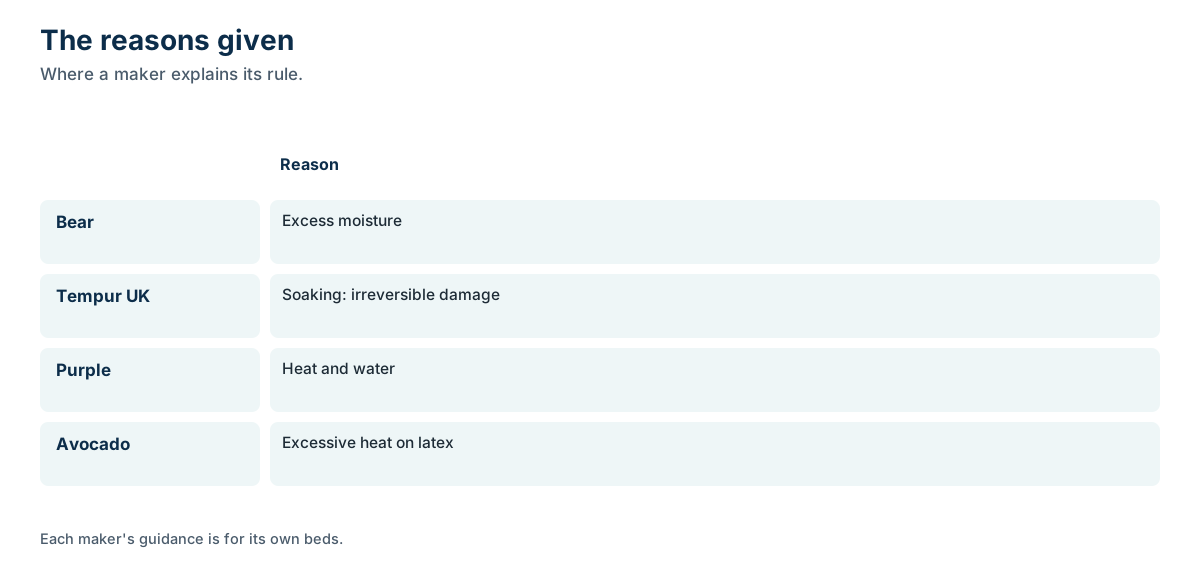
Not every maker gives a reason, but those that do fall into two groups.
Moisture. Bear names "excess moisture." Tempur ties soaking to "irreversible damage." Purple names "the heat and water." Beautyrest, which doesn't mention steam, says: "We do not recommend applying liquids to the mattress. Applying liquids may stain the fabric and make the soiled area worse. Moisture or chemicals applied directly to the mattress can cause premature breakdown of the foam and damage the product." Casper, writing about spot cleaning rather than steam, says in full: "If you need to clean your Casper mattress or cover, we suggest spot-cleaning affected areas with water and mild detergent. Be careful not to saturate the mattress with too much water and/or detergent, as the foam in the mattress core will soak up water and detergent. Allow the treated area to air dry completely before putting your sheets and bedding back on."
Heat. Avocado is the only maker we found that gives heat alone as the reason: "excessive heat can over-bake the organic latex."
Saatva's suggestion is for a garment steamer, a handheld clothing tool, and it gives a dust mite reason. It doesn't discuss moisture or heat.
Why the materials explain much of the split
The reasons line up with the materials. Foam is open-celled and holds water; the Polyurethane Foam Association's viscoelastic bulletin also says memory foam's firmness, support and recovery "are often affected by temperature and humidity." A lab study by Lapčík and colleagues, on hobby-market soft polyurethane foam held at 45 or 80°C in humid air for up to 300 hours, with each measurement repeated five times, tied rising humidity to lasting stiffness loss. So makers of foam beds pointing to moisture fits the material data.
Latex is a different polymer, and its maker points to heat. Coil-based beds have less foam to hold water. Purple's general guide treats them differently, but it doesn't say why, and it also says not to steam clean a Purple mattress. How hybrid mattresses react differently from solid foam goes through that.
What the passages don't say
We can only read what makers publish, and we don't guess at reasons they haven't given. Tempur's passage links its rule directly to its guarantee, and its "Do not steam-clean" applies whatever the moisture level; it makes no exception for low-moisture equipment. None of the passages above mentions dry vapor by name, and silence about dry vapor isn't permission. Where a maker says no, that is the rule for its bed, and our own method doesn't change it.
Allow and prohibit aren't the only answers
Between the two ends, some care pages are silent on steam, and some address liquid without mentioning steam at all. Beautyrest and Casper are examples above: both write about liquids and foam, neither names a steamer. Silence isn't a third category of permission. A page that warns against liquid in foam is a rule in its own right, even if it never names a machine. And a page that allows steam on some constructions, as Purple's general guide does, still ends by sending owners back to "the manufacturer’s care instructions and your warranty." Every route leads back to your own label.
Reading your own care label
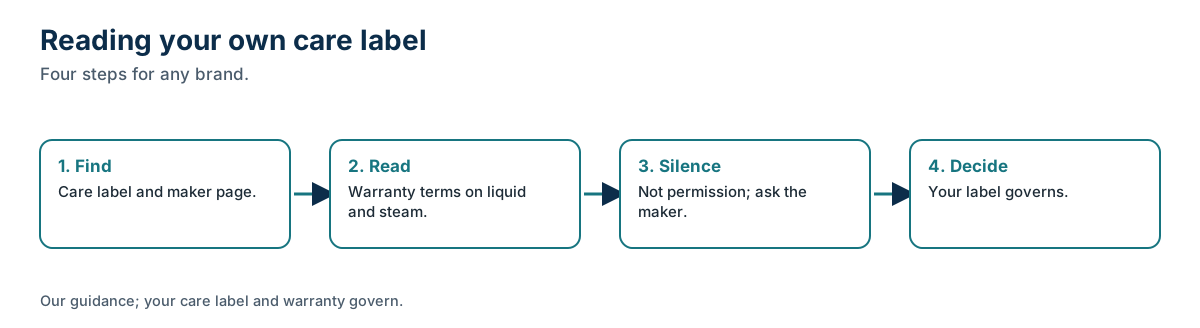
The practical steps are the same whatever your brand:
- Find the care label and the maker's online care page. Hub 2's care-label entry explains what to look for.
- Read the warranty terms for anything about liquids, cleaning or steam.
- If the label is silent on steam, don't treat silence as permission. Ask the maker.
- If the label says no steam, that's the maker's rule for your bed.
Hub 2's compatibility guide collects every brand we checked, and its Tempur-Pedic guide covers that maker in detail.
Where we stand
Here is our position plainly. Sleep Sanitation cleans beds with dry vapor, including beds whose makers say not to steam clean them. That's our own method and reasoning, not a manufacturer exemption, and not a reading of the passages above. We don't say a maker's warning is about some other kind of machine, and we don't claim any maker endorses what we do. Our reasoning is that the mechanism the moisture-based warnings describe is liquid water held in foam, and dry vapor in moving passes is designed to keep water at the cover. Your care label and warranty terms govern your decision. Check your warranty, or ask the maker, before booking.
On a visit, the materials inspection sets steam temperature and pass speed, and dry vapor covers the surface and the seams, tufts, ridges and edges where dust and shed skin flakes collect. Our Italian-made Vapor Clean machines, the Magnum XP with a built-in vac, the ProV 350 and the Pro6 Duo, adjust output and speed for each bed. Organic cleaning methods are our default. The visit is part of the standard price; severe or biohazard contamination is quoted as a custom surcharge before we start. Hub 2 explains the CDC's cleaning and sanitizing terms. Questions about your bed before booking: call (402) 512-5658.
Where to read next
The moisture and heat guide sets the makers' passages beside the material evidence, and this hub lists every article. For why the build matters, read why mattress construction matters for cleaning. For the heat-versus-water question behind the split, see heat vs water, and for memory foam, what happens when memory foam gets wet.
What we don't know
- Each maker's full reasoning for its rule. We can read only what they publish.
- Whether any maker has tested dry vapor on its own beds. None of the pages we found says so.
- How each maker would treat a warranty claim after dry-vapor cleaning. Only the maker can answer that.
Changelog
- 3 October 2026: First published. Sources accessed on this date.
Sources
- How to Clean Your Mattress in 5 Simple Steps (blog, accessed 2026-10-02) · Saatva
- How To Clean a Mattress in 9 Steps (last updated 16 Oct 2025, accessed 2026-10-02) · Purple
- How to Clean Your Natural Mattress Without Using Harsh Chemicals (25 June 2026, accessed 2026-10-02) · Avocado
- How do I clean a Bear mattress? (updated 6 May 2026, accessed 2026-10-02) · Bear
- Caring for your TEMPUR (UK, updated 11 July 2023, accessed 2026-10-02) · Tempur UK
- Product care (US, accessed 2026-10-02) · Tempur-Pedic
- How do I clean my mattress? (updated 16 Sep 2026, accessed 2026-10-02) · Beautyrest
- How to clean your mattress: a mattress care guide (accessed 2026-10-02) · Casper
- IN-TOUCH Vol. 11 No. 1: Viscoelastic (Memory) Foam (revised 2016) · Polyurethane Foam Association
- Effect of Conditioning on PU Foam Matrix Materials Properties (Lapcik et al., Materials, 2022) · PubMed Central
- Magnum XP-Vac product page (maker's claims, accessed 2026-10-02) · Vapor Clean
- ProV 350 product page ('Italian Made'; maker's claims, accessed 2026-10-02) · Vapor Clean
- Pro6 Duo product page ('Made in Italy'; maker's claims, accessed 2026-10-02) · Vapor Clean
- Cleaning and disinfecting your school (definitions) · CDC
Last reviewed October 3, 2026. Manufacturer specifications and care instructions change; check the current version for your exact model. This page is general information, not medical advice. How we source and check pages: editorial standards.