
Short answer
A mattress protector is a washable layer that keeps spills, sweat and body fluids off the mattress and helps you meet the stain terms in most warranties. Brands from Purple to Beautyrest recommend one. It can't stop everything: bed mite allergen builds up in a mattress over time, and washing the protector doesn't clean the mattress inside. The routine that works is a protector, washed regularly, plus mattress sanitation twice a year.
Key terms used on this page
- TPU membrane:
- A thin thermoplastic polyurethane film laminated to a protector's face fabric to stop liquid. Casper lists 'Polyester with Thermoplastic Polyurethane' for its waterproof protector's top.
- Stain clause:
- The warranty term that excludes stained or soiled mattresses. Purple, Saatva and Avocado all exclude stains in their own warranty terms.
- Moisture vapor transmission:
- How much water vapor passes through a fabric or membrane. Higher means more breathable; woven microfiber encasings let air and water vapor pass freely.
- Six-sided encasement:
- A cover that zips closed around the whole mattress, top, bottom and sides. NIEHS advises encasing mattresses and pillows in allergen-impermeable covers.
Weekly
Bedding wash
The allergist practice parameter advises washing bedding weekly to decrease bed mite numbers and allergen levels.
More
Allergen build-up
Older mattresses are likely to have more bed mites and higher accumulated allergen concentrations.
24–48 h
Drying window
The EPA says to dry water-damaged areas and items within 24 to 48 hours to prevent mold growth.
100%
Mite mortality
High-temperature steam (96°C) killed 100% of bed mites in treated mattresses and carpet in an Ohio State study.
A protector does
Keep liquid and stains out
- Stops spills, sweat and accidents at the surface
- Keeps the ticking clean and stain-free
- Helps meet warranty stain and fluid terms
- Washes in a regular laundry load
Sanitation does
Treat the mattress itself
- Dry vapor steam: 212°F+ at the surface, checked with a temperature gun
- HEPA vacuuming of the mattress surface
- UV-C light treatment
- A bed mite sensor reading and a moisture check before we leave
A mattress protector is the cheapest protection a mattress can have. It catches the spill, the sweat and the accident before they reach the ticking, it washes with the rest of your laundry, and most mattress brands recommend one. This guide covers every type, how to care for one, what brand warranties say, and the one thing a protector can't do: clean the mattress underneath it.
General information about mattress care, not medical advice. For allergy or asthma questions, talk with your doctor.
The types, in one paragraph each
Waterproof membrane protectors bond a thin film to a fabric face. TPU (thermoplastic polyurethane) is today's common choice; Casper's waterproof protector lists "Polyester with Thermoplastic Polyurethane" for its top. Older vinyl covers are fully waterproof but crinkly and warm. Compare them in TPU vs vinyl vs polyurethane.
Fitted protectors, encasements and pads differ in coverage. A fitted protector covers the top and sides like a sheet. A six-sided encasement zips around the whole mattress. A pad adds cushioning more than protection. See encasement vs fitted protector vs pad and our earlier comparison, protectors and encasings: what they do.
Breathable and cooling protectors use membranes and face fabrics that let more water vapor pass, or finishes that feel cool to the touch: breathable and cooling protectors.
Organic protectors use organic cotton or wool, often with GOTS or OEKO-TEX labels. Naturepedic, for example, recommends "an organic waterproof protector pad" for its quilted crib mattresses. See organic mattress protectors.
What a protector blocks
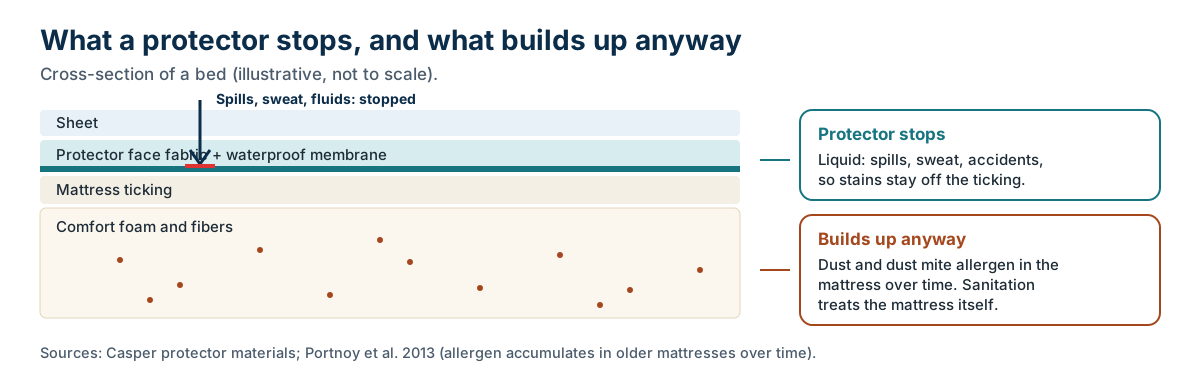
The membrane stops liquid: spills, sweat soaking through, and accidents. That keeps stains out of the ticking and fluid out of the foam. See what a protector blocks and what it doesn't and, for allergen-blocking fabric, mite-allergen encasings and pore size.
Heat, sweat and moisture
A waterproof layer can feel warm, and moisture that can't pass through has to go somewhere. Choosing a breathable protector, keeping humidity down and airing the bed all help. See do mattress protectors make you sleep hot? and moisture and mildew under a protector. Avocado's warranty page puts it plainly: "To prevent mold growth, ensure proper airflow, use mattress protectors, and maintain a dry environment."
Care: wash, dry, replace
Follow the care label. For TPU protectors, Casper's instructions are a good model: "machine wash on cold and tumble dry low," because "Heat drying could cause delamination and shrinkage." See how to wash a mattress protector, how to dry one without ruining it and when to replace a mattress protector. For how often, see how often to wash sheets, pillowcases and protectors.
Warranties
Most warranties exclude stains. Purple's lists "Tears, stains, odors, unsanitary conditions" among excluded damage, and adds: "Purple highly recommends the use of a stretchy, breathable mattress protector at all times to protect your mattress and preserve your warranty rights." Read the brand-by-brand quotes in mattress warranties, stains and protectors.
Kids, pets and caregivers
Protectors matter most on beds that see accidents: kids and bedwetting, pets on the bed, and, for older adults, incontinence: protect, clean, replace.
Why a protector doesn't replace sanitation
The allergist practice parameter notes that older mattresses "are likely to have larger numbers of dust mite and to have accumulated increased concentrations of dust mite allergen over time." Washing the protector cleans the protector. It doesn't reach the mattress underneath, the sides a fitted protector leaves open, or what's built up inside. That's why the routine is both: why a protector doesn't replace mattress sanitation and the protector plus sanitation routine.
Sleep Sanitation's position
This section is our view. Sleep Sanitation serves Omaha, Lincoln and surrounding towns. Every visit includes dry vapor steam, HEPA vacuuming, UV-C light treatment, the built-in bed mite sensor on our JIGOO UV-C mattress vacuum and a moisture check before we leave. We take your protector off at the start of the visit, so you don't need to strip it first; wash it yourself per its care label while we work or afterward. The first mattress is $249. Call or text (402) 512-5658, or email info@sleepsanitation.com. Office hours are Monday to Friday, 9 to 6, and we return calls and texts on weekends.
Changelog
- 15 October 2026: First published. Sources accessed on this date.
Sources
- Environmental Assessment and Exposure Control of Dust Mites: A Practice Parameter (Portnoy et al., 2013) · PubMed Central (Annals of Allergy, Asthma & Immunology)
- Dust Mites and Cockroaches · National Institute of Environmental Health Sciences
- A Brief Guide to Mold, Moisture and Your Home · US Environmental Protection Agency
- Eliminating Dermatophagoides farinae spp. and Their Allergens Through High Temperature Treatment of Textiles (Glass and Needham, 2004) · PubMed (Journal of Medical Entomology)
- Preventing Severe Asthma Exacerbations in Children: A Randomized Trial of Mite-Impermeable Bedcovers (Murray et al., 2017) · PubMed (American Journal of Respiratory and Critical Care Medicine)
- Purple Limited Warranty · Purple
- Saatva Mattress Warranty · Saatva
- What is Avocado's Warranty? · Avocado Green Mattress
- How do I clean my mattress? · Beautyrest
- Product Care · Naturepedic
- Waterproof Mattress Protector: Materials & Care · Casper
- Global Organic Textile Standard (GOTS) · Global Standard gGmbH
- OEKO-TEX STANDARD 100 · OEKO-TEX
Last reviewed October 15, 2026. Manufacturer specifications and care instructions change; check the current version for your exact model. This page is general information, not medical advice. How we source and check pages: editorial standards.