
Short answer
A handful of small studies found people slept somewhat better when their bedrooms got more outdoor air, usually measured as lower CO2. Others, including a double-blind study in children, found no effect. Most involved young, healthy adults. ASHRAE's 2025 position says evidence for direct CO2 effects on sleep at common indoor levels is inconsistent. Better ventilation looks helpful; the size and cause of the effect are unsettled.
Key terms used on this page
- Actigraphy:
- Estimating sleep from movement recorded by a wrist-worn device. Several bedroom ventilation studies used it, including Strøm-Tejsen et al. (2016) and Mishra et al. (2018); it estimates sleep rather than measuring brain activity.
- Single-blind ventilation study:
- A study in which participants aren't told when ventilation changes, so expectations can't drive results. Fan et al. (2023) covertly changed exhaust fan speeds in 29 bedrooms.
- Outdoor air ventilation:
- Outdoor air brought into a space on purpose or by leakage, which dilutes what people and the building give off. ASHRAE says indoor-outdoor CO2 differences can be used to evaluate outdoor ventilation rates, given valid assumptions.
- Bioeffluents:
- Compounds people give off from skin and breath, the source of stuffy-room odor. In a chamber study, bioeffluents with CO2 at 3,000 ppm worsened perceived air quality and symptoms, while pure CO2 at the same level did not.
- Steady-state CO2:
- The level where CO2 stops rising because outdoor air removes it as fast as people add it. Persily and de Jonge's model puts two sleeping adults in a 65 m3 bedroom at 1,988 ppm above outdoors at 0.2 air changes per hour.
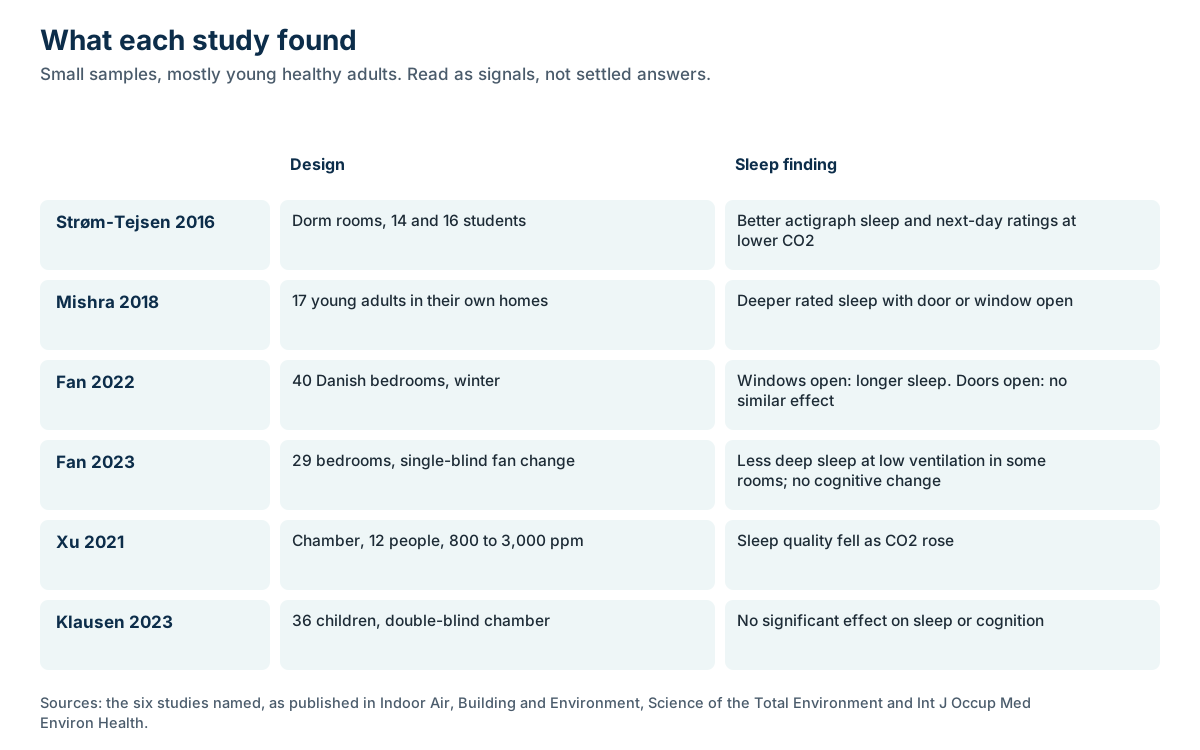
A small body of research links better bedroom ventilation to somewhat better sleep. In field studies, people slept a little better, by various measures, when a window, door or fan brought more outdoor air into the room, usually tracked as lower CO2. A chamber study that raised CO2 alone also found sleep worsened. But other studies, including a double-blind one in children, found no effect, and ASHRAE calls the evidence for direct CO2 effects inconsistent. Here is what each key study found, and what it can't tell you.
General information about bedroom air and ventilation, not medical advice. If you have trouble sleeping, talk with a doctor.
What did the first dormitory studies find?
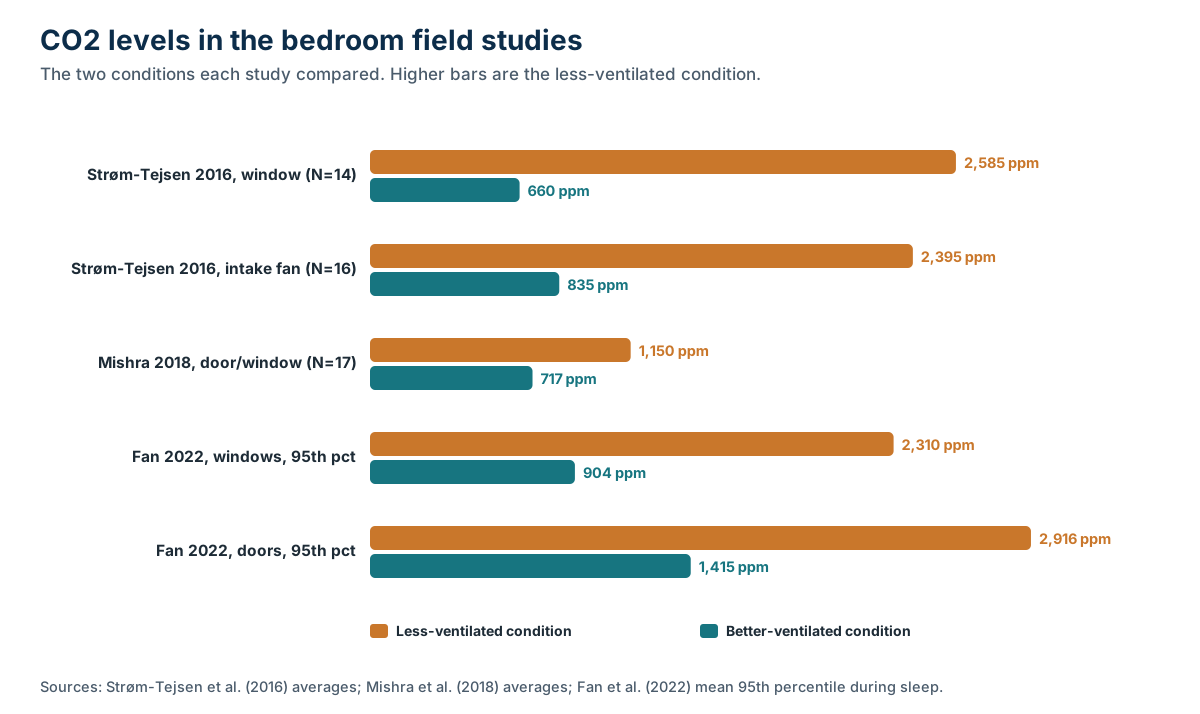
The most cited early work is Strøm-Tejsen et al. (2016), from the Technical University of Denmark. In single-occupancy student dormitory rooms, the researchers ran two experiments. In a pilot with 14 students, opening a window changed the average CO2 to 660 ppm, compared with 2,585 ppm with it closed. In a second experiment with 16 students, a quiet fan in the air intake vent either ran or didn't, giving average levels of 835 versus 2,395 ppm.
The authors report that "objectively measured sleep quality and the perceived freshness of bedroom air improved significantly when the CO2 level was lower," as did next-day sleepiness, ability to concentrate and performance on a test of logical thinking. Sleep was measured with wrist actigraphs. The limits are real: small samples, young students, one setting, and participants in the window experiment knew whether their window was open.
What happened in ordinary homes?
Mishra et al. (2018) followed 17 young adults sleeping in their own homes in the Netherlands, measuring bedrooms over five days with either a window or internal door open, or both closed. Average CO2 was 717 ppm open and 1,150 ppm closed. Of all the sleep measures analyzed, questionnaire-rated depth of sleep and actigraphy-based sleep phase differed significantly between conditions. The authors suggested a threshold close to 1,150 ppm, but with 17 participants that's a hypothesis, not a finding to build a rule on.
Do doors and windows have the same effect?
Not in the largest field study so far. Fan et al. (2022) measured 40 Danish bedrooms over two weeks during the heating season. In the second week, participants opened doors or windows if they'd been closed, or closed them if they'd been open. In the 29 bedrooms where CO2 changed enough to show the change took effect, opening windows improved measured and rated air quality, and "sleep was longer under this condition and sleep quality was subjectively assessed to be better."
Opening doors told a different story: "Similar effects were not observed when the doors were open although the 95th percentile of CO2 concentration decreased by as much as when the windows were open." That's an important result for anyone treating CO2 as the whole explanation. If the CO2 drop alone drove the sleep effect, doors and windows should have matched. The study was part of an ASHRAE research project, and its authors declared no competing interests. Open door vs window vs fan looks at why the two might differ.
What happened when ventilation changed without people knowing?
A stronger design is to change ventilation without telling participants. Fan et al. (2023) ran a four-week study in 29 bedrooms with exhaust ventilation, covertly setting the fan to low, moderate or high for a week each. Sleep was tracked with wrist-worn consumer trackers. In 12 bedrooms with clear differences between all three conditions, "participants had significantly less deep sleep, more light sleep and more awakenings at lower ventilation rate conditions." In 23 bedrooms with a clear high-low difference, deep sleep was significantly shorter at low ventilation. "No differences in cognitive performance between conditions were observed." Relative humidity also rose at low ventilation.
A disclosure matters here: the ventilation systems came from Renson Ventilation NV, whose R&D staff were among the co-authors. Consumer sleep trackers are also less precise than lab sleep recordings. The single-blind design is a strength; the funding, the trackers and the subset analyses are reasons for caution.
What about raising CO2 alone?
A chamber study tried that. Xu et al. (2021) kept 12 people in rooms decorated as bedrooms for 54 consecutive days, at 800, 1,900 or 3,000 ppm, with other conditions tightly controlled. They report that both questionnaire and physiological measures showed sleep quality decreased significantly as CO2 rose. That's the clearest evidence for a direct CO2 effect on sleep, though from a small group in a lab.
Did any study find nothing?
Yes. Klausen et al. (2023) ran a double-blind, placebo-controlled crossover study in a climate chamber with 36 children aged 10 to 12. Conditions were high ventilation at 700 ppm, added pure CO2 at 2,000 to 3,000 ppm, and reduced ventilation with CO2 and bioeffluents at similar levels. There were "no significant exposure effects on cognitive performance," and the one sleep-efficiency difference was "considered to be a chance effect." Is CO2 the problem, or a marker of stale air? covers other studies separating CO2 from other pollutants.
What do the reviews conclude?
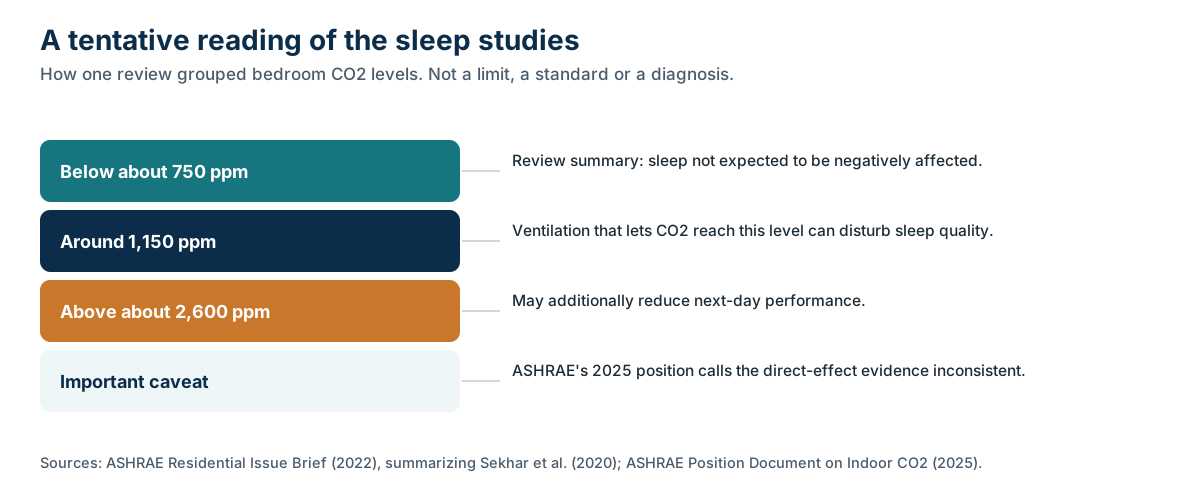
They're cautious. An ASHRAE committee issue brief, summarizing a review by Sekhar and colleagues, says a few studies "suggest that sleep quality will not be negatively affected when bedroom ventilation rates are such that CO2 levels remain below 750 ppm, while ventilation rates allowing CO2 to increase about 1,150 ppm can disturb sleep quality and above 2,600 ppm can additionally reduce the next-day cognitive performance." Note the wording: it's about ventilation rates that allow CO2 to reach those levels, not CO2 alone.
ASHRAE's 2025 position document is blunter: "Existing evidence for direct impacts of CO2 on health, well-being, learning outcomes, sleep patterns, and work performance at commonly observed indoor concentrations is inconsistent. This evidence does not currently justify changes to ventilation and IAQ standards, regulations, or guidelines."
What about surveys?
A Danish survey by Liao et al. (2021) asked 517 people about their bedrooms in winter. Sleeping with mechanical ventilation "tended to reduce sleep disturbance," and stuffy air was the second most sleep-disturbing factor reported. The authors are clear that the results "present associations and are qualitative." Surveys can point to questions; they can't answer them.
How to read all of this
Taken together, the studies point the same general direction: bedrooms with more outdoor air tend to come with slightly better sleep by some measures, in young, healthy adults. They don't establish how big the effect is for any one person, whether CO2 itself is the cause, or whether there's a safe line. They also say nothing about diagnosing or treating sleep problems, which is a question for a doctor.
Sleep Sanitation's view
This section is our view. We read this research as a reasonable case for airing out a bedroom that reads high every night, and not as a case for alarm or for promising anyone better sleep. That's how we describe our optional 72-hour bedroom CO2 test: a three-night ventilation check with a plain-language report and airflow tips, priced by quote, not a medical test. The hub links the rest of this topic, and you can book through our scheduling page.
What we don't know
- Whether CO2 itself, or the bioeffluents, humidity and other pollutants that rise with it, drives the sleep differences. Doors and windows lowered CO2 equally in one study but only windows were linked to longer sleep.
- How the findings apply to older adults, people with sleep disorders or children at home. Most participants were young and healthy.
- How large the effect is when measured with full lab sleep recordings in real bedrooms over months rather than weeks.
Changelog
- 7 October 2026: First published. Sources accessed on this date.
Sources
- The effects of bedroom air quality on sleep and next-day performance (Strøm-Tejsen et al., Indoor Air, 2016) · Wiley (DOI; open access)
- Window/door opening-mediated bedroom ventilation and its impact on sleep quality of healthy, young adults (Mishra et al., Indoor Air, 2018) · Wiley (DOI)
- A field intervention study of the effects of window and door opening on bedroom IAQ, sleep quality, and next-day cognitive performance (Fan et al., 2022) · Building and Environment (DOI)
- A single-blind field intervention study of whether increased bedroom ventilation improves sleep quality (Fan et al., 2023) · Science of the Total Environment (DOI)
- Experimental study on sleep quality affected by carbon dioxide concentration (Xu et al., Indoor Air, 2021) · Wiley (DOI)
- The effect of air quality on sleep and cognitive performance in school children aged 10-12 years (Klausen et al., 2023) · PubMed Central
- A survey of bedroom ventilation types and the subjective sleep quality associated with them in Danish housing (Liao et al., 2021) · Science of the Total Environment (DOI)
- Residential Issue Brief: Ventilation, IEQ and Sleep Quality in Bedrooms (2022) · ASHRAE Residential Buildings Committee
- ASHRAE Position Document on Indoor Carbon Dioxide (approved 2025) · ASHRAE
- Bedroom ventilation: Review of existing evidence and current standards (Sekhar et al., Building and Environment, 2020) · Elsevier (DOI)
Last reviewed October 7, 2026. Manufacturer specifications and care instructions change; check the current version for your exact model. This page is general information, not medical advice. How we source and check pages: editorial standards.