
Short answer
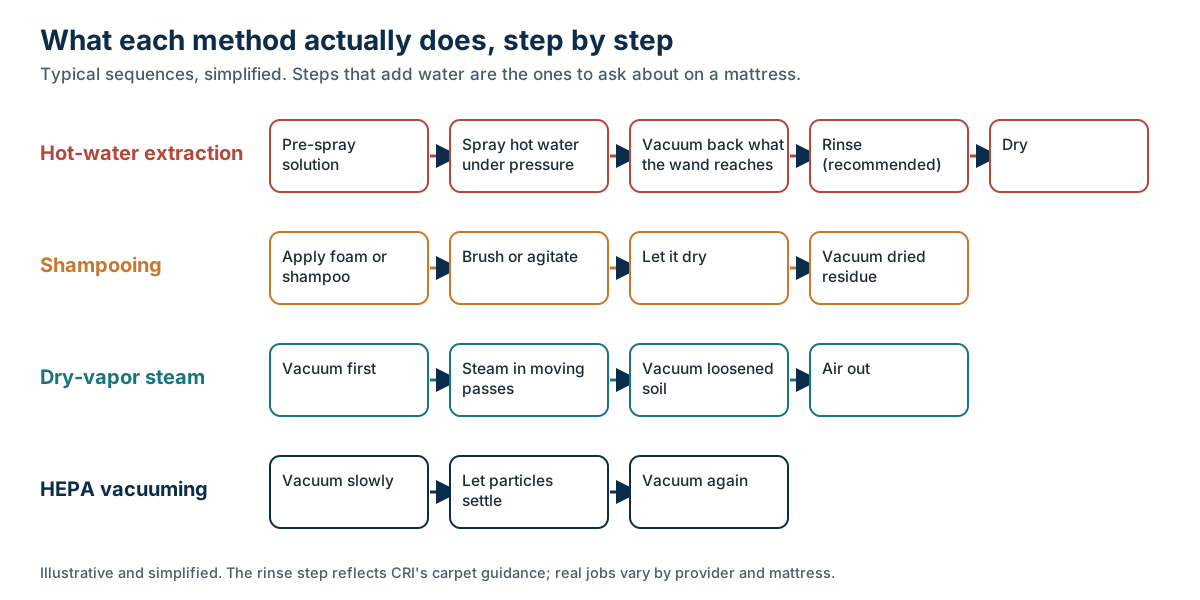
The four common mattress cleaning methods differ mainly in how much water they put into the mattress and what they remove. Hot-water extraction sprays solution and vacuums most of it back. Shampooing works detergent into the fabric. Dry-vapor steam delivers heat with a small amount of condensate and no detergent required. HEPA vacuuming removes loose dust and allergen with no water or heat. No single method does everything.
Key terms used on this page
- Hot-water extraction (HWE):
- The carpet industry's most common professional method. The Carpet and Rug Institute defines an extractor as equipment that uses pressure, water or cleaning solution, and suction to remove soil. It is often marketed as 'steam cleaning' even though it sprays hot water rather than steam.
- Dry-vapor steam:
- Steam made in a sealed, pressurized boiler and released through a hose and nozzle as hot vapor with a low liquid-water content. In the vendor specifications we reviewed, professional units are rated from 80 psi (Ladybug 2350) to 150 psi (Daimer), with stated boiler temperatures from about 345°F (Optima) to 360°F (Daimer); these are maker claims. Daimer describes its steam as about 5% water or less and Vapor Clean claims 'just 5-6% moisture'; that is a vendor claim, not an independent standard.
- Shampooing:
- Cleaning with a foaming detergent worked into the fabric by brush, bonnet or rotary machine, then left to dry or extracted. The Carpet and Rug Institute does not recommend the rotary method for residential carpet and warns that residue from over-concentrated solution speeds re-soiling.
- HEPA vacuuming:
- Vacuuming with a sealed system and a filter meeting the HEPA standard, which the EPA says can theoretically remove at least 99.97% of airborne particles 0.3 microns in size. It removes loose dust and allergen-carrying particles without adding water or heat.
- Moisture load:
- The total amount of water a cleaning process puts into a mattress, whether from spray, steam condensate, shampoo or rinse. It is the main thing that decides how long a mattress takes to dry.
- Residual moisture:
- Water left in a material right after cleaning, before drying. For carpet, the Carpet and Rug Institute's test for its deep-cleaning extractor seal allows up to 8 ounces per square yard. We have not found an equivalent published test for mattresses.
- Latent heat (condensation):
- The energy steam releases when it condenses back into water, about 2,257 kJ per kilogram at atmospheric pressure and somewhat less at higher boiler pressures (about 2,048 kJ/kg at 7 bar gauge). It is why steam heats a surface quickly, and why steam that heats a surface always leaves some condensed water behind.
- Boiler temperature vs surface temperature:
- Boiler temperature is the temperature of steam inside the machine. Surface temperature is what the mattress fabric actually reaches. Surface temperature is always lower and depends on nozzle distance, pass speed, fabric and the tool, and manufacturers rarely publish it.
- Detergent residue:
- Cleaning chemistry left behind in the fabric after cleaning. The Carpet and Rug Institute says residue from over-concentrated solution contributes to rapid re-soiling, which is why extraction cleaners are told to rinse.
- Cleaning, sanitizing and disinfecting:
- As the CDC uses the words: cleaning removes dirt and germs from a surface; sanitizing lowers the number of germs to a safer level; disinfecting kills germs on a surface, usually with a registered chemical used as labeled. These words describe different results and should not be used interchangeably.
- Mattress layers (ticking, comfort layers, support core):
- Ticking is the outer fabric cover. Comfort layers are the foams, latex, fiber or wool directly under it. The support core is the coil unit or base foam underneath. Most mattresses also include a fire barrier between the ticking and the comfort layers.
- Der p 1:
- One of the main dust mite allergens, a protein carried mostly on mite fecal particles. It is the allergen most often measured in mattress and carpet studies. It is stable enough that removing it matters as much as killing live mites.
The four common ways to clean a mattress are hot-water extraction, shampooing, dry-vapor steam and vacuuming (ideally HEPA vacuuming). They differ mainly in two things: how much water they put into the mattress, and whether they remove material or only treat it in place. Extraction sprays solution and vacuums most of it back. Shampooing works detergent into the fabric. Dry-vapor steam delivers heat with a small amount of condensed water and doesn't require detergent. HEPA vacuuming adds no water or heat and removes loose particles. None of them does everything, and the right choice depends on the mattress, what you're trying to remove and what the manufacturer allows.
This guide explains each method in terms of what physically happens to the mattress. It is the reference the rest of the Mattress Cleaning Methods hub builds on, and every defined term links to the hub vocabulary.
The short version
| Method | What goes in | How heat is delivered | What it removes | What it can leave behind | Main risk on a mattress |
|---|---|---|---|---|---|
| Hot-water extraction | Heated water and cleaning solution, sprayed under pressure | Hot liquid | Water-soluble soil and loose debris, pulled back by suction | Residual moisture and any detergent residue not rinsed out | Water travelling into foam that a surface wand can't pull back out |
| Shampooing | Foaming detergent, worked in by brush or machine | Little or none | Some surface soil, depending on how it's recovered | Detergent residue | Residue that attracts soil; wicking stains |
| Dry-vapor steam | Pressurized vapor from a boiler | Latent heat released as vapor condenses on the fabric | Loosens soil, which then has to be vacuumed or wiped away | A small amount of condensate | Heat- or moisture-sensitive materials; brands that prohibit steam |
| HEPA vacuuming | Nothing | None | Loose dust, skin flakes and allergen-carrying particles at the surface | Nothing added | Doesn't reliably kill or remove live dust mites |
The table is a simplification. A cleaner can run an extractor carefully or carelessly, and a steam cleaner can be well tuned or spit water. But the mechanisms don't change, and the mechanisms are what decide the outcome.
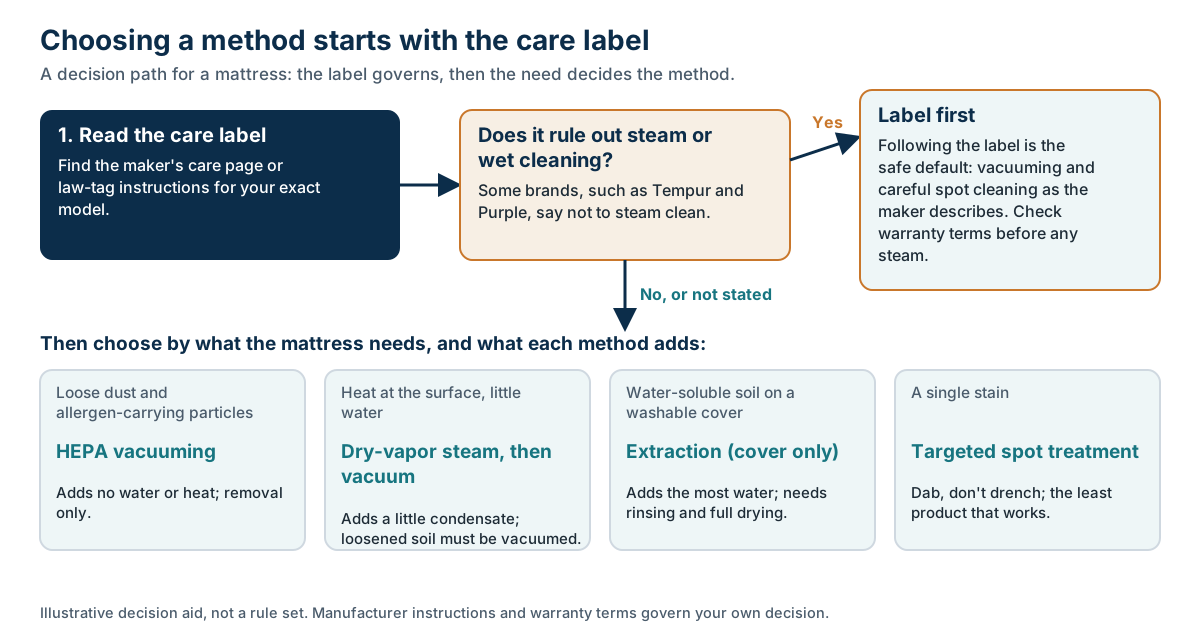
Why the method matters more on a mattress than on a carpet
Most mattress cleaning equipment was designed for carpet, so it helps to see what is different about a mattress.
A carpet is a thin layer of fiber on a backing, on a pad, on a floor. Water that goes in has a short way to travel, and the whole assembly is designed to be walked on, cleaned and dried. The Carpet and Rug Institute's residential standard tells homeowners that carpet should be dry within 12 hours of extraction cleaning.
A mattress is a deep stack of materials (see mattress layers). Under the outer fabric, called the ticking, there is usually a fire barrier, then comfort layers of foam, latex, fiber or wool, then a support core of coils or base foam. Those layers are many inches deep, and there is no drain at the bottom. Water that travels below the ticking has nowhere to go except back up through the surface as it evaporates.
A mattress is also an allergen reservoir. The 2013 AAAAI/ACAAI dust mite practice parameter names mattresses, pillows and bedding as major sources of mite allergen. You also spend hours a night with your face on it. That makes moisture, residue and allergen more important on a mattress than they are on a hallway carpet.
So the question to ask of any method is not "does it clean?" but "what does it put into a deep, glued, undrained stack of materials, and what does it take out?"
Hot-water extraction: what happens to the mattress
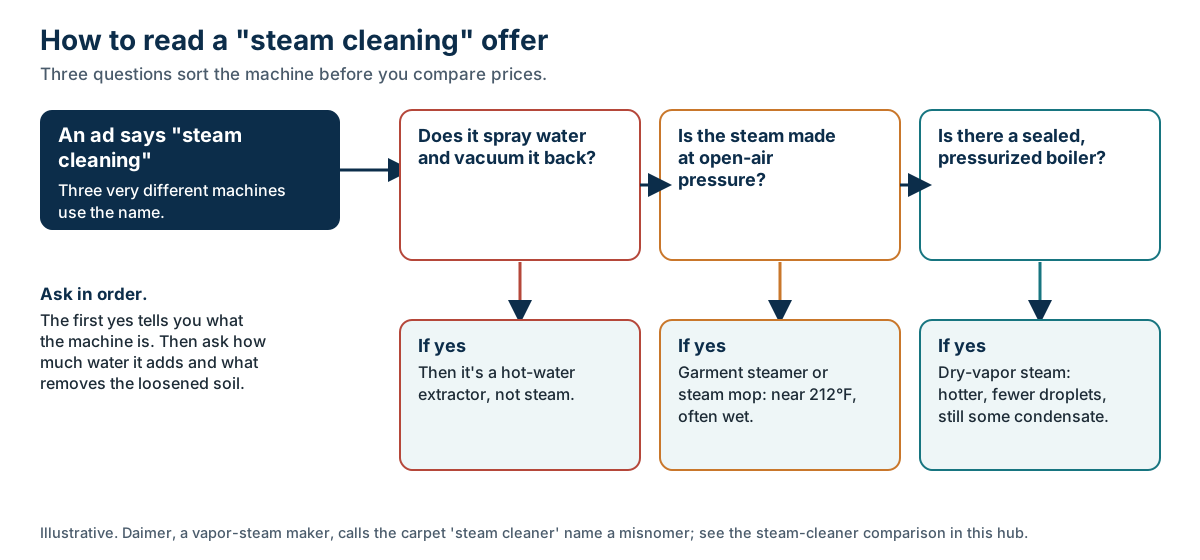
Hot-water extraction is the carpet industry's most common professional method. CRI's residential standard defines an extractor as equipment that uses "pressure, water/cleaning solution, and suction" to remove soil, and lists the three common forms: truckmounted, portable and self-contained. It is often called "steam cleaning" in advertising, but the machine sprays hot water, not steam. Even a steam-cleaner maker, Daimer, points out that "carpet steam cleaner" is a misnomer for these machines.
The equipment is built for volume. A Sapphire 370ss truckmount is rated for water temperatures up to 250°F, pressure up to 1,500 psi and flow up to 3.4 gallons per minute. A compact portable extractor marketed for auto detailing and upholstery, the Mytee HP90, is rated at 120 psi and 1.3 gallons per minute. Most of that water is meant to be vacuumed back out. What matters for the mattress is how much isn't.
On carpet, that leftover is measured. CRI's Test Method 118 allows a deep-cleaning extractor to leave up to 8 ounces of water per square yard (271 grams per square meter) and still earn its seal. As an illustration only, if a mattress surface held water at that same rate, a queen-size top panel (about 3.1 square meters) would hold roughly 0.84 liters of water, close to a full liter. That is a carpet benchmark applied to a mattress for scale, not a measurement of any mattress cleaning. We have not found any published residual-moisture measurement for mattresses.
Extraction does some things well. It flushes water-soluble soil out of fabric, and it can rinse its own detergent if the operator uses a clear-water pass, as CRI recommends after in-tank solution. On a removable, washable cover or a thin pillow-top, those are real strengths.
The problem is depth. A wand pulls water from the surface. Water that has already travelled into the comfort layers is beyond its reach, and foam is good at holding it. Purple warns that a carpet cleaner "could overly saturate a memory foam mattress," and Casper's care guide tells owners to be careful not to saturate the mattress because the foam "will soak up water and detergent." We cover the comparison in detail in dry-vapor steam vs carpet extraction for mattresses, and the equipment question in why carpet-cleaning equipment and mattress-sanitation equipment aren't necessarily interchangeable.
Dry-vapor steam: what happens to the mattress
Dry-vapor steam comes from a sealed boiler that heats water under pressure. Because water boils at a higher temperature under pressure, the steam leaves the boiler far hotter than 212°F. It travels through a hose and comes out of a nozzle or a cloth-covered tool as a jet of hot vapor. The full explanation is in what is dry-vapor steam cleaning?
Published equipment specifications give a sense of the range:
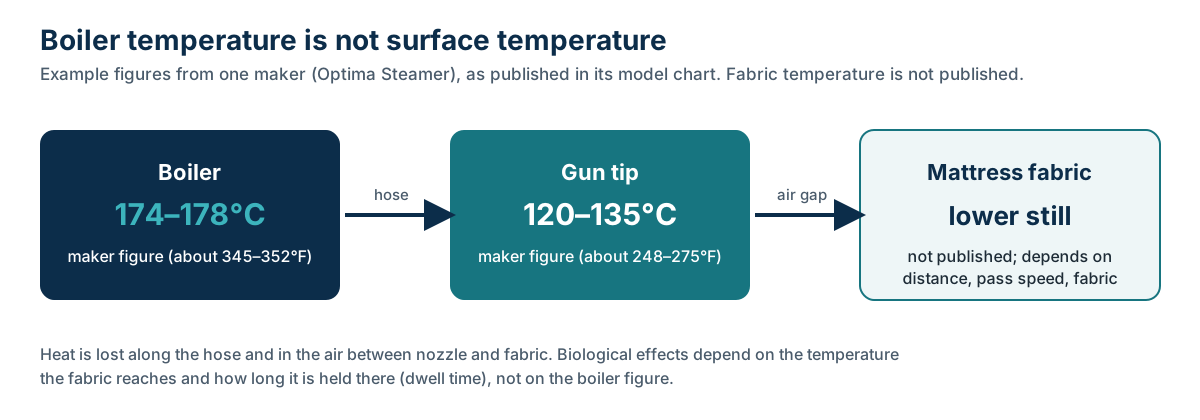
- Optima Steamer commercial units run at 8.5 bar (about 123 psi) with boiler temperatures around 174 to 178°C (345 to 352°F). Optima lists the temperature at the gun tip separately, at 135°C on diesel-heated models and 120°C on electric models, per the Steamericas model comparison.
- Ladybug (Advanced Vapor Technologies) lists its 2350 at a peak pressure of 80 psi and a tip temperature of 260°F, per the maker's spec page. It doesn't list a boiler temperature; saturated steam at 80 psi is about 324°F (calculated from steam tables: NIST Chemistry WebBook, Engineering ToolBox).
- Vapor Clean lists its Magnum XP (with vac) at 145 psi (10 bar) with a 356°F boiler temperature, per its product page; these are maker claims.
- Daimer advertises machines up to 150 psi and 360°F in its steam cleaner FAQ.
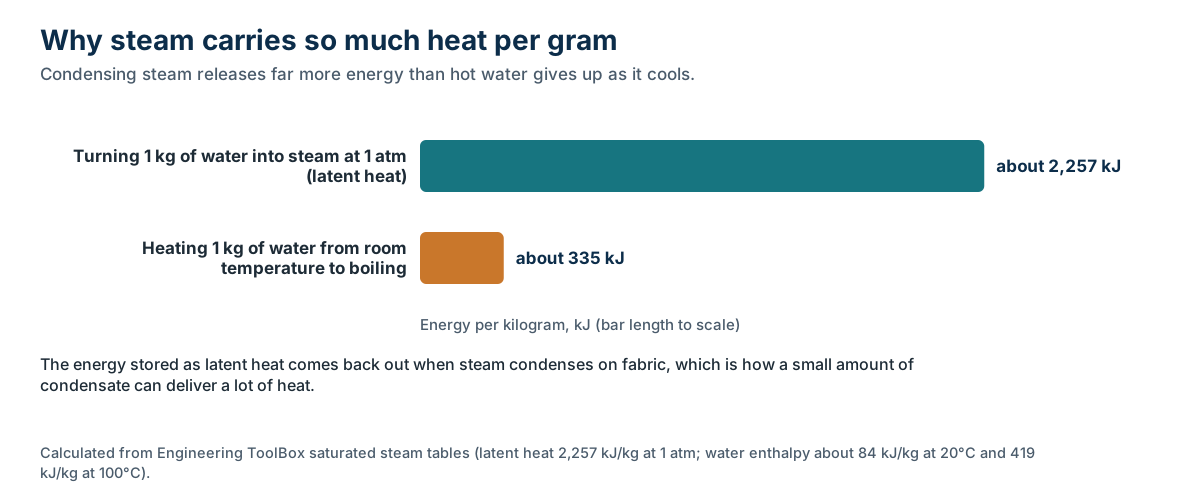
The key physical fact is latent heat. Steam carries most of its energy as the heat it took to turn water into vapor. When it touches a cooler surface, it condenses and releases that energy all at once. According to standard steam tables, that is about 2,257 kJ per kilogram at atmospheric pressure, roughly six to seven times the energy it takes to heat the same water from room temperature to boiling. That's why steam heats fabric so quickly with relatively little water.
It is also why "dry" steam is never perfectly dry on contact. Steam heats a surface by condensing on it, so every pass leaves some water behind. The marketing claim that dry vapor is "about 5% moisture" refers to steam quality, the share of liquid droplets in the steam as it leaves the machine. Daimer says "as little as 5% water," Vapor Clean says "just 5-6% moisture," and Advanced Vapor Technologies, which makes Ladybug, claims (as reported by Green Lodging News) that only 5% of what comes out of the nozzle is moisture and that its machine uses about 1.5 quarts of water an hour. These are vendor claims. We have not found an independent test that measures steam quality at the nozzle for these products, and the figure says nothing about how much condensate ends up in the fabric. We explain that difference in is dry-vapor steam actually "dry"? and how much moisture does dry-vapor steam use?
Operators can control how much water reaches the surface. Optima's user manual has a moisture control valve and tells users to keep it fully closed on water-sensitive surfaces to minimize surface moisture. Pass speed, nozzle distance and the tool matter just as much.
What dry-vapor steam does not do by itself is remove soil. It loosens and heats. The loosened material still has to be vacuumed, wiped or blotted away. That's why steam is usually paired with vacuuming.
What the research shows about steam
The best-known studies were done on carpet, not mattresses:
- In a 1995 study by Colloff, Taylor and Merrett, carpet squares seeded with mites and treated with a domestic steam cleaner had no live mites at any sampling point over four months, and Der p 1 allergen in treated carpet fell 86.7%, compared with 4.7% in untreated areas.
- Vojta et al. (2001) found that dry steam plus vacuuming kept carpet allergen down for up to 8 weeks, compared with about 4 weeks for intensive vacuuming alone.
- Yu et al. (2009) compared HEPA vacuuming alone with HEPA vacuuming plus dry steam on carpets in 50 homes. Mite allergen fell 80.8% and 85.5% respectively, a difference that was not statistically significant. The authors concluded dry steam added only modestly.
Studies of steam against microbes, such as Tanner (2009), were done on lab test surfaces or hospital hard surfaces. They show that steam vapor can inactivate pathogens quickly on those surfaces. They do not measure what happens inside a mattress, and we don't treat them as if they did.
Shampooing: what happens to the mattress
Shampooing means applying a foaming detergent and working it into the fabric with a brush, a bonnet pad or a rotary machine. Sometimes the foam is extracted afterward; sometimes it is left to dry and vacuumed.
The carpet industry has mostly moved away from it. CRI's residential standard says the rotary method is "NOT recommended" for residential carpet and warns that over-concentrated cleaning solution leaves residue that "will contribute to rapid resoiling." Daimer makes the same point about shampoo residue attracting dirt.
On a mattress, shampoo has two specific weaknesses. First, any residue left in the ticking stays where you sleep. Second, shampooing combines liquid with agitation, which pushes solution deeper than a light wipe would, and a mattress has no clear way to rinse it out. As shampoo-wetted fabric dries, dissolved soil can travel back toward the surface with the evaporating water, a process called wicking, so stains can reappear.
Detergent doesn't add much against dust mites, either. McDonald and Tovey (1992) found that detergents did not improve mite killing in lower-temperature washes. The AAAAI practice parameter notes that rugs that were wet-cleaned or shampooed did not have their mites killed, though allergen was removed. We cover chemistry in detail in does professional mattress cleaning have to use detergent?
Vacuuming and HEPA vacuuming: what happens to the mattress
Vacuuming is the only common method that adds neither water nor heat. It pulls loose dust, skin flakes and allergen-carrying particles from the surface. HEPA vacuuming adds a filter that, according to the EPA, can theoretically remove at least 99.97% of airborne particles 0.3 microns in size, so fine particles are less likely to blow back into the room.
The evidence on vacuuming is honest about its limits. The AAAAI practice parameter says vacuuming "does not remove all live mites," but that mite allergen in the form of fecal particles can be removed. It also notes that frequent vacuuming does not significantly decrease mite numbers. At the same time, the guideline recommends HEPA vacuuming and mattress encasements as part of a dust mite control plan.
Many mattress vacuums now add UV-C lamps. UV-C can inactivate microbes on surfaces it reaches, but how well it works on fabric is uncertain. A 2022 laboratory study by Tomás et al., testing UV-C against SARS-CoV-2, found that porous materials such as bed linen and upholstery needed much higher and more variable doses than hard surfaces. A UV-C lamp passing over a mattress for a second or two doesn't reach inside the fabric, and we have not found published data showing what it achieves on mattresses. See HEPA vacuuming vs steam vs extraction for a head-to-head comparison.
What each method removes, kills or leaves behind
| Question | Hot-water extraction | Shampooing | Dry-vapor steam | HEPA vacuuming |
|---|---|---|---|---|
| Removes loose dust and allergen particles? | Partly, along with the water it recovers | Partly, if recovered | No, not by itself; pair with vacuuming | Yes, at the surface |
| Removes water-soluble soil (sweat, spills)? | Yes, if the water is recovered | Partly | Loosens it; must be wiped or vacuumed away | No |
| Delivers heat to the surface? | Hot water (one truckmount is rated up to 250°F) | Little | Yes, through condensation | No |
| Kills dust mites? | Mite deaths in hot water depend on water temperature at the mite | Not reliably | Heat can kill mites in carpet and lab studies; no mattress trial we've found | Not reliably |
| Adds water to the mattress? | Most of the methods here | Yes | A small amount of condensate | No |
| Can leave chemistry behind? | Yes, unless rinsed | Yes | Only if a product is added | No |
| Evidence base | Carpet standards (CRI, IICRC) | Carpet standards | Carpet and lab studies | Allergy guidelines and home studies |
Moisture: the variable that decides most outcomes
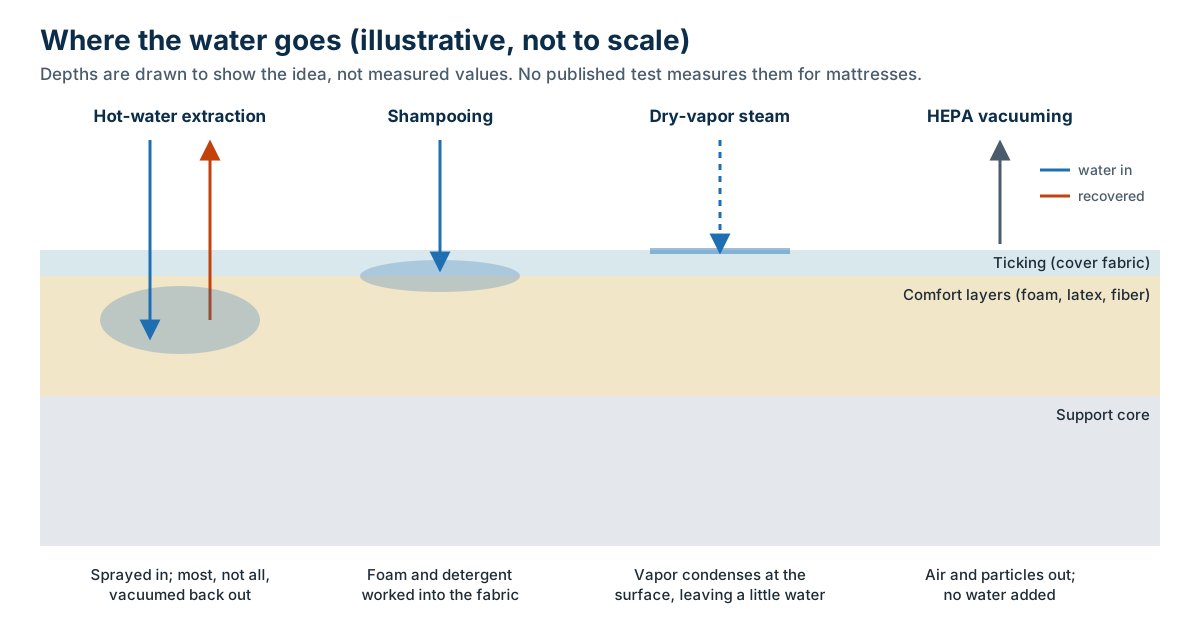
If you take one idea from this guide, take this one: the moisture load, meaning the total water a process leaves in a mattress, decides most of what happens next.
Moisture matters for three reasons:
- Mold and mildew. The EPA's mold guide says wet materials should be dried within 24 to 48 hours, and that if they are, in most cases mold will not grow. A mattress that stays damp longer than that is at risk.
- Dust mites. Mites drink by absorbing moisture from the air. The AAAAI practice parameter says they need relative humidity above about 65% to thrive and decline below 50%, and recommends keeping indoor humidity between 35% and 50%. A damp mattress is a humid microclimate.
- Material damage. Tempur UK warns: "There is a high risk that soaking with water or other cleaning fluids will cause irreversible damage" to its material, and "It will also invalidate your guarantee." Saatva notes that mattresses "aren't designed to get wet, especially memory foam."
A mattress can be dry to the touch long before it is dry through. The ticking dries first, because it's exposed to air. Water in the comfort layers has to travel up through foam that blocks airflow and insulates against heat. That's why the full answer to "how long until it's dry?" depends on where the water went, not just how much went in. See why moisture matters when cleaning a mattress and how long should a mattress take to dry after professional cleaning?
| Moisture figure | Value | Source and context |
|---|---|---|
| Carpet residual moisture allowed for CRI's deep-cleaning extractor seal | Up to 8 oz per sq yd (271 g/m²) | CRI Test Method 118; carpet, not mattresses |
| Carpet dry time after DIY extraction | 6 to 12 hours | CRI 205; carpet |
| Window to dry wet materials before mold risk | 24 to 48 hours | EPA; general building materials |
| Liquid water in dry-vapor steam at the nozzle | "About 5%" | Vendor claims (Daimer and Vapor Clean directly; Ladybug's maker as reported by Green Lodging News); not independently tested that we've found |
| Water used by one vapor-steam machine | About 1.5 quarts per hour | Vendor claim reported by Green Lodging News |
| Water left in a mattress after any method | Unknown | We have not found published measurements |
Heat: a separate question from moisture
Heat and moisture are related but they are not the same variable, and it's a mistake to judge a method on one alone. We explain this in depth in why heat and moisture have to be considered separately.
The first thing to understand is the difference between boiler temperature and surface temperature. The number on a spec sheet is the temperature inside the boiler. Steam cools as it leaves the nozzle and mixes with room air, and fabric heats only as fast as condensation and contact allow. Optima is one of the few makers to publish both figures: around 175°C in the boiler and 120 to 135°C at the gun tip. We have not found published measurements of how hot mattress fabric actually gets under a moving steam tool.
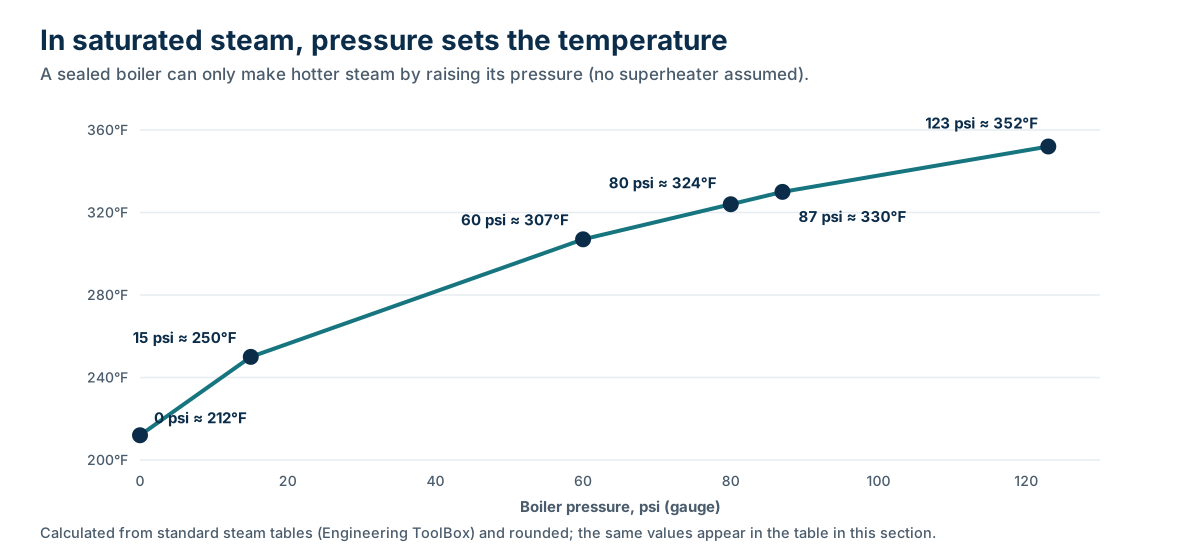
The second thing is that boiler temperature is set by pressure. In saturated steam, temperature and pressure are locked together:
| Boiler pressure (gauge) | Saturated steam temperature |
|---|---|
| 0 psi (open air) | 212°F (100°C) |
| 15 psi | about 250°F (121°C) |
| 60 psi | about 307°F (153°C) |
| 80 psi | about 324°F (162°C) |
| 87 to 90 psi | about 330°F (166°C) |
| 123 psi (8.5 bar) | about 352°F (178°C) |
Values are calculated from standard steam tables and rounded. A published temperature that sits well above the saturation temperature for the published pressure implies a superheater, and is worth asking about.
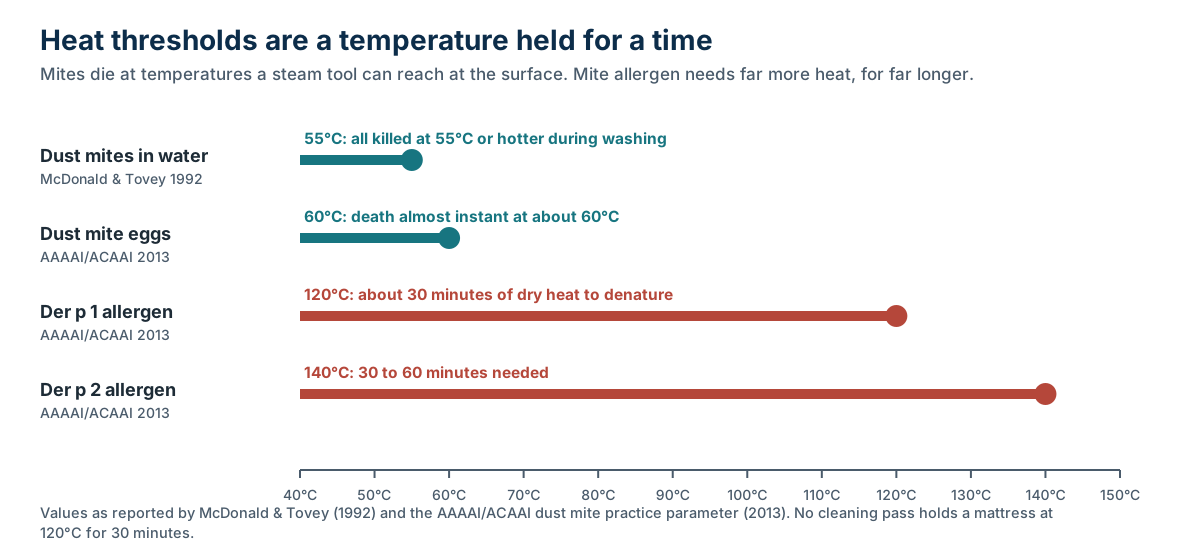
The third thing is dwell time. Biological thresholds are always a temperature held for a time. McDonald and Tovey found all mites died in water at 55°C or hotter, and the AAAAI practice parameter notes mite eggs die almost instantly at 60°C. On the other side, the same guideline says Der p 1, a major mite allergen, needs 30 minutes at 120°C of dry heat to denature. No steam pass on a mattress holds anything at 120°C for 30 minutes, so heat is not a way to destroy allergen. That's why removal (vacuuming) still matters after steam.
Detergent and residue
Detergent helps water lift oily soil, but whatever isn't rinsed out stays in the fabric. CRI's guidance on detergent residue is clear for carpet: over-concentrated solution leaves residue that speeds re-soiling, and a clear-water rinse is recommended. A mattress is harder to rinse than a carpet, because rinsing means more water.
Not every method needs detergent. Dry-vapor steam relies on heat, and vacuuming relies on airflow. Spot treatments, such as enzyme products for organic stains, are a separate step. Our article on detergent explains when chemistry helps and when it just adds residue, and can you sanitize a mattress without soaking it? covers the low-moisture approach.
What mattress manufacturers say
Manufacturer care instructions are the most important input for any mattress, and they aren't consistent. Here is what five major brands publish:
| Brand | What the care guidance says | Source |
|---|---|---|
| Tempur-Pedic | "Do not steam-clean or dry-clean the TEMPUR Material." The US page says TEMPUR material "should never become wet"; spills should be blotted and fan-dried. | Tempur UK, Tempur-Pedic US |
| Purple | "You should not steam clean a Purple mattress." Purple also advises against steaming memory foam, latex and adjustable mattresses and against carpet cleaners on memory foam. | Purple |
| Saatva | Mattresses "aren't designed to get wet, especially memory foam." Dab stains rather than drench them. | Saatva |
| Casper | Spot-clean with water and mild detergent; don't saturate, because the foam will soak up water and detergent. Don't remove the cover. | Casper |
| Sleep Number | Use only a little water, don't remove the cover, and avoid air-freshener sprays that can soak the fabric. | Sleep Number |
Two points come out of this. First, every brand warns about water getting into foam, and the two strictest also name heat. Second, the two strictest brands are specific. Tempur says "Do not steam-clean or dry-clean the TEMPUR Material" and that it "should never become wet." Purple's guide describes setting a steam cleaner to 250°F for innerspring and hybrid mattresses, then says "you should not steam clean a memory foam, latex, or adjustable mattress since the heat and water could damage its materials" and "you should not steam clean a Purple mattress." It warns about carpet cleaners separately. Neither brand's text makes an exception for dry-vapor steam.
Sleep Sanitation's position. Both makers advise against steam cleaning, and neither makes an exception for dry vapor. Tempur UK says "Do not steam-clean or dry-clean the TEMPUR Material." and warns "There is a high risk that soaking with water or other cleaning fluids will cause irreversible damage"; "It will also invalidate your guarantee." Tempur-Pedic US adds that TEMPUR material "should never become wet" and that "Due to the temperature-sensitivity of the TEMPUR-material, adding high heat can hinder its ability to react to your body temperature and conform to your body shape." Purple says "you should not steam clean a memory foam, latex, or adjustable mattress since the heat and water could damage its materials" and "you should not steam clean a Purple mattress". We do clean Tempur-Pedic and Purple mattresses. That is our own choice and our own reasoning; it is not an exemption from the manufacturer, and neither maker has approved it. Because heat and moisture are separate variables, we manage both: an Italian-made Vapor Clean dry-vapor steam system keeps water down (Vapor Clean's product page claims "just 5-6% moisture," a maker claim, not a measurement of our equipment), and quick, repeated passes with the tool kept moving keep heat from dwelling in one spot. Nothing is soaked. Following the manufacturer's label is the safe default, and if your mattress is under warranty, check your manufacturer's warranty terms before booking any cleaning. For how steam and extraction differ mechanically, see dry-vapor steam vs carpet extraction for mattresses.
Clean, sanitize, disinfect: using the words carefully
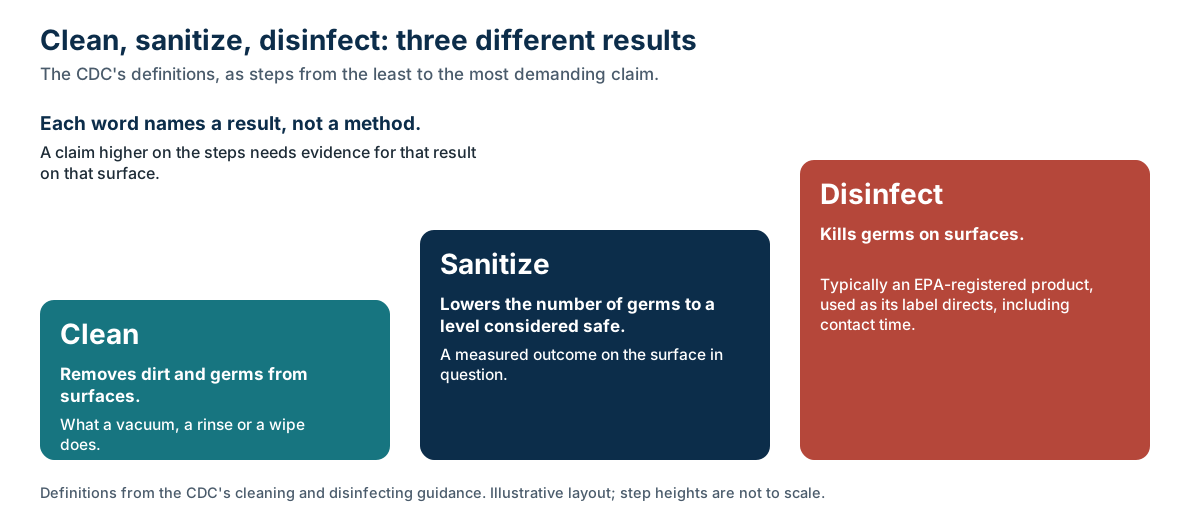
Mattress cleaning advertising uses "sanitize" loosely. The CDC uses three distinct words (see cleaning, sanitizing and disinfecting):
- Cleaning removes dirt and germs from a surface.
- Sanitizing lowers the number of germs to a level considered safe.
- Disinfecting kills germs on surfaces, typically with an EPA-registered product used as labeled.
These are results, not methods. A method can be designed to sanitize, but whether it does on a given mattress depends on the material, the soil and the process. Laboratory studies show steam can inactivate microbes on hard and test surfaces, but we have not found a published study measuring germ reduction on in-use mattresses after steam or extraction.
Be wary of equipment marketing that leans on EPA numbers. Many steam and UV devices carry an EPA establishment number, but the EPA's own consumer guide says that number does not indicate the product has been reviewed for safety or efficacy.
How Sleep Sanitation approaches it
Sleep Sanitation is a mattress-only company in Omaha and Lincoln, and we chose a low-moisture approach because of the mechanisms in this guide. A typical appointment combines dry-vapor steam from our Vapor Clean equipment, applied in quick, controlled passes, with a heated UV-C mattress vacuum, with spot treatments added only where they're needed. The goal is to deliver heat without soaking the comfort layers, remove what can be removed, and leave a bed that, as field guidance from our own jobs rather than a published measurement, is usually dry to the touch the same day in a ventilated room. Every appointment starts with an inspection of the mattress and its materials, and if your manufacturer's care instructions restrict steam or moisture, mention it when you book so we can go over our approach (described above under what mattress manufacturers say) before any treatment.
You can read the step-by-step on our process page, see what's included on pricing, or schedule a visit. If you'd rather talk it through, call or text (402) 512-5658, Monday to Friday, 9am to 6pm.
What we don't know
We would rather say this plainly than fill the gap with marketing:
- Residual moisture in mattresses. We have not found a published measurement of how much water any cleaning method leaves inside a mattress.
- Surface temperature. We have not found published measurements of how hot mattress ticking gets under a moving dry-vapor tool, and most equipment makers publish only boiler temperatures.
- Steam quality at the nozzle. The "5% moisture" figure is a vendor claim. We have not found independent tests of it.
- Mattress-specific outcomes. The best steam studies were on carpet or lab surfaces. A 2001 study by Htut et al. did treat mattresses, but with a specialized combination of hot air at 110°C, steam and heat, not a typical in-home service.
- A mattress cleaning standard. The IICRC publishes standards for carpet (S100) and upholstery (S300). We have not found a consensus standard written for mattresses.
Questions to ask any mattress cleaning company
- Is your machine a hot-water extractor or a steam boiler? What's the make and model?
- How much water goes into the mattress, and how do you control it?
- Do you use detergent? If so, do you rinse it out?
- How do you handle memory foam, latex, wool and adjustable bases?
- What does my mattress manufacturer say about your method?
- How long should I wait before making the bed, and what should I do if it still feels damp?
- Do you vacuum before and after? Is the vacuum HEPA-filtered?
Continue in this hub
Understanding dry-vapor steam
- What is dry-vapor steam cleaning?
- Is dry-vapor steam actually "dry"?
- How much moisture does dry-vapor steam use?
- Steam cleaner vs dry-vapor steam cleaner: are they the same?
Moisture, heat and the mattress
- Why moisture matters when cleaning a mattress
- Why heat and moisture have to be considered separately
- What happens when water penetrates memory foam?
- How long should a mattress take to dry after professional cleaning?
Comparing methods, equipment and chemistry
- Dry-vapor steam vs carpet extraction for mattresses
- Why carpet-cleaning equipment and mattress-sanitation equipment aren't necessarily interchangeable
- Can you sanitize a mattress without soaking it?
- Does professional mattress cleaning have to use detergent?
- HEPA vacuuming vs steam vs extraction: what does each accomplish?
Sources
- CRI 205 Residential Carpet Cleaning Standard · Carpet and Rug Institute
- CRI Test Method 118 (extractor residual moisture) · Carpet and Rug Institute
- Sapphire 370ss truckmount specifications · Hi-Pressure Cleaning Systems
- HP90 Stingray portable extractor specifications · Mytee
- Optima Steamer XDm/XEm user manual · SJE Corp / Optima Steamer
- Steam cleaner FAQ · Daimer Industries
- More on steam cleaning, this time with TANC technology · Green Lodging News
- Saturated steam properties · Engineering ToolBox
- What is steam? (steam tables and dryness fraction) · Spirax Sarco
- Caring for your TEMPUR mattress · Tempur UK
- Product care · Tempur-Pedic
- How to clean a mattress · Purple
- How to get any stain out of a mattress · Saatva
- How to clean your mattress · Casper
- Cleaning your mattress · Sleep Number
- A brief guide to mold, moisture and your home · US EPA
- What is a HEPA filter? · US EPA
- Pesticide devices: a guide for consumers · US EPA
- Cleaning and disinfecting your school (definitions) · CDC
- Environmental assessment and exposure control of dust mites: a practice parameter (Portnoy et al., 2013) · Annals of Allergy, Asthma & Immunology / AAAAI-ACAAI
- Colloff, Taylor & Merrett (1995), steam cleaning of carpets and dust mites · Clinical & Experimental Allergy
- Vojta et al. (2001), dry steam cleaning and allergen reduction · Environmental Health Perspectives
- Yu et al. (2009), HEPA vacuuming with and without dry steam · Journal of Environmental Monitoring
- McDonald & Tovey (1992), washing temperature and dust mites · Journal of Allergy and Clinical Immunology
- Tanner (2009), steam vapor inactivation of pathogens on test surfaces · American Journal of Infection Control
- Tomás et al. (2022), UV-C inactivation of SARS-CoV-2 on porous and non-porous surfaces · Journal of Photochemistry and Photobiology B
Last reviewed October 2, 2026. Manufacturer specifications and care instructions change; check the current version for your exact model. This page is general information, not medical advice. How we source and check pages: editorial standards.