
Short answer
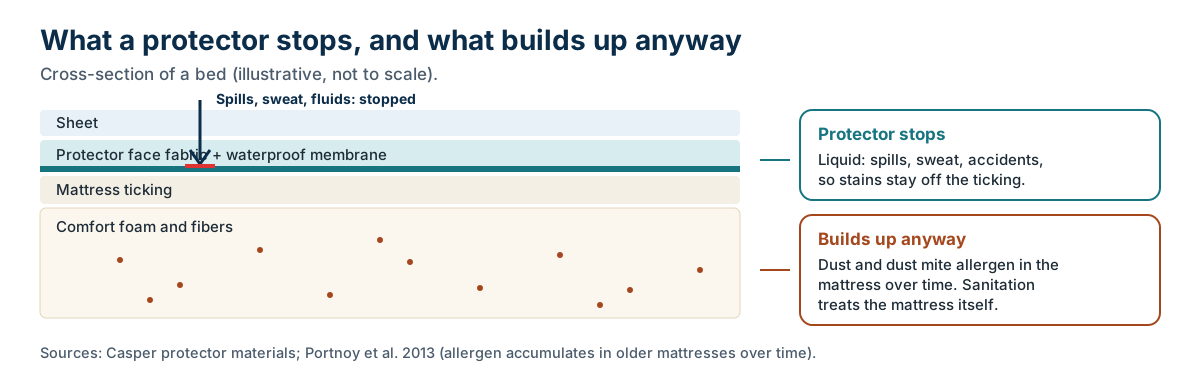
A waterproof protector stops liquid: spills, sweat soaking through, urine and other fluids. That keeps stains out of the ticking and fluid out of the foam. It isn't built to stop water vapor (breathable ones let it through on purpose), it doesn't cover a fitted protector's open underside, and it doesn't remove the dust and bed mite allergen that build up in a mattress over time.
Key terms used on this page
- TPU membrane:
- A thin thermoplastic polyurethane film laminated to a protector's face fabric to stop liquid. Casper lists 'Polyester with Thermoplastic Polyurethane' for its waterproof protector's top.
- Moisture vapor transmission:
- How much water vapor passes through a fabric or membrane. Higher means more breathable; woven microfiber encasings let air and water vapor pass freely.
- Six-sided encasement:
- A cover that zips closed around the whole mattress, top, bottom and sides. NIEHS advises encasing mattresses and pillows in allergen-impermeable covers.
Blocks
Liquid at the surface
- Spills
- Sweat soaking through
- Urine and other fluids
- Stains on the ticking
Not built to block
What still needs sanitation
- Water vapor (by design, on breathable ones)
- The uncovered underside
- Dust and allergen built up over time
- What's already inside the mattress
Knowing exactly what a protector does helps you get the most from it.
General information about mattress care, not medical advice. For allergy or asthma questions, talk with your doctor.
It blocks
- Spills: coffee, water, juice.
- Sweat soaking through: liquid sweat stops at the membrane. See sweat stains and yellowing.
- Accidents: urine, vomit, blood. See our accidents hub.
- Stains: Beautyrest says, "In order to protect your mattress from stains and spills, we highly recommend using a mattress protector."
It isn't built to block
- Water vapor. Breathable membranes let vapor through on purpose. See moisture vapor transmission.
- The underside and lower sides. A fitted protector covers the top and skirt; a six-sided encasement covers everything.
- Build-up over time. The allergist practice parameter notes older mattresses "are likely to have larger numbers of dust mite and to have accumulated increased concentrations of dust mite allergen over time."
That last point is why we pair a protector with sanitation: why a protector doesn't replace mattress sanitation.
Sleep Sanitation's view
This section is our view. Sleep Sanitation serves Omaha, Lincoln and surrounding towns. Every visit includes dry vapor steam, HEPA vacuuming, UV-C light treatment, the built-in bed mite sensor on our JIGOO UV-C mattress vacuum and a moisture check before we leave. We take your protector off at the start of the visit, so you don't need to strip it first; wash it yourself per its care label while we work or afterward. The first mattress is $249. Call or text (402) 512-5658, or email info@sleepsanitation.com. Office hours are Monday to Friday, 9 to 6, and we return calls and texts on weekends.
Changelog
- 15 October 2026: First published. Sources accessed on this date.
Sources
- Environmental Assessment and Exposure Control of Dust Mites: A Practice Parameter (Portnoy et al., 2013) · PubMed Central (Annals of Allergy, Asthma & Immunology)
- Dust Mites and Cockroaches · National Institute of Environmental Health Sciences
- Purple Limited Warranty · Purple
- How do I clean my mattress? · Beautyrest
Last reviewed October 15, 2026. Manufacturer specifications and care instructions change; check the current version for your exact model. This page is general information, not medical advice. How we source and check pages: editorial standards.