
Should You Wash and Sanitize Your Mattress Protector?
Yes. A mattress protector should be cleaned regularly—even when it looks clean.
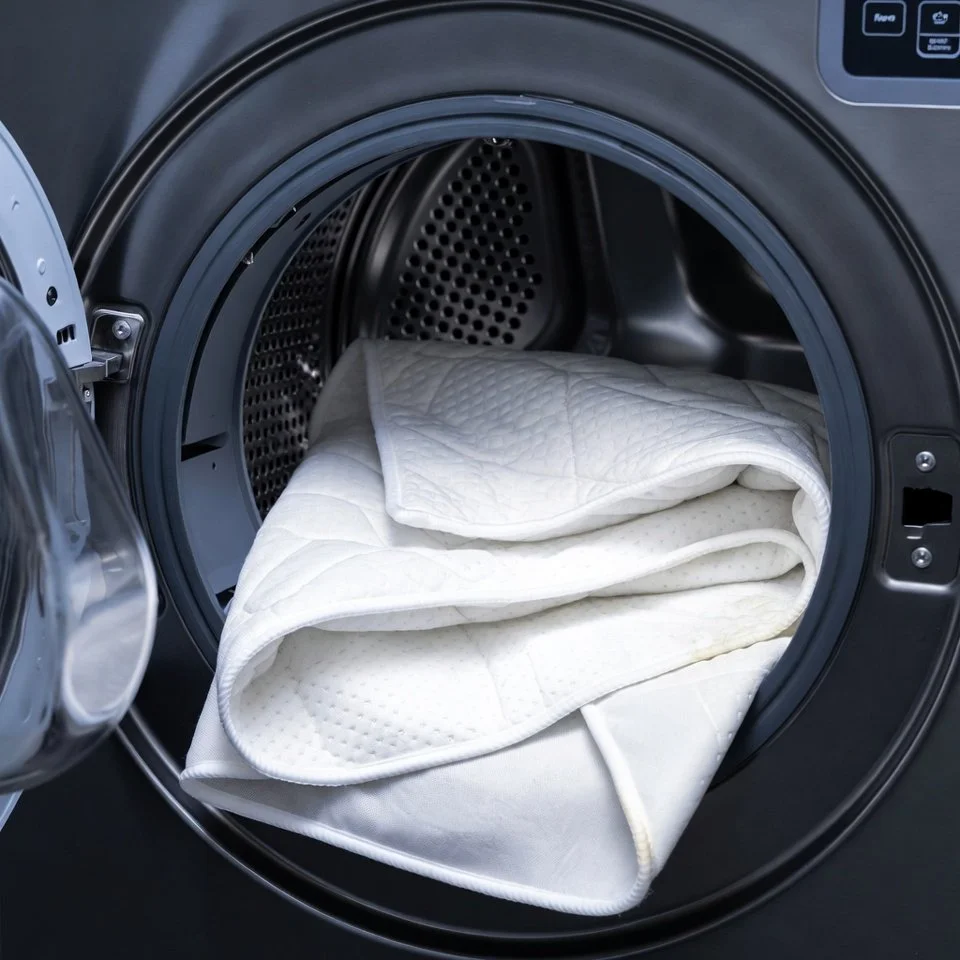
Protectors sit directly beneath the fitted sheet, where they collect perspiration, body oils, skin cells, dust, cosmetic residue, pet dander, and occasional spills. A waterproof barrier may prevent some liquids from reaching the mattress, but it does not make the protector self-cleaning. It also does not guarantee that the mattress underneath has remained untouched throughout years of use.
For proper sleep-surface care, treat the protector and mattress as two separate layers:
Remove and launder the protector according to its care label.
Inspect and, when appropriate, professionally sanitize the mattress underneath.
Allow both surfaces to dry completely before remaking the bed.
That layered approach is different from simply washing the sheets or vacuuming the top of the bed. It recognizes that each component of the sleep environment has its own materials, limitations, and cleaning requirements.
Do Mattress Protectors Really Need to Be Washed?
A mattress protector may be hidden beneath your sheets, but it is still part of the bed’s high-contact environment. Sheets do not capture everything produced during six, seven, or eight hours of nightly use.
Over time, a protector can accumulate:
Perspiration and body oils
Shed skin cells
Dust and airborne particles
Hair and cosmetic residue
Pet dander
Food or beverage spills
Urine, vomit, or other biological contamination
Dust-mite material and other allergens
Waterproofing does not prevent this accumulation. It only limits how readily liquid can pass through the protector’s barrier.
A protector can therefore continue doing its job while still needing to be washed.
If a Protector Has Always Been Used, Does the Mattress Underneath Still Need Cleaning?
Usually, yes.
A quality protector can significantly reduce staining and liquid exposure, but it should not be treated as proof that the mattress underneath is pristine. Protectors can shift, fit imperfectly, leave the sides or underside exposed, or develop wear over time. Fitted protectors also do not fully enclose the mattress the way a six-sided zippered encasement does.
Moisture and debris may reach the mattress through:
Unprotected sides or lower surfaces
Openings around elastic edges
Seams, zippers, and fastening points
Spills that exceeded the protector’s capacity
A protector that moved during sleep
Wear or damage to a waterproof membrane
Periods when the protector was removed
Handling during moves, delivery, or bedding changes
Even when no visible staining is present, the mattress ticking—the outer fabric covering—can accumulate dust, skin cells, allergen-containing particles, and other debris over years of use.
That is why professional mattress sanitation should address the mattress itself rather than stopping at the removable protector.
The protector belongs in the laundry. The mattress requires its own material-appropriate process.
Should the Mattress Protector Be Left on During Professional Mattress Sanitation?
No. It should ordinarily be removed before the mattress is assessed and treated.
Leaving it in place prevents the technician from inspecting the actual mattress surface, seams, quilting, edges, and other higher-accumulation areas. It can also conceal stains, moisture concerns, wear, or material conditions that should be identified before treatment begins.
At Sleep Sanitation, the protector and mattress are treated as different textile systems:
The removable protector is laundered separately according to its manufacturer’s instructions.
The exposed mattress is inspected and treated using a controlled, mattress-specific protocol.
The protector is not subjected to dry vapor steam unless its construction and manufacturer instructions clearly permit that treatment.
Many waterproof protectors contain a thin polyurethane or thermoplastic polyurethane barrier. Direct exposure to uncontrolled heat can damage that membrane, affect its adhesion, or reduce its waterproof performance. A process that is appropriate for a mattress ticking is not automatically appropriate for a removable protector.
You can learn more about the distinction in our mattress sanitation process.
Check the Care Label Before Washing a Mattress Protector
The sewn-in care label is the most important source of instructions.
“Organic,” “natural,” “bamboo,” “cotton,” and “waterproof” are not complete washing instructions. These terms describe only part of the product. For example, a protector advertised as organic cotton may still have a waterproof polyurethane barrier bonded to the underside.
Before washing, identify:
The face fabric
The fill material, if any
Whether a waterproof membrane is present
Whether the protector is fitted, padded, or fully encasing
Whether it contains wool, latex, silk, specialty fibers, or electronic components
The permitted wash temperature
Whether machine drying is allowed
Whether bleach, enzymes, or dry cleaning are prohibited
If the label is missing or unreadable, search the manufacturer’s website using the brand and exact product name. Do not rely solely on the mattress brand: the protector may have been made by a different company.
If the material still cannot be verified, use the lowest-risk cleaning settings rather than guessing that the product can tolerate heat.
Safest Default Washing Instructions When the Material Is Unknown
When the care instructions cannot be found, the conservative default is:
Inspect the protector for tears, peeling, bubbling, cracking, or loose seams.
Close any zippers or fasteners.
Place it loosely in a machine large enough to let it move freely.
Use cold water.
Select a gentle or delicate cycle.
Add a small amount of mild liquid laundry detergent.
Skip bleach, fabric softener, scent beads, and dryer sheets.
Run an extra rinse if detergent remains in the fabric.
Air-dry when possible.
If machine drying is necessary, use no heat or the lowest available temperature only when the product appears dryer-safe.
Confirm that every layer is completely dry before returning it to the bed.
These are cautious fallback instructions—not a replacement for the manufacturer’s directions. If the label says “dry clean only,” “spot clean only,” or provides different instructions, follow the label.
How to Wash a Waterproof Mattress Protector
Most modern waterproof protectors combine a textile face with a thin polyurethane or TPU membrane. That membrane is what makes the product protective—and what makes heat and aggressive laundry practices risky.
Unless the manufacturer instructs otherwise:
Wash in cold or cool water.
Use a gentle cycle.
Use a small amount of mild liquid detergent.
Do not use chlorine bleach.
Do not add fabric softener or scent beads.
Avoid ironing and dry cleaning.
Air-dry or tumble dry using the lowest permitted temperature.
Do not assume that a “sanitize” washer cycle is safe. Many sanitizing cycles rely on high water temperatures or extended heat exposure. Those settings may shorten the life of a waterproof membrane even if the outer fabric appears unaffected.
The goal is to clean the protector thoroughly without sacrificing the barrier that makes it useful.
How to Wash Cotton or Organic Cotton Protectors
A protector described as cotton or organic cotton may be:
Unlined woven cotton
A quilted cotton mattress pad
Cotton filled
Cotton faced with synthetic backing
Cotton faced with a waterproof membrane
Those products cannot all be washed the same way.
Unlined cotton may tolerate warmer water, but cotton can shrink. Quilted products may distort if the washer is too small or the spin cycle is too aggressive. A cotton-faced waterproof protector should usually be handled according to the membrane’s limitations, not according to what bare cotton could withstand.
Unless the label specifically permits more aggressive treatment, use cold water, a gentle cycle, mild detergent, and low-temperature drying.
The word “organic” describes how a fiber was produced. It does not tell you whether the complete protector is waterproof, preshrunk, machine-dryable, or safe at high temperatures.
How to Clean a Wool Mattress Protector
Wool requires special caution.
Some washable wool protectors can be cleaned using a designated wool cycle and wool-safe detergent. Others should be spot cleaned, professionally cleaned, or not machine washed at all. Heat, agitation, enzymes, and rapid temperature changes can cause felting, shrinkage, or distortion.
For a wool protector:
Follow the care label exactly.
Do not assume it is machine washable.
Use a wool-specific cycle if machine washing is expressly allowed.
Use a detergent labeled safe for washable wool.
Avoid standard biological or enzyme detergents unless approved by the manufacturer.
Avoid twisting, wringing, or aggressive spinning.
Reshape while damp if directed.
Dry flat or follow the specified drying method.
Never describe a wool protector as merely “organic fabric” and apply general cotton instructions. Wool is a protein fiber and needs its own care protocol.
What Detergent Should You Use?
For most washable synthetic, cotton, and waterproof protectors, use a mild liquid laundry detergent that:
Is fragrance-free
Contains no fabric softener
Contains no chlorine bleach
Produces relatively low suds
Is compatible with the household’s washing machine
Is permitted by the protector manufacturer
Use only the amount needed for the load. More detergent does not create a more sanitary result. Excess detergent can remain in bulky fabric, contribute to odor, irritate sensitive skin, and interfere with the protector’s breathability or feel.
For wool, use a cleaner specifically labeled as suitable for washable wool.
Be cautious with the term “pH-neutral.” A detergent should not be represented as pH-neutral unless the manufacturer provides that specification. “Natural,” “plant-based,” and “free and clear” also do not automatically mean that a product is safe for every waterproof membrane or natural fiber.
When recommending a product, the protector manufacturer’s approved-detergent guidance should take priority over a universal brand recommendation.
Products to Avoid Unless the Care Label Specifically Allows Them
Chlorine bleach
Bleach can discolor fabric, degrade elastic components, and damage some waterproof barriers. Do not use it simply because the goal is “sanitizing.”
Fabric softener and dryer sheets
These products deposit lubricating or conditioning ingredients on fibers. The coating can affect absorbency, breathability, and the performance of certain technical fabrics.
Scent beads and heavily fragranced additives
These are unnecessary for cleaning and can leave additional residue directly beneath the sleeper.
Excess detergent
Bulky protectors can be difficult to rinse. Too much detergent may remain trapped in quilting, seams, or absorbent layers.
High dryer heat
Excessive heat can shrink natural fibers and damage, separate, or distort waterproof membranes.
Ironing
Direct heat can permanently damage synthetic barriers.
Unapproved enzyme detergents
Enzymes are useful for many ordinary laundry soils, but they may not be appropriate for wool, silk, or certain specialty materials. Follow the product label.
Should You Wash a Mattress Protector With Towels or Sheets?
Only if the manufacturer permits it and the washer has enough capacity.
A protector should be able to move freely through the wash. Packing it tightly with bath towels can make the load extremely heavy, reduce rinsing, increase abrasion, and cause the washer to become unbalanced.
A few lightweight sheets may help balance some loads without creating as much weight or friction, but washing the protector by itself is often the simplest option.
Avoid washing it with:
Clothing with exposed zippers
Hook-and-loop fasteners
Bras with hooks
Shoes
Rough workwear
Items with sharp hardware
Heavily soiled towels
These can snag the fabric or damage a thin waterproof backing.
Large king-size, padded, or absorbent protectors may require a high-capacity front-loading machine or a commercial-size washer. Do not force a bulky protector into an undersized machine.
How Often Should You Wash a Mattress Protector?
There is no single interval for every household, but every two to three months is a reasonable starting point for many routinely used protectors.
Wash it sooner when:
A spill or biological accident occurs
The sleeper has been ill
Pets regularly sleep on the bed
Night sweating is substantial
Odor or visible soil develops
The household is managing dust-mite or allergen concerns
The manufacturer specifies more frequent laundering
Guest-room protectors should also be cleaned periodically, even when the bed is used less frequently. Dust and airborne material still settle on an unused sleep surface.
The mattress beneath the protector should be inspected whenever the protector is removed. For ongoing mattress care, see how often a mattress should be professionally sanitized.
Does Washing a Mattress Protector Sanitize It?
Ordinary laundering removes soils and can substantially reduce microorganisms and allergen-containing debris. However, “cleaned,” “sanitized,” and “sterilized” are not interchangeable terms.
A home washer’s sanitizing cycle may use temperatures that are unsafe for a waterproof protector. A laundry disinfectant may also be incompatible with the membrane, fabric, or household’s chemical preferences.
The safest approach is to follow the care label rather than trying to impose a high-temperature or chemical-disinfection method on a product that was not designed for it.
When care instructions permit only cold washing, focus on:
Appropriate detergent
Correct dosage
Adequate agitation
Thorough rinsing
Complete drying
Regular laundering
Prompt treatment after contamination
For urine, vomit, blood, or another significant biological event, contact the manufacturer before applying stain removers, enzyme products, oxidizers, or disinfectants. Product compatibility and contamination severity may determine whether the protector should be treated or replaced.
When Should a Mattress Protector Be Replaced?
Inspect the protector each time it is washed. Replacement may be appropriate when you see:
Cracks or pinholes
Peeling or flaking
Separation between layers
Bubbling in the waterproof backing
Torn seams or damaged zippers
Stretched elastic that no longer holds the protector in place
Persistent odor after proper washing
Staining that cannot be safely removed
Liquid passing through during normal use
If you are unsure whether a waterproof protector still works, consult its manufacturer. An at-home water test may be appropriate for some products, but follow the manufacturer’s procedure and never test it while it is installed on the mattress.
A Protector Is Part of Mattress Care—Not a Substitute for It
A quality protector is one of the best ways to reduce staining, simplify routine maintenance, and protect a mattress investment. But it does not eliminate the need to inspect or care for the mattress underneath.
The complete approach is straightforward:
Wash the sheets.
Remove and properly launder the protector.
Inspect the exposed mattress.
Address the mattress with a material-appropriate sanitation process.
Let every component dry completely.
Replace worn or compromised protectors.
Sleep Sanitation provides a controlled, low-moisture process developed for mattresses rather than adapting a carpet-cleaning workflow to the bed. Our service includes inspection, clean-entry procedures, mattress-specific handling, and focused attention to seams, quilting, edges, and high-contact areas.
Read more about what makes Sleep Sanitation different, explore the science behind sleep-surface sanitation, or find your local Sleep Sanitation provider.
Frequently Asked Questions
Can I wash a mattress protector in a washing machine?
Many mattress protectors are machine washable, but some wool, specialty, padded, and electronically integrated products are not. Check the sewn-in care label and manufacturer’s instructions before washing.
What setting should I use to wash a mattress protector?
Follow the care label. When the material and instructions cannot be verified, cold water and a gentle cycle are the lowest-risk defaults for a conventional washable protector.
Can I put a waterproof mattress protector in the dryer?
Only if the manufacturer allows it. Use the lowest approved temperature. Air-drying is the conservative option when dryer instructions are unclear.
Can I wash a mattress protector on the sanitize cycle?
Not unless its care instructions permit the cycle’s water temperature and agitation. High-temperature sanitizing cycles can damage some waterproof barriers and shrink natural fibers.
Can I use bleach on a mattress protector?
Avoid bleach unless the manufacturer specifically permits it. Bleach can damage fabrics, elastic, and waterproof membranes.
Should I use fabric softener?
Generally, no. Fabric softener and dryer sheets can leave coatings on fibers and may affect breathability, absorbency, or waterproof performance.
Should the mattress itself be sanitized if it has always had a protector?
Yes, the protector should be removed so the mattress can be inspected. A protector reduces exposure but does not guarantee that every part of the mattress has remained free of dust, debris, allergens, spills, or other accumulation.
Can a mattress protector be steam cleaned?
Do not apply steam unless the manufacturer expressly approves it. Heat can damage waterproof membranes, adhesives, elastic components, and some specialty fibers.
Should a mattress protector be completely dry before it goes back on the bed?
Yes. Check the seams, corners, elastic, quilting, and waterproof backing—not just the outer surface. Trapping residual moisture against the mattress can create odor and unwanted moisture conditions.