
Short answer
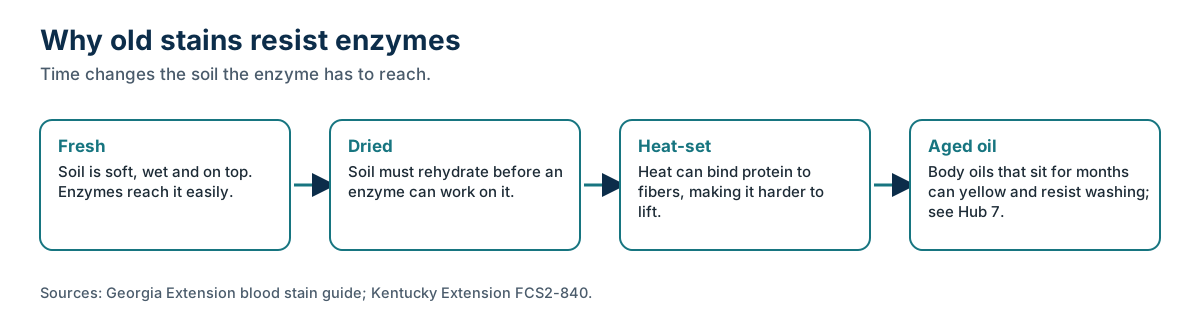
Old stains resist enzymes because the soil has changed. Dried soil has to rehydrate before an enzyme can reach it. Heat can bind protein to fibers; Georgia Extension says heat-set stains are difficult to remove. Body oils age and yellow over months. Urine has turned partly to ammonia and spread. Enzymes can still help, but expect partial results and possibly more than one light round.
Key terms used on this page
- Heat-set stain:
- A stain that has become harder to remove because heat fixed it in place. Kentucky Extension warns never to iron stained fabrics because heat sets stains, and Georgia Extension says stains set by heat will be difficult to remove.
- Dwell time (enzyme products):
- How long a cleaning product stays on a surface before it is removed or dried. Enzyme products need dwell time to work, and the label sets it. Longer dwell does not mean more liquid: on a mattress we keep the amount small so the foam underneath doesn't soak.
- Denaturation:
- Loss of a protein's folded shape, usually from heat or extreme pH. A denatured enzyme is still present but can no longer bind its target, so it stops working.
- Saturated core:
- A mattress whose interior layers, not just the cover and quilting, were soaked by a large accident or several in one place. Surface treatment can't reach all of it. Some saturated cores improve with treatment and drying; some don't, and we say so before charging for work that won't help.
Fresh stains respond best to enzymes, because the soil is soft, wet and on top. Time changes that. Dried soil has to rehydrate before an enzyme can reach it, heat can fix protein to fibers, body oils yellow over months, and urine spreads and turns partly to ammonia. Enzymes still help with old stains, but results are often partial.
General information. Results depend on the stain, the material and its history.
Dried soil has to rehydrate
Enzymes work in water (see dwell time explained). A dried stain gives them nothing to work in until it's dampened, and the top layer may rehydrate before what's beneath it. That's one reason old stains can take more than one light round.
Heat sets protein
Blood, vomit and saliva are protein-rich. Heat can fix protein to fibers. Georgia Extension says stains set by heat "will be difficult to remove," and Kentucky Extension warns never to iron stained fabric. The glossary term heat-set stain and our article on why heat can set a blood stain explain the details. A stain that has been hit with a hair dryer, iron or hot water is harder for any cleaner.
Body oils age
Skin oils that soak into a mattress over months don't stay the same. Our stain chemistry hub covers sweat stains and yellowing and why one side of the bed turns darker. Lipases target oils, but aged, yellowed residues tend to resist.
Old urine has moved and changed
A urine stain that has sat for weeks has spread wider than its mark and may have reached deeper layers. Bacteria have turned much of the urea into ammonia (see urease, uricase and urine odor). An enzyme can work on what organic soil remains at the surface, but it can't reach a saturated core without soaking it. Our article on old dog urine smell covers that case.
What still helps
- Rehydrate lightly. A small amount of product, not a soak.
- Give it the full label time. Old soil takes longer to break down.
- Blot, then repeat if needed. Two light rounds beat one heavy one.
- Heat last. Only after the enzyme has done its work.
- Expect partial color change. Odor often improves more than appearance.
Sleep Sanitation's view
This section is our view. We'll look at an old stain and tell you honestly what we expect before we start. We can't promise any stain will come out completely, and we'd rather say so up front. Our visits use dry vapor steam with little water, HEPA vacuuming and UV-C light, with a moisture check after service and the built-in bed mite sensor on our UV-C vacuum. Enzyme treatment is part of our urine and organic odor work and is included in the standard visit; severe or biohazard contamination carries a surcharge, and we tell you before any work starts. Call or text (402) 512-5658.
What we don't know
- How quickly enzyme response falls off with stain age on mattress fabrics. We found no study.
- How much of a stain's color versus its odor typically responds to enzyme treatment.
Changelog
- 12 October 2026: First published. Sources accessed on this date.
Sources
- Remove Stains from Blood · University of Georgia Extension, Textiles
- Stain Removal for Washable Fabrics (FCS2-840) · University of Kentucky Cooperative Extension
- Biology 2e, 6.5 Enzymes · OpenStax (Rice University)
Last reviewed October 12, 2026. Manufacturer specifications and care instructions change; check the current version for your exact model. This page is general information, not medical advice. How we source and check pages: editorial standards.