
Short answer
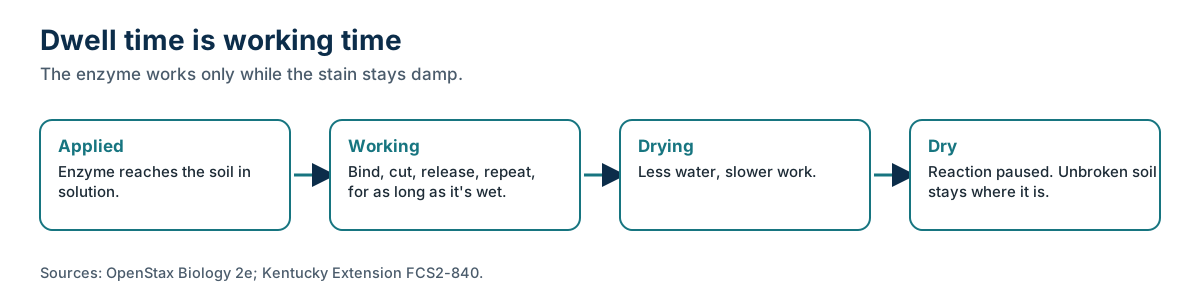
Dwell time is how long an enzyme product stays in contact with the soil before it's blotted or dried. Enzymes cut molecules one at a time and need water for the reaction, so they work only while the area stays damp. Drying early pauses the work. The product label sets the time. On a mattress, the answer to a short dwell is not more liquid, since foam holds whatever goes in.
Key terms used on this page
- Dwell time (enzyme products):
- How long a cleaning product stays on a surface before it is removed or dried. Enzyme products need dwell time to work, and the label sets it. Longer dwell does not mean more liquid: on a mattress we keep the amount small so the foam underneath doesn't soak.
- Hydrolysis:
- Splitting a chemical bond using a water molecule. Proteases, lipases and amylases in cleaners are hydrolases, which is one reason they need a damp stain to work.
- Catalyst:
- A substance that speeds up a chemical reaction without being used up by it. Enzymes are biological catalysts; OpenStax notes they return to their original state after each reaction.
- Moisture load:
- The total amount of water a cleaning process puts into a mattress, whether from spray, steam condensate, shampoo or rinse. It is the main thing that decides how long a mattress takes to dry.
Dwell time is the working time. An enzyme cuts one molecule, lets go and moves on, and it needs water to do it. So it works only while the stain stays damp. Blot or dry too soon and the reaction pauses with soil still there. The product label sets how long; on a mattress, the hard part is giving enough time without adding so much liquid that the foam soaks.
General information. Always follow the directions on the specific product you use.
Why enzymes need time
OpenStax's biology text explains that an enzyme binds its target at the active site, catalyzes the reaction and releases the products before binding the next molecule. That's fast per molecule, but a dried urine or sweat stain holds a great many molecules, and the enzyme has to find them by moving through the liquid. More time means more of the soil gets cut.
Cleaning enzymes are hydrolases: they use water to split bonds. Water is part of the reaction, not just the carrier. As a stain dries, the enzyme loses both its medium and its reagent.
What the label's dwell time means
Each product's label sets a contact time based on its formulation. Hub 3's glossary entry on dwell time puts it simply: enzyme products need dwell time, and the label sets it. We don't publish a universal figure, because there isn't one.
Kentucky Extension's laundry guide says enzyme presoaks are most effective in warm to hot water. That's written for washable fabric soaking in a tub, a very different situation from a mattress.
Longer dwell is not more liquid
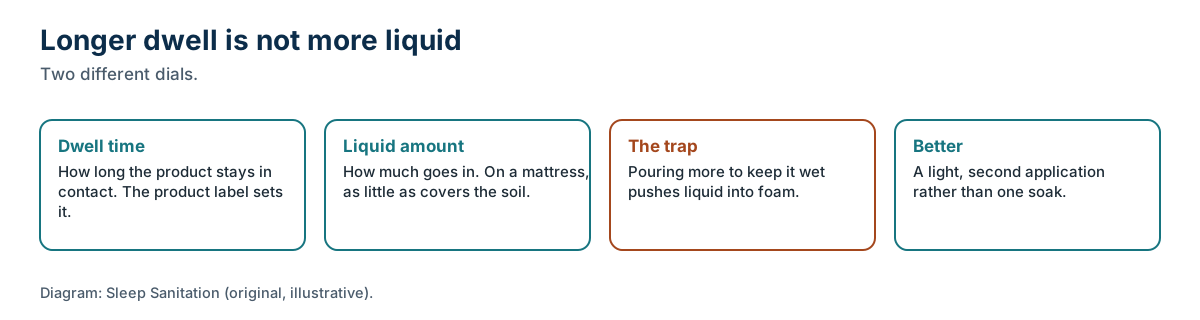
It's tempting to keep a spot wet by pouring more on. On a mattress, that pushes liquid deeper into foam and fiber, where it dries slowly. Foam makers are wary of liquid: Purple's care guide says not to steam clean memory foam, latex or adjustable mattresses "since the heat and water could damage its materials." Our accidents hub explains why the liquid, not the enzyme, is usually the bigger risk to memory foam.
The better pattern is a small amount that covers the soil, the full label time, blotting, and a second light application if the first didn't finish the job. That keeps moisture load down.
What stops the clock early
- Heat. Running steam, a hair dryer or an iron over a fresh enzyme application dries it early and can denature the enzyme. See does steam heat destroy enzyme cleaners?.
- Other products. Vinegar, peroxide or bleach on top of an enzyme product change its conditions. See DIY enzyme cleaner myths.
- Airflow and low humidity. Fans and dry winter air speed drying. That's good for the mattress afterward, but not during dwell.
Sleep Sanitation's view
This section is our view. On urine and organic odor jobs, we give the enzyme the time the product label sets before any heat touches the area, and we keep the amount small. If a stain needs more, we'd rather do a second light round. Our visits use dry vapor steam with little water, HEPA vacuuming and UV-C light, with a moisture check after service and the built-in bed mite sensor on our UV-C vacuum. Enzyme treatment is part of our urine and organic odor work and is included in the standard visit; severe or biohazard contamination carries a surcharge, and we tell you before any work starts. Call or text (402) 512-5658.
What we don't know
- How quickly a light enzyme application dries on different mattress covers in a typical Nebraska bedroom. We found no data.
- How much enzyme activity survives a dry-and-rewet cycle in fabric. Lab data exist for specific enzymes, not for mattress conditions.
Changelog
- 12 October 2026: First published. Sources accessed on this date.
Sources
- Biology 2e, 6.5 Enzymes · OpenStax (Rice University)
- Stain Removal for Washable Fabrics (FCS2-840) · University of Kentucky Cooperative Extension
- How To Clean a Mattress in 9 Steps · Purple
Last reviewed October 12, 2026. Manufacturer specifications and care instructions change; check the current version for your exact model. This page is general information, not medical advice. How we source and check pages: editorial standards.