
Short answer
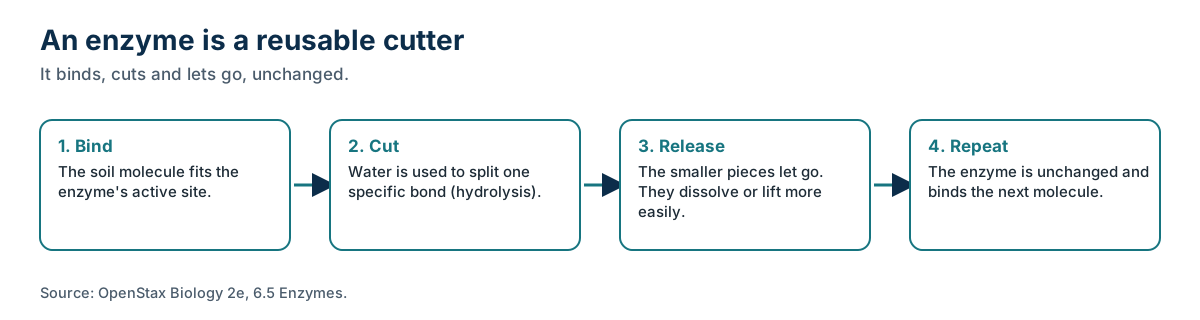
An enzyme cleaner contains enzymes, proteins that act as catalysts. Each one binds a specific kind of molecule at its active site and uses water to cut one type of bond, a reaction called hydrolysis. The enzyme comes out unchanged and moves to the next molecule. Breaking big protein, fat and starch molecules into small pieces makes body-fluid soil easier to lift and leaves less for odor-causing bacteria to feed on.
Key terms used on this page
- Catalyst:
- A substance that speeds up a chemical reaction without being used up by it. Enzymes are biological catalysts; OpenStax notes they return to their original state after each reaction.
- Active site:
- The pocket on an enzyme where its target molecule binds and the reaction happens. Its shape and chemistry make each enzyme specific to one kind of molecule.
- Hydrolysis:
- Splitting a chemical bond using a water molecule. Proteases, lipases and amylases in cleaners are hydrolases, which is one reason they need a damp stain to work.
- Detergent enzymes:
- Enzymes added to cleaners to break specific bonds in soil: proteases for protein, lipases for fats and oils, amylases for starch. Each targets its own kind of soil.
- Enzyme cleaner:
- A cleaning product that uses enzymes to break down organic soils such as urine, sweat, vomit or blood. Several mattress makers mention them for urine stains, including Purple and Avocado. They are liquids, so how much is applied matters as much as what is applied. Sleep Sanitation uses enzyme treatment on urine and organic odor, sparingly.
An enzyme cleaner works by cutting soil into smaller pieces. The enzymes in it are proteins that act as catalysts: each one grabs a particular kind of molecule, splits one specific chemical bond using water, lets go, and grabs the next. Big, sticky molecules from blood, sweat, vomit and food become small, more soluble ones that are easier to lift out of fabric and give odor-causing bacteria less to feed on.
General information about cleaning chemistry. Not a product recommendation; always follow the label of any product you use.
Catalysts, not soap
Soap and detergent surround soil and carry it away. Enzymes do something different: they change the soil itself. OpenStax's biology textbook describes enzymes as catalysts that "lower the activation energies" of reactions by binding the reacting molecule and "holding them in such a way as to make the chemical bond-breaking and bond-forming processes take place more readily." It also stresses a hallmark: enzymes "remain ultimately unchanged by the reactions they catalyze."
That last point is why a small amount of enzyme can work through a lot of soil, given time. It's also why time matters so much, which we cover in dwell time explained.
The active site and why enzymes are picky
The place on the enzyme where soil binds is the active site. OpenStax calls the match between enzyme and target a "jigsaw puzzle-like match," and notes that enzymes "are known for their specificity." In cleaning terms:
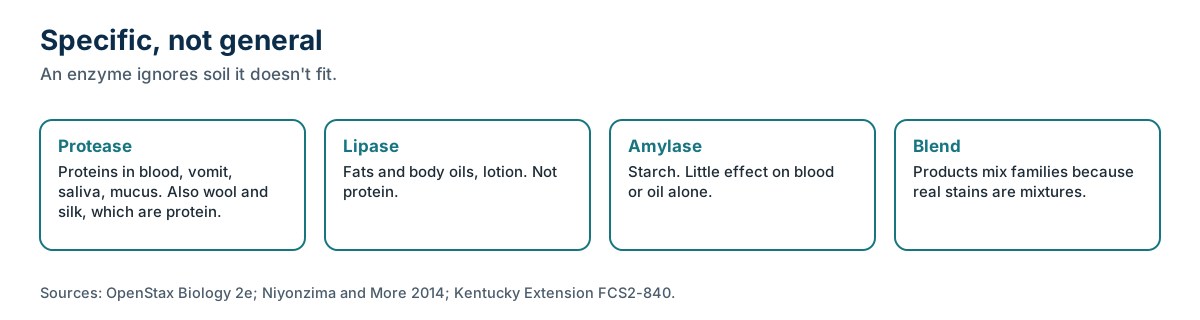
- Proteases cut proteins. Blood, vomit, saliva and mucus are protein-rich, and Song and colleagues describe detergent proteases as releasing protein stains from fabric.
- Lipases cut fats and oils, including the skin oils in sweat. Niyonzima and More's review says lipases remove fatty stains.
- Amylases break down starch, mostly from food.
Our stain chemistry hub matches each enzyme family to specific stains. This article stays with how they work.
Hydrolysis: cutting with water
Most cleaning enzymes are hydrolases. They use a water molecule to split a bond, a reaction called hydrolysis. That's the first reason enzymes need a damp stain: water isn't only the carrier, it's part of the reaction.
The pieces they leave behind are smaller, more soluble fragments: amino acids and short peptides from protein, fatty acids and glycerol from fat, sugars from starch. Those still need lifting or drying out, which is why enzyme treatment is followed by blotting rather than left to dry on its own (see limits of enzyme treatment).
What enzymes need to work
Four conditions decide whether an enzyme does its job:
- Water. No water, no hydrolysis.
- Time. Each molecule is cut one at a time.
- Temperature. Warmth speeds things up within a range; too much heat destroys the enzyme. See does steam heat destroy enzyme cleaners?.
- pH. Each enzyme works in a pH window. See temperature and pH.
Why this matters for a mattress
A mattress isn't a shirt. It can't be soaked, agitated and rinsed. Kentucky Extension's laundry guidance describes enzyme presoaks in water, but on a mattress the liquid has to stay small, because foam holds whatever goes in. That makes enzymes useful, since they keep working at low volume, and limited, since they only work while damp. The hub explains how those two facts shape good practice.
Sleep Sanitation's view
This section is our view. We use enzyme treatment on urine and organic odor jobs because it breaks down the soil rather than covering it. We apply it sparingly, give it the time the product label sets, and only then move to heat. Our visits use dry vapor steam with little water, HEPA vacuuming and UV-C light, with a moisture check after service and the built-in bed mite sensor on our UV-C vacuum. Enzyme treatment is part of our urine and organic odor work and is included in the standard visit; severe or biohazard contamination carries a surcharge, and we tell you before any work starts. Call or text (402) 512-5658, or email info@sleepsanitation.com.
What we don't know
- How much of a typical mattress urine or sweat stain an enzyme product breaks down in a home setting. Published enzyme data come mostly from laundry and lab tests.
- How enzyme performance differs between foam, fiber batting and quilted covers. We found no comparison study.
Changelog
- 12 October 2026: First published. Sources accessed on this date.
Sources
- Biology 2e, 6.5 Enzymes · OpenStax (Rice University)
- Microbial proteases and their applications (Song et al., Frontiers in Microbiology, 2023) · PubMed Central
- Concomitant production of detergent compatible enzymes by Bacillus flexus XJU-1 (Niyonzima and More, Braz J Microbiol, 2014) · PubMed Central
- Stain Removal for Washable Fabrics (FCS2-840) · University of Kentucky Cooperative Extension
- Determining If a Cleaning Product Is a Pesticide Under FIFRA · US Environmental Protection Agency
Last reviewed October 12, 2026. Manufacturer specifications and care instructions change; check the current version for your exact model. This page is general information, not medical advice. How we source and check pages: editorial standards.