
Short answer
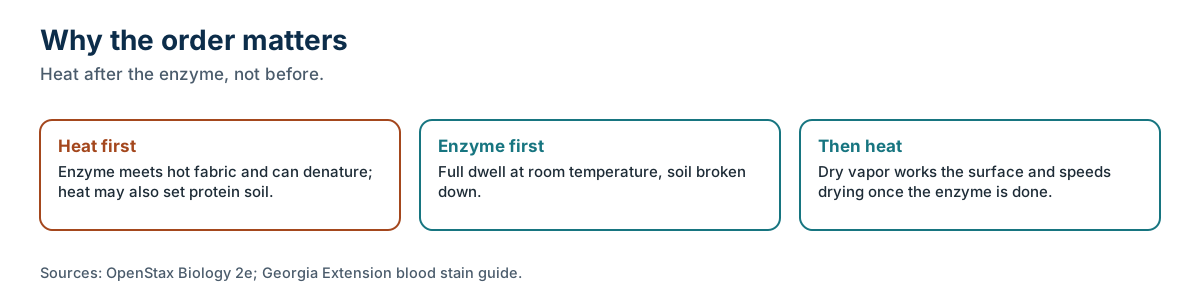
Yes, enough heat can. Enzymes are proteins, and high temperatures denature them, changing their shape so they stop working. Steam applied to a fresh enzyme application can also dry it before the dwell time ends. Heat can set some protein stains too. So the sequence matters: enzyme first, full label dwell at room temperature, blot, then low-moisture heat to work the surface and speed drying.
Key terms used on this page
- Denaturation:
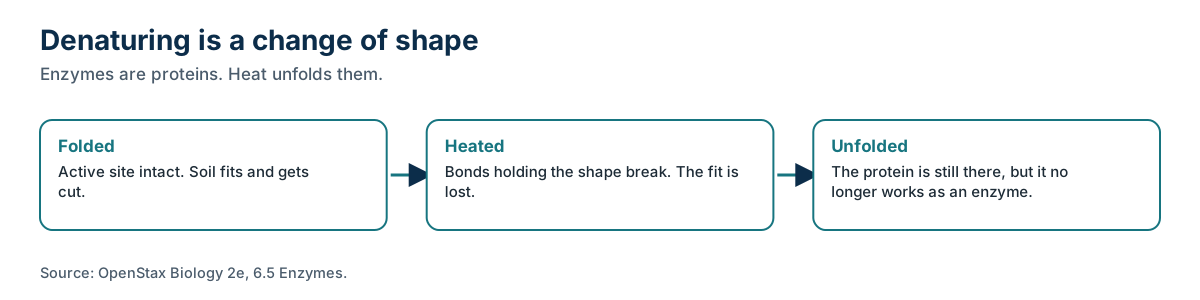
- Loss of a protein's folded shape, usually from heat or extreme pH. A denatured enzyme is still present but can no longer bind its target, so it stops working.
- Dwell time (enzyme products):
- How long a cleaning product stays on a surface before it is removed or dried. Enzyme products need dwell time to work, and the label sets it. Longer dwell does not mean more liquid: on a mattress we keep the amount small so the foam underneath doesn't soak.
- Heat-set stain:
- A stain that has become harder to remove because heat fixed it in place. Kentucky Extension warns never to iron stained fabrics because heat sets stains, and Georgia Extension says stains set by heat will be difficult to remove.
- Catalyst:
- A substance that speeds up a chemical reaction without being used up by it. Enzymes are biological catalysts; OpenStax notes they return to their original state after each reaction.
Enough heat does destroy enzymes. They're proteins, and OpenStax's biology text says high temperatures "will eventually cause enzymes, like other biological molecules, to denature." Steam is far hotter than any cleaning enzyme's working range. Heat can also set protein stains and dry an enzyme application before it has finished. That's why the order matters: enzyme first, full dwell, blot, then heat.
General information about enzyme chemistry and heat. Not product directions.
What denaturing means
An enzyme works because it's folded into a precise shape, with an active site that fits its target. Heat breaks the weak bonds that hold that shape. The protein unfolds and the fit is lost. That's denaturation.
OpenStax notes a nuance: warmth speeds reactions up within an enzyme's optimal range. That's why laundry guides like Kentucky Extension's describe enzyme presoaks working best in warm water. Steam is a different order of heat altogether. Our moisture and heat hub explains how hot dry vapor is at the tip and how quickly that heat drops as it reaches fabric.
Heat can set protein stains
Heat doesn't only affect the enzyme. It affects the soil. Protein in blood and vomit can bind more tightly to fibers when heated. Georgia Extension says stains set by heat "will be difficult to remove," and Kentucky warns never to iron stained fabric. Our stain chemistry hub explains the blood case in detail, and the glossary term heat-set stain summarizes it.
So heat on untreated protein soil works against you twice: it can set the stain and it can disable the enzyme you add afterward.
Heat also cuts the dwell short
Even below denaturing temperatures, heat dries a damp area fast. An enzyme needs water to work (see dwell time explained). Drying it early pauses the reaction with soil left behind.
The sequence that follows from this
- Remove loose debris.
- Apply the enzyme sparingly to the mapped area.
- Give it the label's full dwell time, at room temperature.
- Blot to lift what's broken down.
- Then heat: low-moisture passes to work the surface and help it dry.
Our accidents hub explains how we apply this on urine jobs, step by step. This article covers the chemistry behind it.
Why heat still belongs in the process
None of this makes heat the enemy. Once the enzyme has finished, heat helps the remaining moisture leave faster, and dry vapor works the cover fabric without adding much water. It simply comes second.
Sleep Sanitation's view
This section is our view. On urine and organic odor jobs we put enzyme treatment first, give it its label time, blot, and only then bring in dry vapor. Our visits use dry vapor steam with little water, HEPA vacuuming and UV-C light, with a moisture check after service and the built-in bed mite sensor on our UV-C vacuum. Enzyme treatment is part of our urine and organic odor work and is included in the standard visit; severe or biohazard contamination carries a surcharge, and we tell you before any work starts. Call or text (402) 512-5658.
What we don't know
- The temperature an enzyme application actually reaches in a mattress cover during a dry vapor pass. We found no published measurement.
- How much residual enzyme activity, if any, survives into the heat step on a typical job. We don't measure it, and we don't claim to.
Changelog
- 12 October 2026: First published. Sources accessed on this date.
Sources
- Biology 2e, 6.5 Enzymes · OpenStax (Rice University)
- Remove Stains from Blood · University of Georgia Extension, Textiles
- Stain Removal for Washable Fabrics (FCS2-840) · University of Kentucky Cooperative Extension
Last reviewed October 12, 2026. Manufacturer specifications and care instructions change; check the current version for your exact model. This page is general information, not medical advice. How we source and check pages: editorial standards.