
Short answer
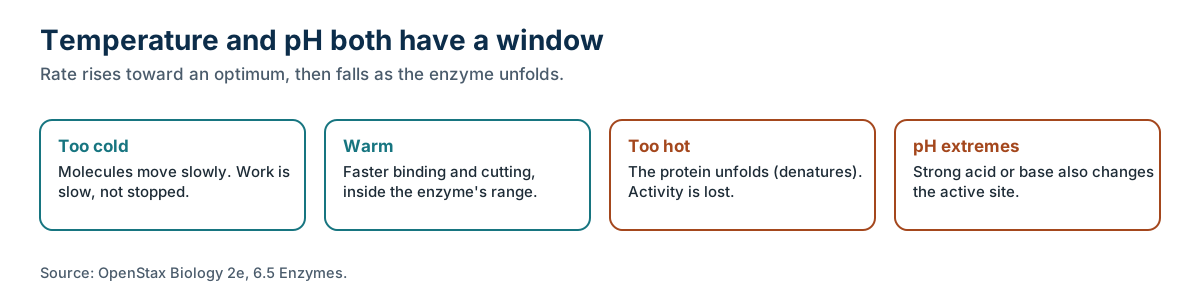
Every enzyme has a working window for temperature and pH. Warmth speeds it up to a point, then too much heat unfolds the protein and it stops working, which is called denaturation. Strong acids and bases also change its shape. In practice, room-temperature to warm conditions and the product as directed suit enzyme cleaners; adding vinegar, bleach or very hot water can work against them.
Key terms used on this page
- Denaturation:
- Loss of a protein's folded shape, usually from heat or extreme pH. A denatured enzyme is still present but can no longer bind its target, so it stops working.
- Enzyme working range:
- The band of temperature and pH in which an enzyme works well. Inside it, warmth speeds reactions; outside it, activity falls and the enzyme can denature.
- pH:
- A scale for how acidic or alkaline a solution is. Wool is damaged by too much alkali, while cotton's cellulose is broken down by strong acid, so a cleaner's pH matters as much as its strength.
- Active site:
- The pocket on an enzyme where its target molecule binds and the reaction happens. Its shape and chemistry make each enzyme specific to one kind of molecule.
Enzymes are proteins with a working window. Warmth speeds them up, until heat starts to unfold them and they stop. Each one also works best in a particular pH range, and strong acids or bases change its shape. For an enzyme cleaner, that means room-temperature to warm conditions and the product used as directed, not boiled, not acidified, and not mixed with other cleaners.
General information about enzyme chemistry, not product directions.
Temperature: faster, then broken
OpenStax's biology text puts both sides plainly: "increasing the environmental temperature generally increases reaction rates, enzyme-catalyzed or otherwise. However, increasing or decreasing the temperature outside of an optimal range can affect chemical bonds within the active site." And: "High temperatures will eventually cause enzymes, like other biological molecules, to denature."
Denaturation means the protein loses its folded shape. It's still present, but it can't bind its target. For most enzymes, that loss doesn't reverse when things cool down.
Cold is different. It slows the reaction but doesn't destroy the enzyme. A cool bedroom means slower work, which is one more reason dwell time matters.
Why there's no single magic number
Cleaning enzymes come from different microbes and are chosen for different conditions. Song and colleagues' review of microbial proteases discusses enzymes selected to stay stable in detergent conditions. Kentucky Extension's guidance says enzyme presoaks are most effective in warm to hot water. Neither gives a number that applies to every product. The label is the authority for any given product, and we don't publish one universal temperature.
pH: the other half of the window
OpenStax again: "Enzymes are suited to function best within a certain pH range, and, as with temperature, extreme environmental pH values (acidic or basic) can cause enzymes to denature." The active site's own chemical groups have to be in the right charge state to bind and cut.
That's why mixing household products with an enzyme cleaner is a gamble. Our stain chemistry hub covers pH and mattress materials; here's what it means for enzymes.
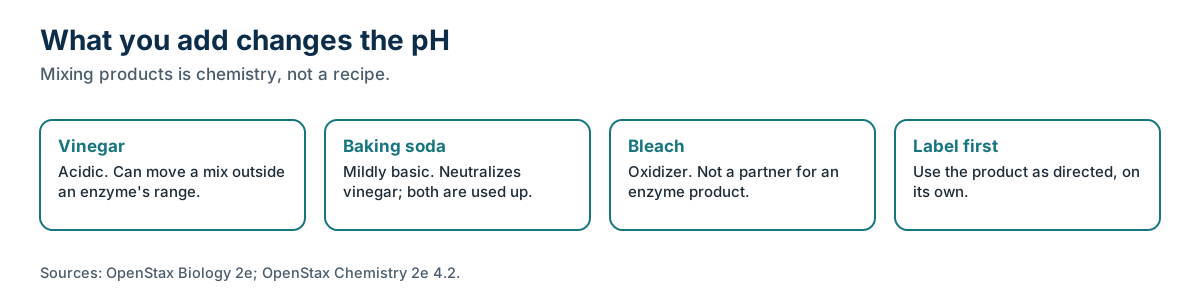
- Vinegar is acidic and can push the mix outside an enzyme's range.
- Baking soda and vinegar together neutralize each other. OpenStax's chemistry text classifies this as an acid-base reaction producing a salt, water and carbon dioxide. The fizz isn't cleaning.
- Bleach and hydrogen peroxide are oxidizers. They're separate tools with their own cautions and aren't partners for an enzyme product. See our hydrogen peroxide article.
Protein fibers: a pH-independent caution
Proteases cut protein, and some mattress materials are protein. Kentucky Extension warns against enzyme presoaks on silk or wool. That applies to wool batting and wool-blend covers in natural mattresses. Our materials hub explains which layers those are.
Sleep Sanitation's view
This section is our view. We use enzyme treatment on its own, at room temperature, for its full label time, before heat. We don't mix it with vinegar, peroxide or bleach, and we check for wool or silk layers before deciding how to treat. Our visits use dry vapor steam with little water, HEPA vacuuming and UV-C light, with a moisture check after service and the built-in bed mite sensor on our UV-C vacuum. Enzyme treatment is part of our urine and organic odor work and is included in the standard visit; severe or biohazard contamination carries a surcharge, and we tell you before any work starts. Call or text (402) 512-5658.
What we don't know
- The temperature a mattress surface reaches during a typical enzyme dwell in a cool Nebraska bedroom, and how much that slows the work. We found no data.
- How the pH of a dried urine stain, which can rise as ammonia forms, affects consumer enzyme products in practice.
Changelog
- 12 October 2026: First published. Sources accessed on this date.
Sources
- Biology 2e, 6.5 Enzymes · OpenStax (Rice University)
- Stain Removal for Washable Fabrics (FCS2-840) · University of Kentucky Cooperative Extension
- Microbial proteases and their applications (Song et al., Frontiers in Microbiology, 2023) · PubMed Central
- Chemistry 2e, 4.2 Classifying Chemical Reactions · OpenStax (Rice University)
Last reviewed October 12, 2026. Manufacturer specifications and care instructions change; check the current version for your exact model. This page is general information, not medical advice. How we source and check pages: editorial standards.