
Short answer
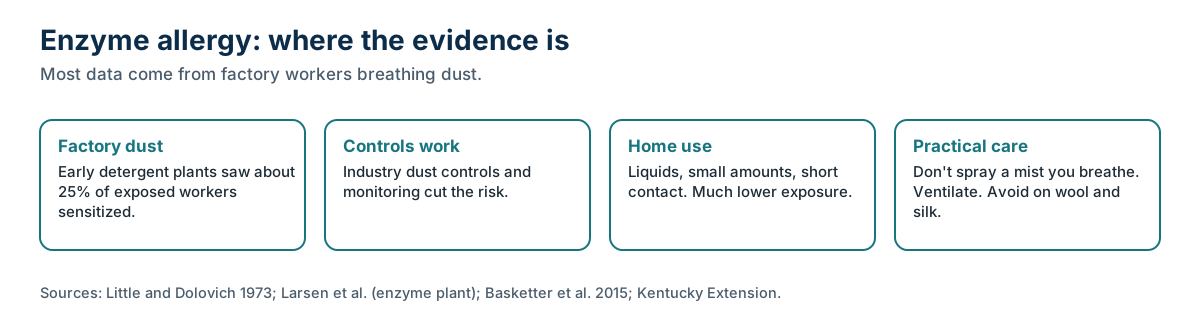
Enzymes are proteins, and inhaled enzyme dust can cause allergy. Most evidence comes from detergent and enzyme factories: one early plant saw about 25% of 644 exposed workers sensitized, and industry dust controls later cut that risk. Home use of liquid products involves far less exposure. Sensible care: don't breathe a spray mist, ventilate, follow the label, and avoid proteases on wool or silk.
Key terms used on this page
- Enzyme sensitization:
- Developing an allergic immune response to an enzyme protein, usually after breathing it as dust. Documented mainly in detergent and enzyme factory workers.
- Protease:
- An enzyme that cuts proteins at their peptide bonds. In cleaners it targets blood, vomit and other protein soil, and because wool is protein, Kentucky Extension warns against enzyme presoaks on wool and silk.
- Enzyme cleaner:
- A cleaning product that uses enzymes to break down organic soils such as urine, sweat, vomit or blood. Several mattress makers mention them for urine stains, including Purple and Avocado. They are liquids, so how much is applied matters as much as what is applied. Sleep Sanitation uses enzyme treatment on urine and organic odor, sparingly.
Enzymes are proteins, and like other proteins they can cause allergy when breathed in. That's well established for factory workers exposed to enzyme dust. It's much less clear for people using liquid enzyme cleaners at home, where exposure is far lower. Reasonable care covers most of the gap: don't breathe the mist, ventilate, follow the label, and keep proteases off wool and silk.
General information, not medical advice. If you have asthma or allergies, ask your doctor.
What factory studies found
Detergent makers began adding protease enzymes in the 1960s, and problems followed. Little and Dolovich reported in 1973 that in a Canadian plant "about 25% of 644 employees exposed to airborne commercial B. subtilis enzyme preparations became sensitized," with respiratory symptoms "reported much more commonly among sensitized workers."
Larsen and colleagues, studying an enzyme-producing plant, describe microbial enzymes as "a well known cause of occupational allergy, typically manifesting itself as rhinitis and/or asthma," and note that most enzyme types, including proteases, lipases and amylases, can sensitize. They found sensitization decreased over the study period, possibly reflecting a better working environment.
Controls changed the picture
Basketter and colleagues reviewed air monitoring and health surveillance across about 100 detergent manufacturing sites. They conclude that with exposure limits, good occupational hygiene and active health monitoring, "the respiratory allergenic risk associated with enzyme proteins can be successfully managed."
The lesson is exposure. The risk came from breathing enzyme dust over long periods.
What that means at home
A household liquid enzyme cleaner, used in small amounts on a stain, is a very different exposure from airborne powder in a factory. We found no study measuring sensitization from consumer use of enzyme spot cleaners, so we won't claim either way. Sensible steps:
- Pour or dab rather than mist where you can. If you spray, don't breathe the mist.
- Ventilate the room.
- Let the treated area dry before sleeping on it.
- Follow the product label, including any pet and skin guidance.
Protein fibers
Proteases cut protein. Kentucky Extension warns against using enzyme presoaks on silk or wool for that reason. Check whether a mattress has wool batting or a wool-blend cover before using an enzyme product on it. Our materials hub explains where wool shows up.
What we won't claim
Enzyme cleaners break down soil. We don't claim they reduce allergy symptoms. Our allergens hub covers what the evidence shows about mattress cleaning and allergy, carefully.
Sleep Sanitation's view
This section is our view. On urine and organic odor jobs we apply enzyme treatment sparingly and directly to the mapped area, not as a room-filling mist, and the area is dried with low-moisture heat and airflow afterward. If anyone in the home has asthma or a known enzyme allergy, tell us when you book. Our visits use dry vapor steam with little water, HEPA vacuuming and UV-C light, with a moisture check after service and the built-in bed mite sensor on our UV-C vacuum. Enzyme treatment is part of our urine and organic odor work and is included in the standard visit; severe or biohazard contamination carries a surcharge, and we tell you before any work starts. Call or text (402) 512-5658.
What we don't know
- Whether consumer use of liquid enzyme spot cleaners causes sensitization. We found no study.
- How much enzyme remains in a mattress cover after treatment and drying.
Changelog
- 12 October 2026: First published. Sources accessed on this date.
Sources
- Respiratory disease in industry due to B. subtilis enzyme preparations (Little and Dolovich, 1973) · PubMed Central
- Incidence of respiratory sensitisation and allergy to enzymes among employees in an enzyme producing plant (Larsen et al.) · PubMed Central
- Managing the Risk of Occupational Allergy in the Enzyme Detergent Industry (Basketter et al., 2015) · PubMed Central
- Stain Removal for Washable Fabrics (FCS2-840) · University of Kentucky Cooperative Extension
Last reviewed October 12, 2026. Manufacturer specifications and care instructions change; check the current version for your exact model. This page is general information, not medical advice. How we source and check pages: editorial standards.