
Short answer
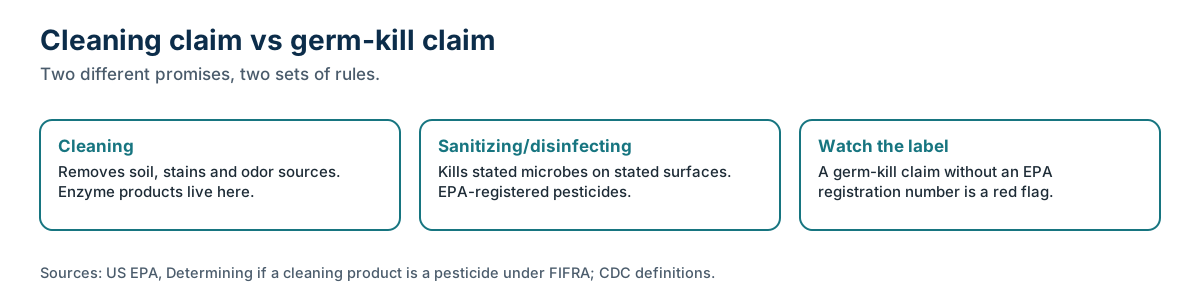
No. Enzyme cleaners break down organic soil such as urine, sweat and blood. Killing germs is a different claim. Under federal law, a product that claims to kill or control germs is a pesticide and must be registered with the EPA. Some products combine a registered disinfectant with enzymes, but the enzyme part is cleaning, and the label's registration number tells you which claim you're getting.
Key terms used on this page
- Pesticidal claim:
- A product claim to prevent, destroy, repel or mitigate a pest, including microbes. EPA says such claims make a cleaning product a pesticide that must be registered.
- Enzyme cleaner:
- A cleaning product that uses enzymes to break down organic soils such as urine, sweat, vomit or blood. Several mattress makers mention them for urine stains, including Purple and Avocado. They are liquids, so how much is applied matters as much as what is applied. Sleep Sanitation uses enzyme treatment on urine and organic odor, sparingly.
- Cleaning vs sanitizing:
- The CDC treats cleaning, sanitizing and disinfecting as different steps. Urine and odor treatment is cleaning. Hub 2's sanitize definition explains how we use that word, and we make no disinfection claim.
No. Enzymes break down soil; they don't kill germs. That isn't only chemistry, it's law: a product that claims to kill or control germs is a pesticide under federal law and must be registered with the EPA. Enzyme products that make only cleaning claims don't need that registration, and shouldn't be read as disinfectants.
General information about product labeling. Not legal advice.
What enzymes do and don't do
Enzymes are catalysts that cut specific bonds in organic soil (see how enzyme cleaners work). Breaking down urine, sweat, blood and vomit removes what bacteria feed on and what produces odor. That's valuable, and it's cleaning.
They don't target living microbes the way a disinfectant does. Our stain chemistry hub puts it directly: an enzyme cleaner is not a disinfectant.
How EPA draws the line
EPA's page on determining if a cleaning product is a pesticide explains that FIFRA defines a pesticide as a substance "intended for preventing, destroying, repelling, or mitigating any pest," and that a product becomes subject to registration once its label or other sales statements include "any claim of pest mitigation." Microbes count. EPA contrasts those claims with statements that a product "merely claim[s] to remove dirt or other debris without any linkage to mitigating a pest."
It also lists cleaning claims that cross the line, such as a product that "cleans or removes the habitat where biofilm, germs, allergens or microorganisms can hide, thrive or grow." That's why careful cleaning companies, us included, choose words carefully.
The CDC's definitions of cleaning, sanitizing and disinfecting set out the same three-way distinction. Our compatibility hub explains it in cleaning versus sanitizing.
Combination products
Some products pair a registered disinfectant ingredient with enzymes. In that case, the germ-kill claim comes from the registered ingredient and applies only as the label states: specific organisms, surfaces and contact times. The enzymes still do the cleaning.
What to look for on a label
- An EPA registration number if the product claims to kill or control germs.
- The organisms and surfaces listed. Many disinfectant claims are limited to hard, nonporous surfaces.
- Plain cleaning language, such as "breaks down organic stains and odors," on enzyme-only products.
Sleep Sanitation's view
This section is our view. We use enzyme treatment on urine and organic odor jobs as a cleaning step, and we don't describe it as disinfecting. Our visits clean and sanitize at the surface with dry vapor steam, HEPA vacuuming and UV-C light, with a moisture check after service and the built-in bed mite sensor on our UV-C vacuum. Severe or biohazard contamination carries a surcharge, and we tell you before work starts. Call or text (402) 512-5658.
What we don't know
- How much bacterial load on mattress fabric drops after enzyme cleaning alone. We found no study measuring it on mattresses.
Changelog
- 12 October 2026: First published. Sources accessed on this date.
Sources
- Determining If a Cleaning Product Is a Pesticide Under FIFRA · US Environmental Protection Agency
- Cleaning and disinfecting your school (definitions) · CDC
- Biology 2e, 6.5 Enzymes · OpenStax (Rice University)
Last reviewed October 12, 2026. Manufacturer specifications and care instructions change; check the current version for your exact model. This page is general information, not medical advice. How we source and check pages: editorial standards.