
Short answer
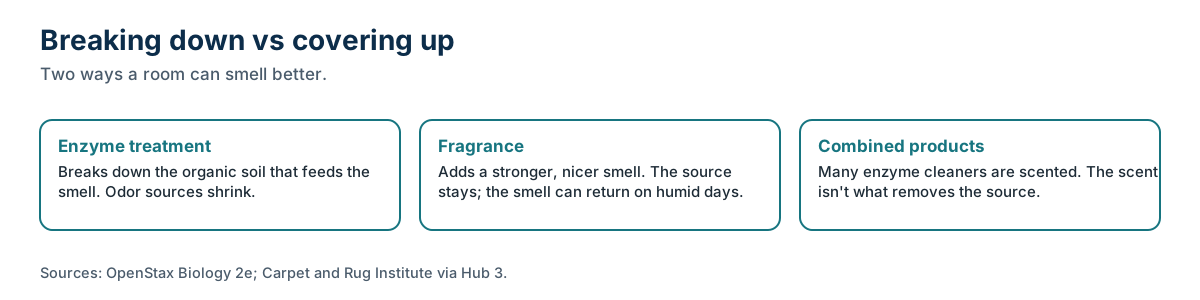
Fragrance and enzymes do different jobs. Fragrance adds a stronger smell over the original one, so the source stays and odor can return on humid days. Enzymes break down the organic soil in urine, sweat and vomit that bacteria feed on, so less odor is produced. Many enzyme products are also scented, which can make a bed smell fixed before the work is done.
Key terms used on this page
- Odor masking:
- Covering a smell with fragrance instead of removing its source. The Carpet and Rug Institute warns that some odor products may simply mask the odor, which can reappear in high humidity.
- Enzyme cleaner:
- A cleaning product that uses enzymes to break down organic soils such as urine, sweat, vomit or blood. Several mattress makers mention them for urine stains, including Purple and Avocado. They are liquids, so how much is applied matters as much as what is applied. Sleep Sanitation uses enzyme treatment on urine and organic odor, sparingly.
- Catalyst:
- A substance that speeds up a chemical reaction without being used up by it. Enzymes are biological catalysts; OpenStax notes they return to their original state after each reaction.
- Urease:
- An enzyme made by many bacteria that splits urea into ammonia and carbon dioxide. It is the reason a fresh urine stain turns into an ammonia smell as it sits.
Fragrance makes a room smell different. Enzymes change what's in the mattress. A scented spray lays a stronger smell over urine or sweat while the source stays put, so the original odor can return when humidity rises. An enzyme product breaks down the organic soil bacteria feed on, so less odor gets made. The catch is that many enzyme products are scented too, which can make a bed smell fixed before the work is done.
General information. Our cleaning-done-wrong hub covers how masking works in the nose; this article covers the enzyme side.
Where mattress odor comes from
Body-fluid odor isn't one chemical. The sharp smell of old urine is mostly ammonia, which bacteria make from urea using the enzyme urease (see urease, uricase and urine odor). Konieczna and colleagues describe how that reaction releases ammonia and raises the pH. Sweat and body oils produce their own stale smells as bacteria and air break them down over time.
In each case, the odor is a product of soil that's still there. While the soil remains, more odor gets made.
What fragrance does
Fragrance doesn't touch the soil. It adds odor molecules that compete for your attention. The odor masking glossary entry quotes the Carpet and Rug Institute's warning that some products "may simply mask the odor," which can reappear in high humidity. That fits the chemistry: damp air restarts bacterial activity and carries volatile compounds out of the fabric again.
What enzymes do
Enzymes target the soil. Proteases cut proteins from blood, vomit and saliva; lipases cut body oils. Breaking those molecules down makes them easier to lift out and leaves less food for bacteria. OpenStax describes enzymes as catalysts that bind specific molecules and return unchanged, so they keep working through the dwell time.
They don't remove ammonia already in the air or fabric. That airs out as the area dries. They also aren't instant, and they don't make anything sterile. We explain the limits in limits of enzyme treatment.
Why scented enzyme products blur the line
Many consumer enzyme products add fragrance. That's a reasonable choice for a product sold for homes, but it means the first improvement you notice may be the scent. A fair test is to let the area dry fully and air out, then smell it again on a humid day. If the odor returns, soil is likely still present.
How to judge odor removal at home
- Wait until the area is fully dry. Damp fabric smells different.
- Smell on a humid day, or after the room has been closed for a while.
- Check the edges, not just the visible stain; liquid spreads wider than the mark.
Sleep Sanitation's view
This section is our view. We don't use fragrance to cover odor. On urine and organic odor jobs we use enzyme treatment to break down the source, then dry vapor and airflow. If the odor source is deeper than we can reach, we say so. Our visits use dry vapor steam with little water, HEPA vacuuming and UV-C light, with a moisture check after service and the built-in bed mite sensor on our UV-C vacuum. Enzyme treatment is part of our urine and organic odor work and is included in the standard visit; severe or biohazard contamination carries a surcharge, and we tell you before any work starts. Call or text (402) 512-5658.
What we don't know
- How long fragrance from a typical spray persists in a mattress cover. We found no measurement.
- Which volatile compounds, beyond ammonia, dominate stale sweat odor in mattresses specifically.
Changelog
- 12 October 2026: First published. Sources accessed on this date.
Sources
- Biology 2e, 6.5 Enzymes · OpenStax (Rice University)
- Bacterial Urease and its Role in Long-Lasting Human Diseases (Konieczna et al., 2012) · PubMed Central
- Stain Removal for Washable Fabrics (FCS2-840) · University of Kentucky Cooperative Extension
Last reviewed October 12, 2026. Manufacturer specifications and care instructions change; check the current version for your exact model. This page is general information, not medical advice. How we source and check pages: editorial standards.