
Short answer
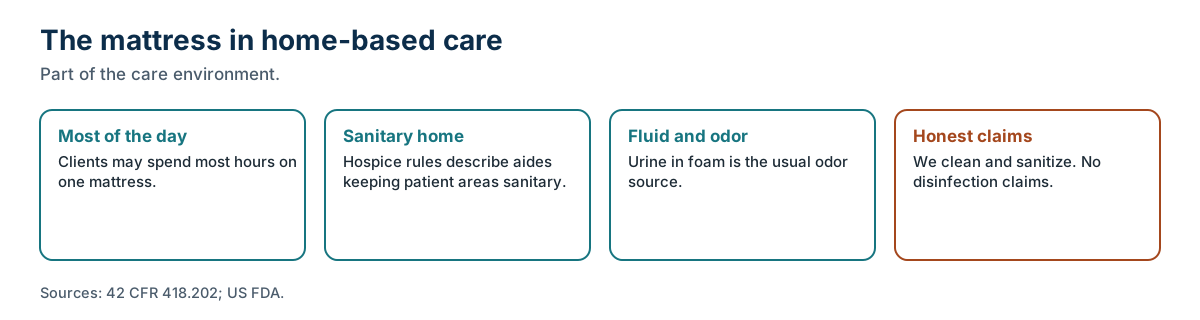
A client in home-based care may spend most of the day on one mattress, and it collects body fluids, sweat and skin. Federal hospice rules describe aides keeping 'a safe and sanitary environment in areas of the home used by the patient.' A clean, dry mattress supports comfort and dignity and removes odor sources. It isn't a disinfection step and we make no infection-outcome claims.
Key terms used on this page
- Safe and sanitary environment:
- Federal hospice rules' phrase for the household tasks aides may do in areas the patient uses, such as changing linens and light cleaning.
- Fluid ingress:
- Body fluids getting through a worn or damaged mattress cover into the core. The FDA has warned about it.
In home-based care, the mattress is where a client may spend most of the day. Linens get changed; the mattress underneath often doesn't get attention until there's a problem. This hub is for home care, home health and hospice teams who want a straightforward option for that problem.
General information for home care and hospice teams, not medical, legal or infection-control advice. Follow your agency's policies.
What the rules say about the home
Federal hospice rules (42 CFR 418.202) say aides "may perform household services to maintain a safe and sanitary environment in areas of the home used by the patient, such as changing bed linens or light cleaning." Homemaker services may include "maintenance of a safe and healthy environment." A deep mattress cleaning is beyond light cleaning, which is where an outside service fits.
Why the mattress specifically
The FDA warns that worn hospital-bed mattress covers can let body fluids get inside (fluid ingress). Home mattresses often have no fluid-resistant cover at all. Urine and other fluids that reach the foam are the usual source of the odor teams call about. See our accidents hub and enzyme science hub.
What we can honestly claim
We clean and sanitize. We don't disinfect and make no infection-outcome claims; see what a mattress service can claim. The real benefits are comfort, dignity, odor removal, and a dry mattress back in use quickly.
Sleep Sanitation's view
This section is our view. Agencies that group visits with us for route efficiency can ask about agency rates. We carry a certificate of insurance, available on request, and run background checks under our hiring policy, including a national sex offender registry check. Sleep Sanitation serves Omaha, Lincoln and surrounding towns. Every visit includes dry vapor steam, HEPA vacuuming, UV-C light treatment, the built-in bed mite sensor on our JIGOO UV-C mattress vacuum and a moisture check before we leave. Enzyme treatment is used on urine and other biological jobs, and ordinary accident treatment is included in the $249 first-mattress price. Severe or biohazard contamination carries a surcharge, and we tell you before any work starts. Call or text (402) 512-5658, or email info@sleepsanitation.com.
Changelog
- 14 October 2026: First published. Sources accessed on this date.
Sources
- 42 CFR 418.202, Covered services (hospice) · eCFR (US Government)
- Covers for Hospital Bed Mattresses: Learn How to Keep Them Safe · US Food and Drug Administration
- All types of bed mattresses: contamination through damaged mattresses or covers (MDA/2010/002) · GOV.UK, Medicines and Healthcare products Regulatory Agency
- Cleaning and disinfecting your school (definitions) · CDC
Last reviewed October 14, 2026. Manufacturer specifications and care instructions change; check the current version for your exact model. This page is general information, not medical advice. How we source and check pages: editorial standards.