
Short answer
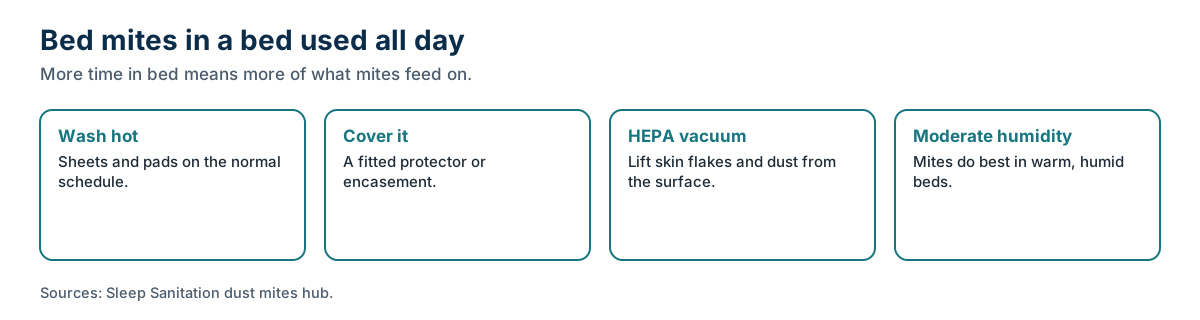
A bed used most of the day collects more skin flakes and dust, which is what bed mites feed on. Washing bedding hot, using an encasement or protector, HEPA vacuuming the mattress, and keeping humidity moderate are the practical steps. Steam heat kills mites it reaches, but killing mites isn't the same as removing their allergen. We make no allergy or health promises.
Key terms used on this page
- Time in bed:
- How many hours a day someone spends on the mattress. More time in bed means more skin contact, sweat and soil.
- Waterproof protector:
- A removable, washable cover with a waterproof layer that sits under the sheet. It turns most accidents into laundry and keeps urine out of the mattress itself.
A bed someone uses for most of the day gets more of everything: skin flakes, sweat, humidity and dust. Those are the conditions bed mites (the dust mites that live in beds) do well in. This article covers practical steps, and stays inside what the evidence supports.
General information about mattress care, not medical advice. For health questions, talk with the person's doctor or care team.
Why the bed matters more
More time in bed means more skin and moisture in the mattress. Our bed mites and allergens hub explains what lives in mattress dust and the difference between killing mites and removing their allergen.
Practical steps
- Wash sheets and pads hot on the normal schedule. See does washing sheets clean the mattress?
- Use a fitted protector or encasement.
- HEPA vacuum the mattress surface when the bed is changed, if the person can be moved safely.
- Keep bedroom humidity moderate. Our CO2 and humidity article explains how stale, humid air relates to bed mites.
What we don't claim
We don't claim mattress sanitation treats allergies or breathing problems. Our article does mattress sanitation cure allergies? explains why.
Sleep Sanitation's view
This section is our view. Sleep Sanitation serves Omaha, Lincoln and surrounding towns. Every visit includes dry vapor steam, HEPA vacuuming, UV-C light treatment, the built-in bed mite sensor on our JIGOO UV-C mattress vacuum and a moisture check before we leave. Enzyme treatment is used on urine and other biological jobs, and ordinary accident treatment is included in the $249 first-mattress price. Severe or biohazard contamination carries a surcharge, and we tell you before any work starts. Call or text (402) 512-5658, or email info@sleepsanitation.com.
What we don't know
- Whether bed mite levels are measurably higher in beds of bedbound people. We found no study.
Changelog
- 14 October 2026: First published. Sources accessed on this date.
Sources
- Different Care Settings at the End of Life · National Institute on Aging
Last reviewed October 14, 2026. Manufacturer specifications and care instructions change; check the current version for your exact model. This page is general information, not medical advice. How we source and check pages: editorial standards.