
Short answer
As people age, many spend more hours in bed, and the mattress collects more sweat, skin, spills and accidents. What matters most is keeping it dry, covered with a good protector, and cleaned without soaking it or leaving residue. Low-moisture dry vapor steam, HEPA vacuuming and a moisture check suit that goal. No mattress cleaning treats or prevents any health condition.
Key terms used on this page
- Waterproof protector:
- A removable, washable cover with a waterproof layer that sits under the sheet. It turns most accidents into laundry and keeps urine out of the mattress itself.
- Low-moisture cleaning:
- A carpet-industry label for methods such as encapsulation, bonnet and dry-compound cleaning that use less water than extraction. It is not the same thing as dry-vapor steam, which is a heat-delivery method rather than a detergent method.
- Time in bed:
- How many hours a day someone spends on the mattress. More time in bed means more skin contact, sweat and soil.
More time in bed means the mattress matters more. The National Institute on Aging notes that end-of-life and long-term care at home often brings in special equipment such as a hospital bed, and that incontinence becomes more common with age. Both put more on the mattress: more hours of skin contact, more sweat and spills, and more accidents. This hub covers how to keep that mattress clean, dry and comfortable, in plain terms.
General information about mattress care, not medical advice. For health questions, talk with the person's doctor or care team.
What matters most
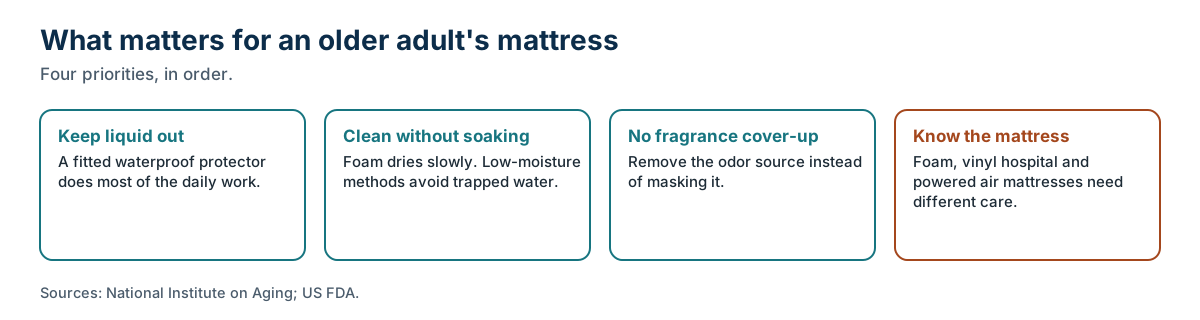
- Keep liquid out. A fitted waterproof protector does most of the daily work. Our article on incontinence and the mattress covers layering.
- Clean without soaking. Wet extraction pushes water into foam that dries slowly. Low-moisture cleaning avoids that. See moisture and drying for fragile sleepers.
- Skip fragrance and heavy residue. Masking odor doesn't remove its source. See odor in an older adult's bedroom.
- Know the mattress type. Foam, innerspring, vinyl-covered hospital mattresses and powered air mattresses all need different care. See hospital-bed mattresses and why we don't clean air mattresses.
What a cleaner mattress can and can't do
A clean, dry mattress is more comfortable and smells better. That's the honest benefit. It doesn't treat skin conditions, infections or allergies, and we don't claim it does. If someone has pressure injuries, skin breakdown or breathing problems, their care team is the right source of advice.
Sleep Sanitation's view
This section is our view. For aging-in-place homes we keep visits calm and short, use very little water, and leave the bed ready to use once our moisture check confirms it's dry. Sleep Sanitation serves Omaha, Lincoln and surrounding towns. Every visit includes dry vapor steam, HEPA vacuuming, UV-C light treatment, the built-in bed mite sensor on our JIGOO UV-C mattress vacuum and a moisture check before we leave. Enzyme treatment is used on urine and other biological jobs, and ordinary accident treatment is included in the $249 first-mattress price. Severe or biohazard contamination carries a surcharge, and we tell you before any work starts. Call or text (402) 512-5658, or email info@sleepsanitation.com.
What we don't know
- How much faster mattresses soil when a person spends most of the day in bed. We found no measured data.
Changelog
- 14 October 2026: First published. Sources accessed on this date.
Sources
- Different Care Settings at the End of Life · National Institute on Aging
- Urinary Incontinence in Older Adults · National Institute on Aging
- Covers for Hospital Bed Mattresses: Learn How to Keep Them Safe · US Food and Drug Administration
Last reviewed October 14, 2026. Manufacturer specifications and care instructions change; check the current version for your exact model. This page is general information, not medical advice. How we source and check pages: editorial standards.