
Short answer
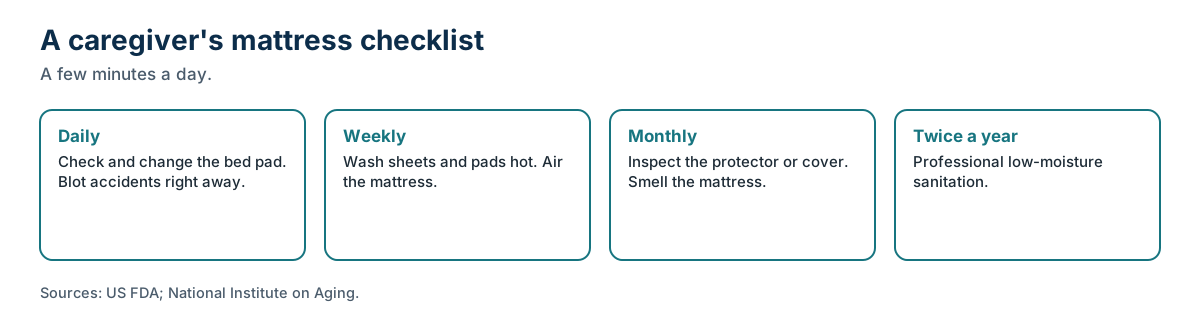
Daily: check and change the bed pad, and blot any accident right away. Weekly: wash sheets and pads hot and air the mattress briefly. Monthly: inspect the protector or cover for tears and the mattress for stains or odor. Twice a year, or after a major accident: have the mattress professionally sanitized with a low-moisture method.
Key terms used on this page
- Bed-pad layering:
- Protector on the mattress, sheet over it, washable or disposable pad on top, so accidents are changed at the pad.
- Waterproof protector:
- A removable, washable cover with a waterproof layer that sits under the sheet. It turns most accidents into laundry and keeps urine out of the mattress itself.
Caregivers have enough to keep track of. This checklist keeps mattress care to a few minutes a day.
General information about mattress care, not medical advice. For health questions, talk with the person's doctor or care team.
Daily
- Check and change the bed pad when wet. See bed-pad layering.
- After an accident: strip, blot, air. Don't pour cleaner on it.
Weekly
- Wash sheets, pads and pillowcases hot.
- Leave the mattress uncovered for a while if the person can be out of bed.
Monthly
- Inspect the protector or hospital-bed cover for tears, pinholes and stains, as the FDA advises for hospital mattress covers.
- Smell the mattress itself, not just the sheets.
Twice a year, or after a major accident
- Professional low-moisture sanitation. Our how often to clean page explains the twice-yearly baseline.
Sleep Sanitation's view
This section is our view. Sleep Sanitation serves Omaha, Lincoln and surrounding towns. Every visit includes dry vapor steam, HEPA vacuuming, UV-C light treatment, the built-in bed mite sensor on our JIGOO UV-C mattress vacuum and a moisture check before we leave. Enzyme treatment is used on urine and other biological jobs, and ordinary accident treatment is included in the $249 first-mattress price. Severe or biohazard contamination carries a surcharge, and we tell you before any work starts. Call or text (402) 512-5658, or email info@sleepsanitation.com.
Changelog
- 14 October 2026: First published. Sources accessed on this date.
Sources
- Covers for Hospital Bed Mattresses: Learn How to Keep Them Safe · US Food and Drug Administration
- Urinary Incontinence in Older Adults · National Institute on Aging
Last reviewed October 14, 2026. Manufacturer specifications and care instructions change; check the current version for your exact model. This page is general information, not medical advice. How we source and check pages: editorial standards.